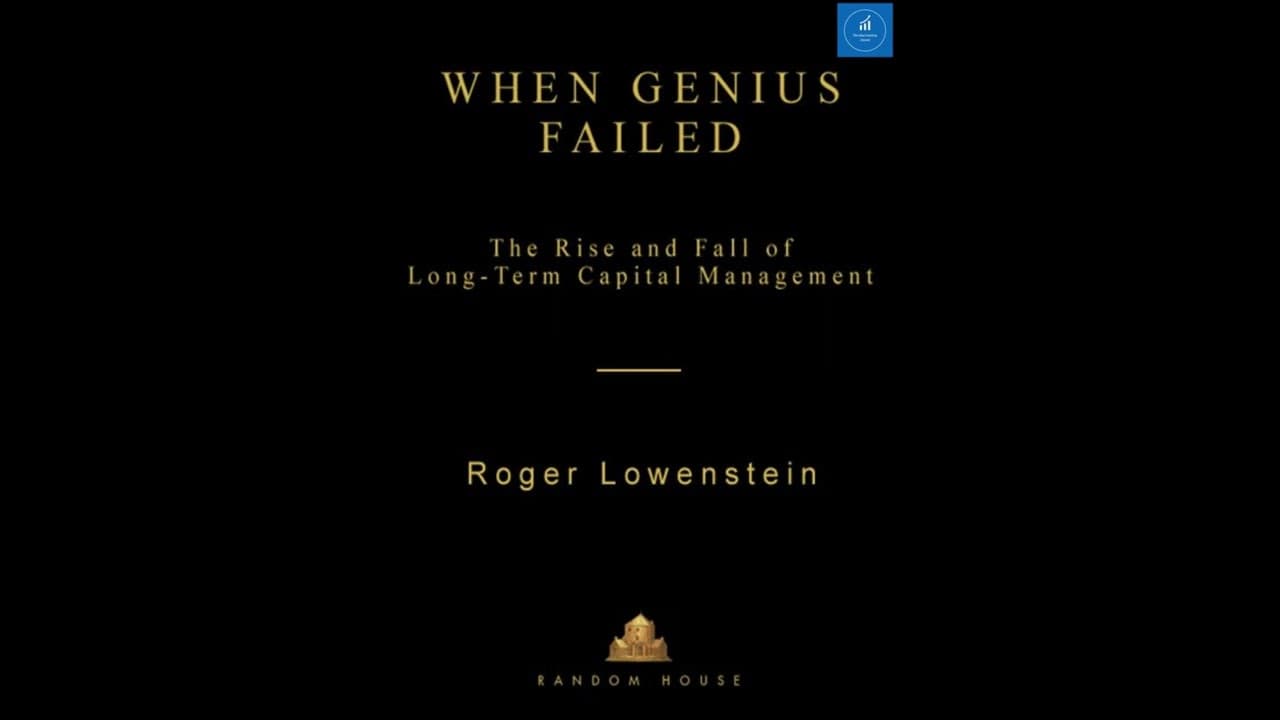
When Genius Failed book summary
TL;DR
A hedge fund, Long-Term Capital Management (LTCM), achieved immense success but ultimately collapsed due to overconfidence and risky investments.
Transcript
roger lowenstein when genius failed the rise and fall of long-term capital management do you know the story of icarus he was given a pair of wings that allowed him to fly and he took full advantage unfortunately for him he got a little carried away despite warnings not to he proceeded to fly as high as he could so high that the sun started to melt ... Read More
Key Insights
- 👻 Hedge funds like LTCM are subject to little regulation, allowing them to take on riskier investments.
- 🔍 LTCM's reliance on leverage magnified their potential returns but also exposed them to significant risk.
- ❓ The fund's success was attributed to its recruitment of renowned academics and experts, which lured many investors.
- ❓ LTCM's rapid growth and reliance on risky strategies made it vulnerable to market downturns.
- 🥺 The failure of LTCM's models and the Asian financial crisis led to significant losses and a near-collapse of the fund.
- 😨 The rescue of LTCM by a consortium of banks was driven by the fear of a widespread financial crisis.
- 🎮 The collapse of LTCM highlighted the limitations of even the most sophisticated models to predict and control market behavior.
- 🦔 Despite its collapse, one of LTCM's founders managed to retain his personal assets and returned to the hedge fund industry.
Install to Summarize YouTube Videos and Get Transcripts
Explore YouTube Video Summarizer or Get YouTube Transcript Extractor
Questions & Answers
Q: What was Long-Term Capital Management (LTCM) and how did it make money?
LTCM was a hedge fund founded in 1994 that used arbitrage strategies, buying and selling financial products with the expectation of price changes. It identified and exploited tiny discrepancies in the prices of assets to generate profit.
Q: How did LTCM leverage its investments?
LTCM borrowed heavily from banks, allowing them to invest far more than their actual capital. With an investment of only $1.25 billion, they could borrow around $20 billion.
Q: Why did banks willingly lend large sums of money to LTCM?
Banks believed LTCM's strategy contained minimal inherent risk, as the fund focused on financial anomalies that were thought to be less affected by market swings, such as changing interest rates.
Q: Why did LTCM's models fail during the 1997 Asian financial crisis?
LTCM's models failed because they assumed rational behavior by market participants, which is not always the case, especially during times of crisis. The models did not accurately predict the extent of panic and irrational decision-making that occurred during the crisis.
Summary & Key Takeaways
-
LTCM was a hedge fund that utilized arbitrage strategies to make profits in the financial markets, but it eventually brought the financial world to the brink of collapse during the 1997 Asian financial crisis and 1998 Russian default.
-
The fund heavily leveraged to maximize its returns, borrowing large amounts of money from banks who saw the strategy as low-risk due to its well-regarded management and academic models.
-
Employing academic expertise and mathematical formulas, LTCM attracted investors and became the largest hedge fund ever, surpassing both mutual funds and rival hedge funds in size and popularity.
Read in Other Languages (beta)
Share This Summary 📚
Summarize YouTube Videos and Get Video Transcripts with 1-Click
Try YouTube Summary with ChatGPT & Claude or YouTube Transcript Generator
Explore More Summaries from The value investing channel 📚






Summarize YouTube Videos and Get Video Transcripts with 1-Click
Try YouTube Summary with ChatGPT & Claude or YouTube Transcript Generator