Mars Up Close, Part 4: Pan Conrad | Nat Geo Live
TL;DR
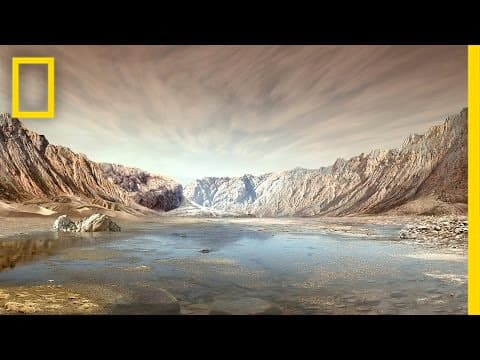
Exploring the violent past and potential habitability of Mars through geological analysis.
Transcript
( intro music ) ( applause ) Pan Conrad: We are on Mars! So, I'm going to go way back and to facilitate that I've provided you with my way back machine... a blank slate. Because I want to take you so far back, we don't have a picture of that. About 4.6 billion years ago, when the Universe was just a little more than half as old as it is now, the So... Read More
Key Insights
- 💁 Mars provides valuable insights into early planetary formation and potential habitability.
- 💦 Geological studies at Yellowknife Bay reveal evidence of past water and benign chemistry, suggesting a habitable environment.
- 🌸 The loss of Mars' protective magnetic field impacted its atmosphere and potential for habitability.
- 🛟 Geological analyses can help determine the evolution of Mars' environment and the potential for life on the planet.
- 🍝 Curiosity's exploration on Mars aims to uncover the planet's history and potential for past habitability.
- 💨 Past missions like Viking, Spirit, and Opportunity paved the way for current Mars explorations.
- ⌛ Decision-making based on real-time science data is crucial for successful Mars exploration.
Install to Summarize YouTube Videos and Get Transcripts
Explore YouTube Video Summarizer or Get YouTube Transcript Extractor
Questions & Answers
Q: How did the Solar System form, and what role did planetesimal collisions play?
The Solar System formed 4.6 billion years ago, with planetesimals colliding to create rocks and eventually planets, influencing their chemical composition and development.
Q: What evidence suggests past habitable conditions on Mars?
Geological studies at Yellowknife Bay on Mars reveal evidence of water and benign chemistry, indicating potential habitability for life in the past.
Q: How does Mars' lack of atmospheric protection affect its habitability?
Mars lost its protective magnetic field, resulting in the thin atmosphere present today, which raises questions about past habitability and environmental evolution.
Q: What insights can geological analyses on Mars provide about the potential for life?
By examining rocks at locations like Yellowknife Bay, scientists can assess past habitable conditions and the possibility of life evolving on Mars.
Summary & Key Takeaways
-
The Solar System formed around 4.6 billion years ago through a violent process of planetesimal collisions and material chemistry interactions.
-
Mars, Earth's closest neighbor, provides valuable insights into the evolution of planets and potential for life.
-
Geological studies on Mars, such as at Yellowknife Bay, reveal past habitable conditions and the importance of environmental evolution.
Read in Other Languages (beta)
Share This Summary 📚
Summarize YouTube Videos and Get Video Transcripts with 1-Click
Try YouTube Summary with ChatGPT & Claude or YouTube Transcript Generator
Explore More Summaries from National Geographic 📚



Summarize YouTube Videos and Get Video Transcripts with 1-Click
Try YouTube Summary with ChatGPT & Claude or YouTube Transcript Generator