Amending the Budget to Support Humans on the Moon in 2024 on This Week @NASA – May 17, 2019
TL;DR
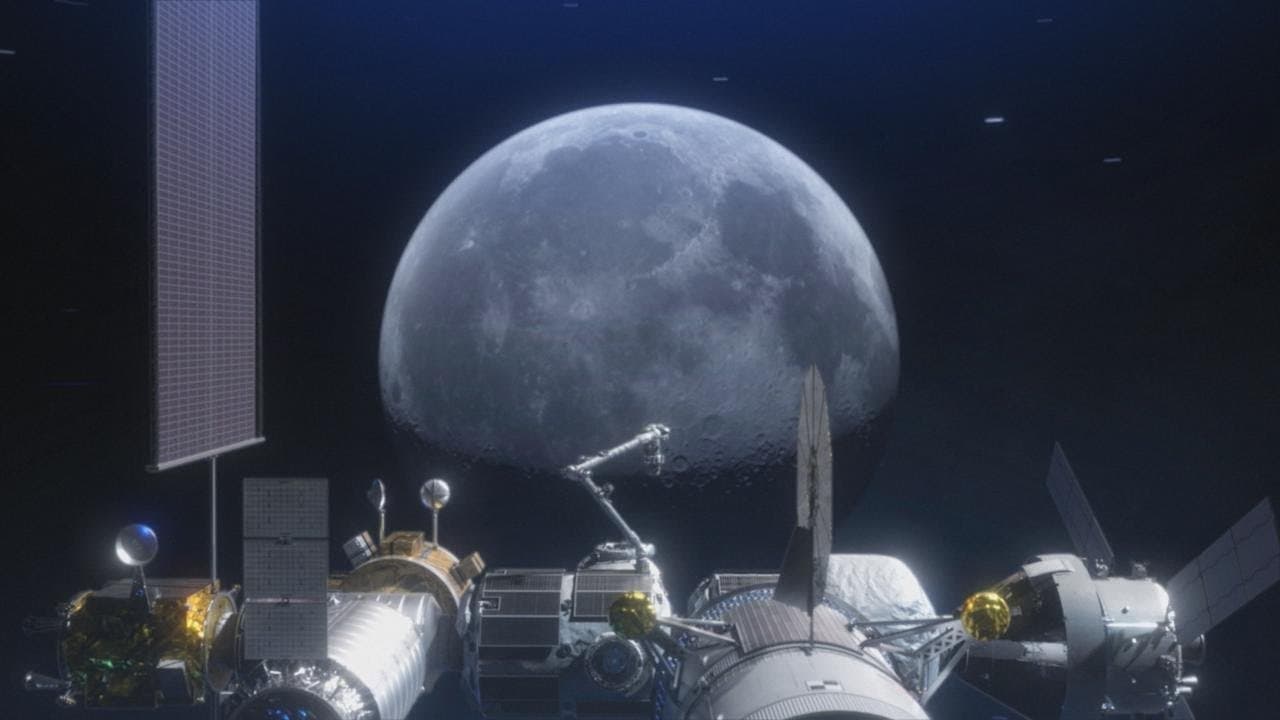
NASA receives additional funding to support accelerated plans to land astronauts on the Moon by 2024, while a study reveals evidence of moonquakes caused by shifting lunar surfaces.
Transcript
Amending the budget to support humans on the Moon in 2024 … What may be causing possible Moonquakes … And a virtual flight over an area of scientific interest on Mars … a few of the stories to tell you about – This Week at NASA! During an agencywide town hall at our headquarters on May 14, NASA Administrator Jim Bridenstine and other senior agency ... Read More
Key Insights
- 🧑🚀 NASA receives additional funding, affirming the administration's commitment to landing astronauts on the Moon by 2024.
- 🥺 Shifting lunar surfaces, called thrust faults, are still active, leading to moonquakes on the Moon.
- 💁 The study of Ultima Thule reveals valuable information about its development, geology, and composition.
- 💦 Curiosity's exploration of Mount Sharp on Mars aims to understand the disappearance of water on the planet.
- 🇲🇭 NASA's Mars Reconnaissance Orbiter has circled the Red Planet 60,000 times, providing crucial data for future Mars missions.
- 🧑🏭 The spacecraft acts as a data relay for Mars rovers and landers, including Curiosity.
- ❤️🩹 MRO is expected to reach the milestone of relaying 1 terabit of data by the end of the month.
Install to Summarize YouTube Videos and Get Transcripts
Explore YouTube Video Summarizer or Get YouTube Transcript Extractor
Questions & Answers
Q: How much additional funding did NASA receive to accelerate plans for Moon exploration?
NASA received $1.6 billion in new spending to support accelerated plans to land astronauts on the Moon by 2024, demonstrating a strong commitment from the administration.
Q: What causes moonquakes on the lunar surface?
Shifting lunar surfaces, known as thrust faults, are still active and likely producing moonquakes. These faults occur due to the gradual cooling of the Moon's interior, causing it to shrink.
Q: What did the study of Ultima Thule reveal?
The study of Ultima Thule, based on data collected by New Horizons during its flyby, provides insights into the object's development, geology, and composition. This exploration was the farthest in history and the first investigation of a well-preserved planetesimal.
Q: What insights can be gained from Curiosity's exploration of Mount Sharp on Mars?
Curiosity's aerial tour of Mount Sharp provides insights into regions that could explain the disappearance of water on Mars billions of years ago, a critical resource for life.
Summary & Key Takeaways
-
NASA received $1.6 billion in new spending to support accelerated plans to land astronauts on the Moon by 2024, indicating a strong commitment from the administration.
-
Data from seismometers on the Moon show that shifting lunar surfaces, known as thrust faults, are still active and likely causing moonquakes.
-
The first peer-reviewed scientific results of the Kuiper Belt object Ultima Thule, based on data gathered during New Horizons' historic flyby, provide insights into its development, geology, and composition.
Read in Other Languages (beta)
Share This Summary 📚
Summarize YouTube Videos and Get Video Transcripts with 1-Click
Try YouTube Summary with ChatGPT & Claude or YouTube Transcript Generator
Explore More Summaries from NASA 📚

Summarize YouTube Videos and Get Video Transcripts with 1-Click
Try YouTube Summary with ChatGPT & Claude or YouTube Transcript Generator