The Future of Exoplanets - Professor Carolin Crawford
TL;DR
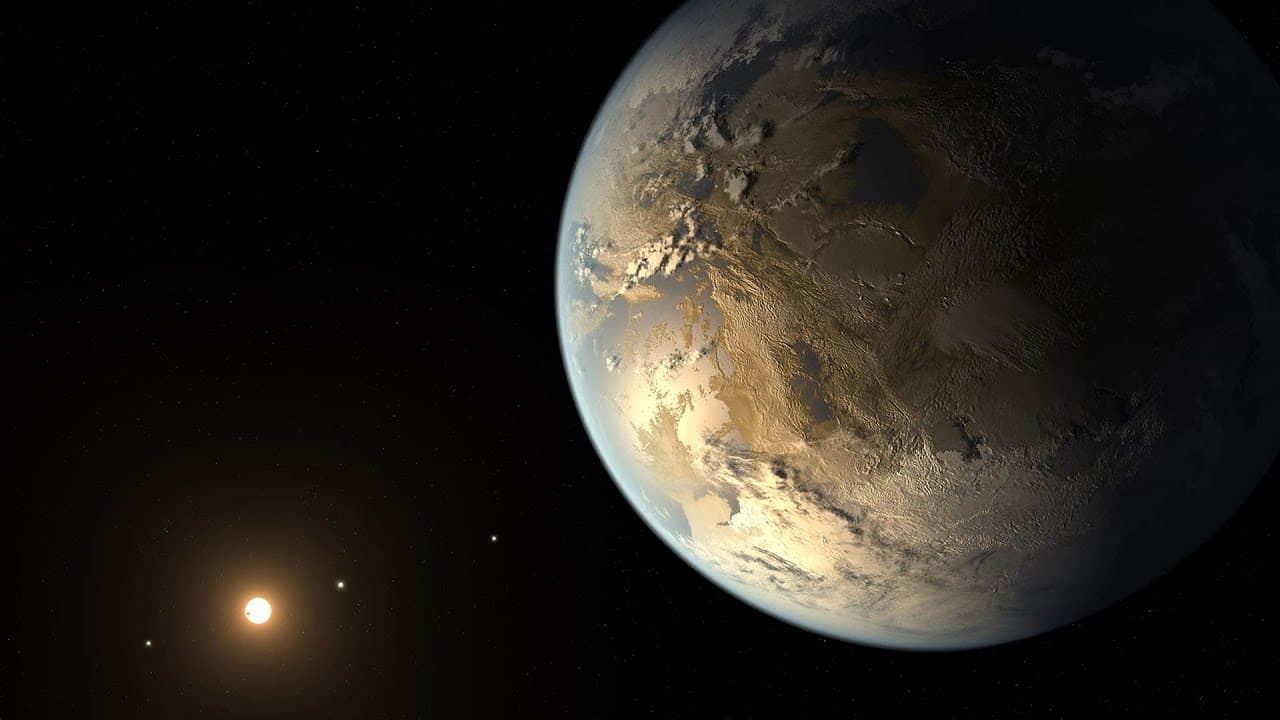
The field of exoplanet research has undergone significant changes in the past two years, with the discovery of thousands of exoplanets, revealing a diverse range of planet types and characteristics.
Transcript
and of course this is where we've seen a huge paradigm shift I talked about exoplanets two years ago if I just showed you how the field has changed it's just in those two years this is just the number of exoplanets discovered as an effect of time right just for the last two years here exoplanet research is changing hugely we now know of at least ni... Read More
Key Insights
- 👨🔬 Exoplanet research has witnessed a substantial increase in discoveries in the past two years, with at least nineteen thousand planets being detected in about 1200 systems.
- 🫢 The most common type of exoplanet is different from the rocky planets and gas giants in our solar system, falling within the size range of super Earths or mini Neptunes.
- 👻 Advancements in technology have allowed scientists to explore the chemical compositions and climates of exoplanet atmospheres, providing insights into their characteristics.
- 🕵️ Detecting atmospheres and studying Earth-like planets remains a challenge due to current technological limitations.
- 👨🔬 Research is focused on understanding the composition, climate, and conditions on various exoplanets.
- 🥹 The James Webb Space Telescope holds the potential to further advance our understanding of exoplanet atmospheres, including super Earths.
- 👨🔬 Exoplanet research offers incredible opportunities for scientific exploration without the need for physical travel or visitation to these distant planets.
Install to Summarize YouTube Videos and Get Transcripts
Explore YouTube Video Summarizer or Get YouTube Transcript Extractor
Questions & Answers
Q: How has exoplanet research changed in the past two years?
Exoplanet research has experienced a paradigm shift, with the discovery of thousands of exoplanets, leading to a better understanding of the diversity of planets in other solar systems.
Q: What is the most common type of exoplanet?
The most common type of exoplanet is either a super Earth or a mini Neptune, which sits within a size range of approximately one to four times the size of Earth.
Q: Why is it challenging to detect Earth-like planets?
Currently, our technology limits our ability to detect Earth-like planets. We can only detect planets relatively close to their stars, which means we are unable to observe planets that resemble our own Earth.
Q: How can the atmosphere of an exoplanet be characterized?
By observing the transit of a planet in front of its star, we can analyze the chemical imprints on the starlight, revealing the presence of certain molecules and even providing information about cloud layers and climate within the exoplanet's atmosphere.
Summary & Key Takeaways
-
In the last two years, significant advancements have been made in exoplanet research, resulting in the discovery of at least nineteen thousand planets in about 1200 systems.
-
These exoplanets have varied sizes, with a common type known as super Earths or mini Neptunes, which are different from the rocky planets and gas giants in our solar system.
-
Research is focused on understanding the composition and characteristics of these exoplanets, including their atmospheres and climate.
Read in Other Languages (beta)
Share This Summary 📚
Summarize YouTube Videos and Get Video Transcripts with 1-Click
Try YouTube Summary with ChatGPT & Claude or YouTube Transcript Generator
Explore More Summaries from Gresham College 📚


Summarize YouTube Videos and Get Video Transcripts with 1-Click
Try YouTube Summary with ChatGPT & Claude or YouTube Transcript Generator