Is Trudeau being honest about his climate policy?
TL;DR
The discussion highlights the hidden costs of climate policies and calls for honest political dialogue.
Transcript
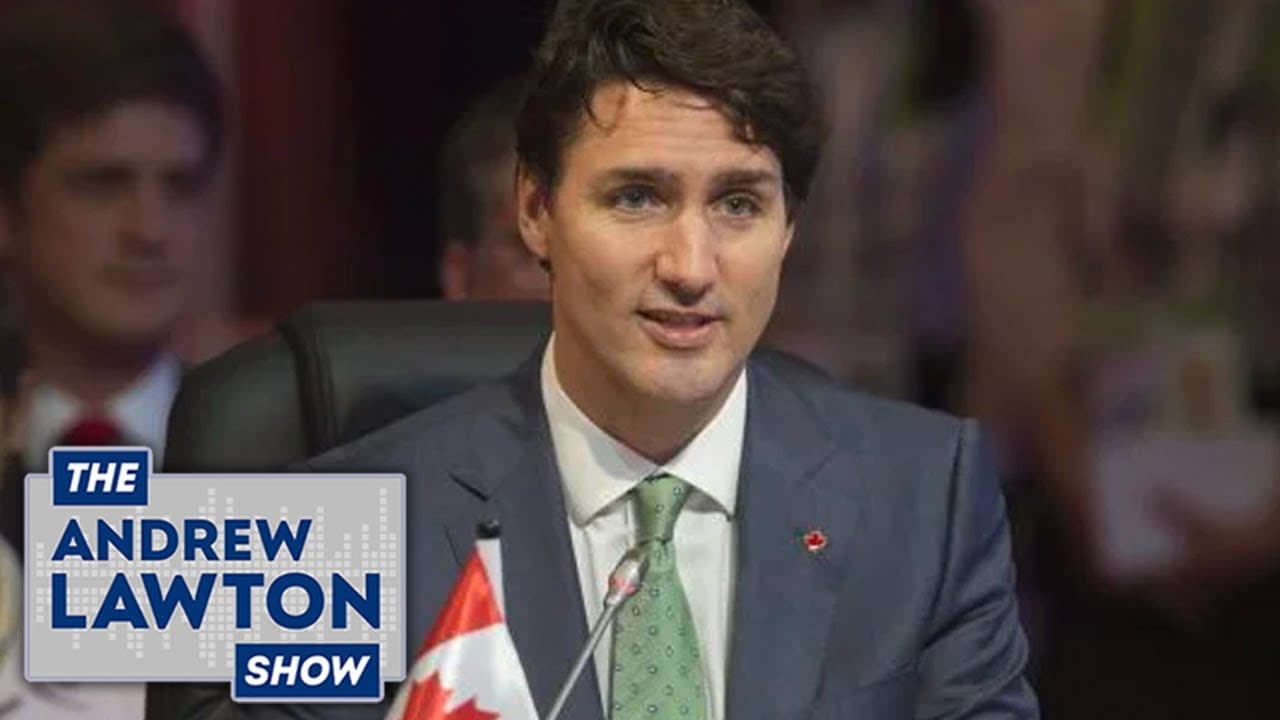
you're tuned in to the Andrew lton show I believe we have Ross mckitrick back on the line now Ross uh good to talk to you here what is it you feel is really the the misdirection taking place here where the government is saying on one hand that this is not a heavy-handed regulatory process on its part um well the the comment that I made in my opad w... Read More
Key Insights
- 🇨🇫 The complexity of climate policies often obscures their real costs, potentially misleading the public regarding their efficacy.
- 😮 Transparency about the financial implications of climate strategies is essential for responsible governance amidst rising living costs.
- 🎯 There is significant skepticism about the feasibility of reaching aggressive climate targets without incurring substantial costs.
- 🥅 Political leaders must reconcile their stated commitments to climate goals with practical funding and consumer impacts.
- 👨🔬 Research focused on reducing carbon emissions has been ongoing for decades with little tangible progress, illustrating the challenges in this field.
- ⚖️ An effective climate policy should transparently address the balance between economic feasibility and environmental obligation.
- 🎟️ Current discussions on climate policy often miss critical evaluations of existing technologies and their potential to drive change.
Install to Summarize YouTube Videos and Get Transcripts
Explore YouTube Video Summarizer or Get YouTube Transcript Extractor
Questions & Answers
Q: What are the primary criticisms of the current Canadian climate policies?
The primary criticisms include a disconnect between the government's commitment to effective climate policy and the actual cost implications of their regulations. While the carbon tax is highlighted, there are additional burdens from policies like the clean fuel standard and energy efficiency codes, raising overall costs significantly without clear benefits towards climate goals.
Q: How do the Conservatives address the costs of climate policies?
The Conservatives point out the high costs associated with climate policies, particularly the consumer carbon tax. However, they lack a clear plan to achieve emissions reduction targets such as the Paris Agreement while addressing public concerns over rising costs and cost of living, creating an incoherent policy stance.
Q: What does the speaker suggest is missing from political discussions about climate policy?
The speaker suggests a critical absence of honest dialogue regarding the costs of climate policies. There’s a need for politicians to openly communicate the financial impacts of climate commitments or to scale back ambitions to match public willingness to pay for these policies.
Q: What challenges exist in developing technology for emissions reduction?
Current challenges include the absence of viable technology to decouple carbon dioxide emissions from fossil fuel combustion. Although there has been research over decades, breakthroughs remain elusive, with existing methods like carbon capture and storage still being limited in applicability.
Q: How does the speaker view the role of government in promoting research and development for climate solutions?
The speaker believes the government has taken some steps towards funding research in emissions reduction technologies, though he points out that Canada lags compared to other countries. There is skepticism whether a significant technological breakthrough can be achieved in the short term, emphasizing the need for sustained investment in R&D.
Q: Why does the speaker argue that market-based solutions may not be the answer?
The speaker argues that while market-based solutions are often promoted as a way to lower costs and remain within climate goals, there is currently no proven technology capable of achieving significant reductions in carbon emissions effectively. Market optimism must be coupled with realistic assessments of technology limitations.
Summary & Key Takeaways
-
The conversation focuses on the misalignment between proclaimed climate policy goals and the hidden costs associated with government regulations, emphasizing the need for transparency about the financial implications of these policies.
-
Both the Liberal and Conservative parties face criticism for their approaches to climate policy, with calls for them to be realistic about costs versus commitments like the Paris Agreement and Net Zero goals.
-
The lack of current technological advancements in carbon emissions reduction is highlighted, with a strong emphasis on the need for research and development to find viable solutions.
Read in Other Languages (beta)
Share This Summary 📚
Summarize YouTube Videos and Get Video Transcripts with 1-Click
Try YouTube Summary with ChatGPT & Claude or YouTube Transcript Generator
Explore More Summaries from True North 📚


Summarize YouTube Videos and Get Video Transcripts with 1-Click
Try YouTube Summary with ChatGPT & Claude or YouTube Transcript Generator