Checkpoints
TL;DR
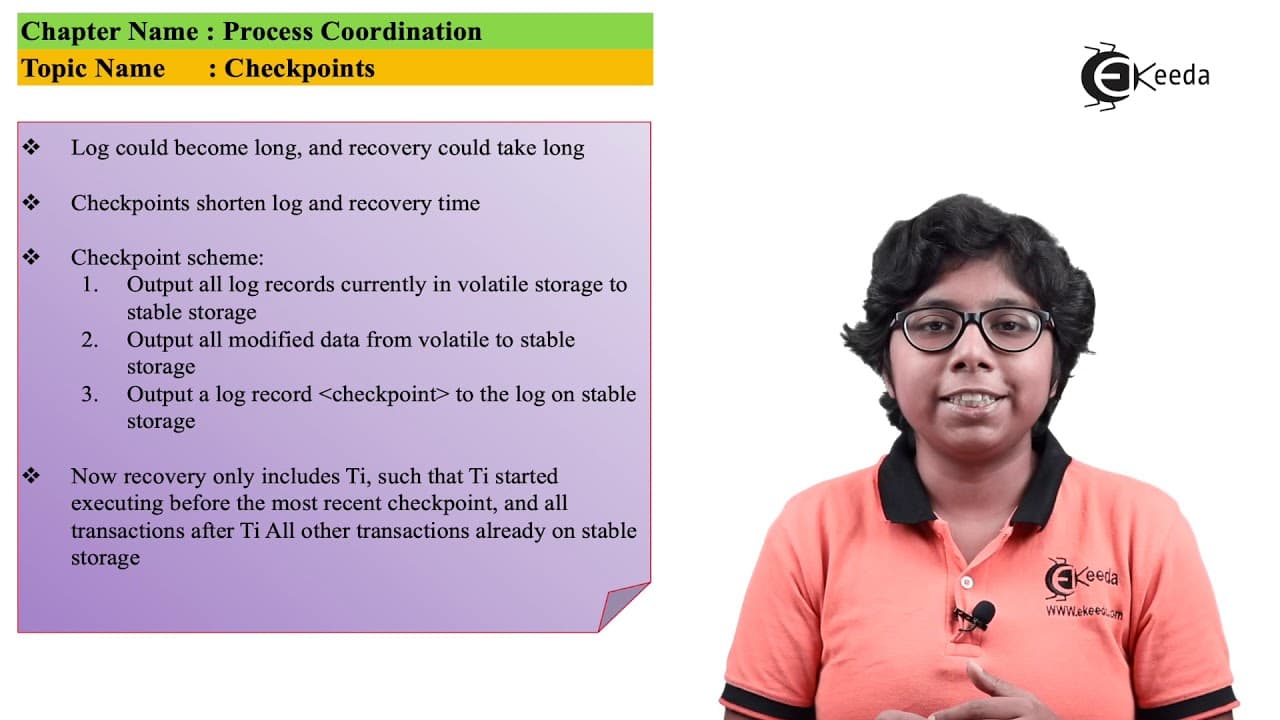
Checkpoints in atomic transactions help reduce the time-consuming process of searching through logs for recovery decisions, allowing for quicker redo and undo operations based on system errors or logical errors.
Transcript
click the bell icon to get latest videos from akira hello friends today we will discuss about a technique called checkpoints which is implemented in short the atomicity in there to make transactions we know that the prison section should be undone or returned with the basis of the recovery techniques on the data to make transactions so now it is de... Read More
Key Insights
- 🫀 Checkpoints reduce the time required for redo and undo operations in atomic transactions by eliminating the need to search through the entire log.
- 🍵 They involve periodically examining the status of transactions and performing specific actions to update stable storage and handle undo operations.
- 🙂 Checkpoints can introduce overhead and slightly prolong recovery time, but they optimize the recovery process overall.
Install to Summarize YouTube Videos and Get Transcripts
Explore YouTube Video Summarizer or Get YouTube Transcript Extractor
Questions & Answers
Q: What is the purpose of implementing checkpoints in atomic transactions?
Checkpoints aid in making recovery decisions by reducing the need to search through the entire log. They help determine whether transactions should be redone or undone based on the data accessed and modified during execution.
Q: How does the use of checkpoints in atomic transactions affect recovery time?
Checkpoints help reduce recovery time by allowing for quicker redo and undo operations. However, they can introduce overhead in the form of periodic examination and writing of modified data, which may slightly extend the overall recovery process.
Q: How are checkpoints performed in atomic transaction systems?
Checkpoints involve several actions, including writing modified data from volatile storage to stable storage, writing out log records from volatile storage, and undoing data residing in volatile storage. These actions collectively ensure a checkpoint is performed.
Q: What role do checkpoints play in efficient recovery algorithms for atomic transactions?
Checkpoints allow recovery algorithms to determine the scope of redo and undo operations more efficiently. By referencing the checkpoint and specific transaction instructions in the log, the recovery algorithm can focus on the necessary operations and skip unnecessary log searching.
Summary & Key Takeaways
-
Checkpoints are used in atomic transactions to determine whether transactions should be redone or undone based on recovery techniques.
-
They provide advantages such as reducing the time taken for recovery, but can also introduce overhead and longer recovery time in certain situations.
-
Checkpoints involve periodically examining the transaction's completion status and performing actions like writing modified data to stable storage and undoing any relevant operations.
Read in Other Languages (beta)
Share This Summary 📚
Summarize YouTube Videos and Get Video Transcripts with 1-Click
Try YouTube Summary with ChatGPT & Claude or YouTube Transcript Generator
Explore More Summaries from Ekeeda 📚





Summarize YouTube Videos and Get Video Transcripts with 1-Click
Try YouTube Summary with ChatGPT & Claude or YouTube Transcript Generator