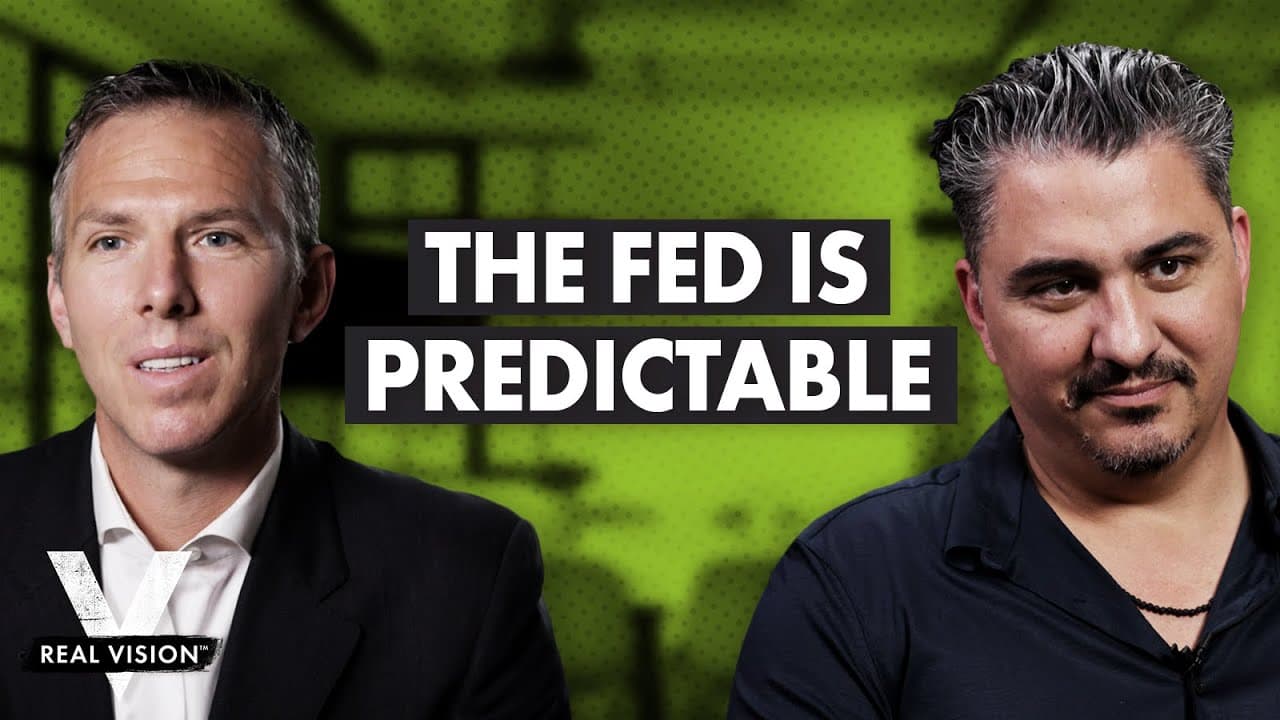
"Governments Don't Want to be Embarrassed" (w/ Matt Rowe & Jared Dillian)
TL;DR
The reopening of the economy after the coronavirus pandemic will not lead to an instant recovery, but rather a slow and challenging process with a possibility of a deep recession. While current equity valuations may be high, they are not necessarily indicative of the overall economy.
Transcript
MATT ROWE: And maybe that's a good segue way to talking about emerging from the coronavirus stall or coronavirus halt to the world's business. My contention is that once things reopen or things restart, it's not going to be a magic grand opening of an amusement park. It's more going to be like walking past the yellow tape of a crime scene and seein... Read More
Key Insights
- ❓ The reopening of the economy will not result in an instant recovery, with a prolonged recession expected due to extended unemployment benefits and challenges in rehiring.
- ✋ Equity valuations may be high, but they do not necessarily reflect the actual state of the economy.
- 🪛 The government's response, including the actions of the Federal Reserve, is driven by a desire to avoid market failures and minimize embarrassment.
- 🧑🏭 Cultural factors and government interventions can make shorting specific assets challenging.
- 🪡 The stock market and the economy are not always closely correlated, emphasizing the need for careful analysis in making investment decisions.
- 🙃 The government's support for certain industries, such as airlines, will likely result in a tradeoff between stability and limited upside potential.
- 🥺 During times of crisis, rules and regulations often change, leading to unpredictability in financial markets.
Install to Summarize YouTube Videos and Get Transcripts
Explore YouTube Video Summarizer or Get YouTube Transcript Extractor
Questions & Answers
Q: How long does Jared Dillian believe the recession will last after the reopening of the economy?
Dillian suggests that the recession could last for around 12 to 18 months due to extended unemployment benefits and slow rehiring processes.
Q: Does current equity valuation reflect the state of the economy?
While equity valuations are high, Dillian argues that they are not directly correlated with the overall economy, highlighting the difference between the stock market and the economy.
Q: How does the government's response to the crisis impact investment decisions?
The government's actions, particularly those of the Federal Reserve, aim to prevent market failures and minimize embarrassment. Understanding their predictable reaction function can present investment opportunities.
Q: Why is shorting specific assets such as Canadian housing or US stocks challenging?
Cultural factors play a role in the buoyancy of certain asset classes, and government interventions often prevent market failures, making shorting attempts ineffective.
Summary & Key Takeaways
-
The reopening of the economy may not lead to a quick recovery, but rather a prolonged recession lasting up to 18 months due to extended unemployment benefits and difficulties in rehiring.
-
Equity valuations are high, but their correlation with the overall economy is not as strong as it has been historically.
-
The government's response to the crisis, including the actions of the Federal Reserve, is aimed at preventing market failures and minimizing embarrassment, leading to predictable reactions and potential investment opportunities.
-
Shorting specific assets such as Canadian housing or stocks in the US may be futile due to cultural factors and government interventions.
Read in Other Languages (beta)
Share This Summary 📚
Summarize YouTube Videos and Get Video Transcripts with 1-Click
Try YouTube Summary with ChatGPT & Claude or YouTube Transcript Generator
Explore More Summaries from Real Vision 📚

Summarize YouTube Videos and Get Video Transcripts with 1-Click
Try YouTube Summary with ChatGPT & Claude or YouTube Transcript Generator