2. What Are the Classifications of Ratios?
TL;DR
The classification of ratios has four broad categories: liquidity ratios, capital structure or leverage ratios, activity ratios, and profitability ratios. Liquidity ratios compare short-term assets with short-term liabilities to assess whether a business can meet short-term expenses and obligations. The current ratio equals current assets divided by current liabilities. Read on for formulas, examples, and the meaning of positive net working capital.
Transcript
now let's get into the topic today we are going to talk about the various classifications of issues let me just come back here whether anyone that's facing difficulty in listening to my voice it is I would request you to get in touch with our organizer suite linnekar you can send her a message and be able to Vega okay fine thank you now what are th... Read More
Key Insights
- 🥳 Ratios can be classified into categories such as liquidity ratios, capital structure or leverage ratios, activity ratios, and profitability ratios.
- 🍉 Liquidity ratios focus on the short-term assets and liabilities of a company to determine its ability to meet short-term expenses and obligations.
- 🥳 The current ratio is a commonly used liquidity ratio, calculated by dividing current assets by current liabilities.
- 🧘 A comfortable liquidity position is indicated when current assets exceed current liabilities.
- 🧘 Positive net working capital represents the excess of current assets over current liabilities and signifies a healthy liquidity position.
- 🥺 Negative working capital, where current liabilities exceed current assets, can lead to financial difficulties and operational problems.
- 🧘 Maintaining a healthy liquidity position is crucial for a company's financial stability and ability to meet its short-term obligations.
Install to Summarize YouTube Videos and Get Transcripts
Explore YouTube Video Summarizer or Get YouTube Transcript Extractor
Questions & Answers
Q: What is the classification of ratios?
Ratios are broadly classified into four categories: liquidity ratios, capital structure or leverage ratios, activity ratios, and profitability ratios. The discussion then focuses on liquidity ratios.
Q: What do liquidity ratios measure?
Liquidity ratios measure a company's ability to meet short-term expenses and short-term obligations. They focus on the relationship between short-term assets and short-term liabilities.
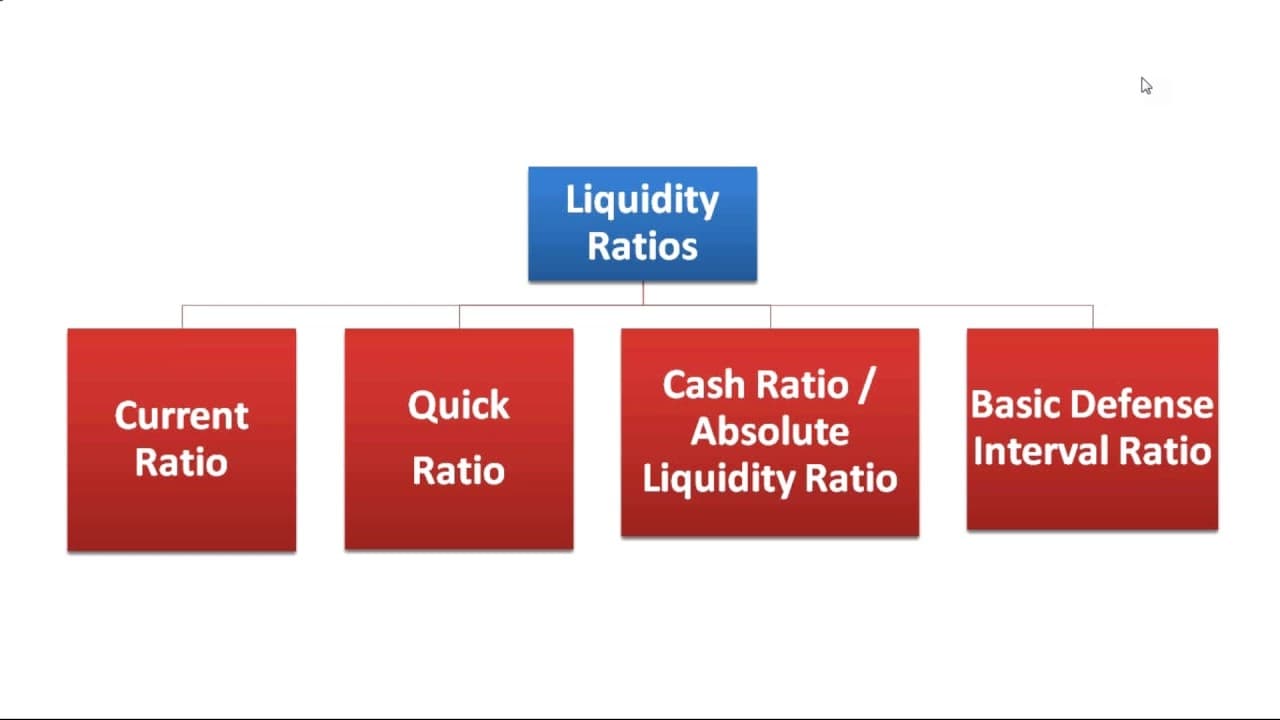
Q: How are liquidity ratios classified?
Liquidity ratios are classified into current ratio, quick ratio, cash or absolute liquidity ratio, and basic defense interval ratio. The discussion concentrates on the ratios with immediate practical relevance and application in professional examinations.
Q: What is the formula for the current ratio?
The current ratio is calculated as current assets divided by current liabilities. It compares assets convertible into cash within one year with liabilities payable within one year.
Q: What indicates a comfortable liquidity position?
A comfortable liquidity position exists when current assets are greater than current liabilities. This means the business has more short-term assets available than short-term obligations it must pay.
Q: How does the example calculate the current ratio?
The example has total current liabilities of 300 and total current assets of 600. Dividing 600 by 300 shows that the business has twice as many current assets as current liabilities, which the transcript describes as a comfortable liquidity position.
Q: What is positive net working capital?
Positive net working capital is the excess of current assets over current liabilities. In the example, it is 600 minus 300, which equals 300, and it represents long-term funds used to fund current assets.
Q: Why are current assets needed to pay current liabilities?
Current liabilities must be paid within one year, so the business needs cash or cash-equivalent resources during that period. Current assets provide those resources because they can be converted into cash within one year.
Summary & Key Takeaways
-
The video discusses the different classifications of ratios, including liquidity ratios, capital structure or leverage ratios, activity ratios, and profitability ratios.
-
Liquidity ratios focus on the short-term assets and liabilities of a company to determine its ability to meet short-term expenses and obligations.
-
The video explains the current ratio as a measure of liquidity, where current assets should be greater than current liabilities to indicate a comfortable liquidity position.
Read in Other Languages (beta)
Share This Summary 📚
Summarize YouTube Videos and Get Video Transcripts with 1-Click
Try YouTube Summary with ChatGPT & Claude or YouTube Transcript Generator
Explore More Summaries from Elearnmarkets by StockEdge 📚


Summarize YouTube Videos and Get Video Transcripts with 1-Click
Try YouTube Summary with ChatGPT & Claude or YouTube Transcript Generator