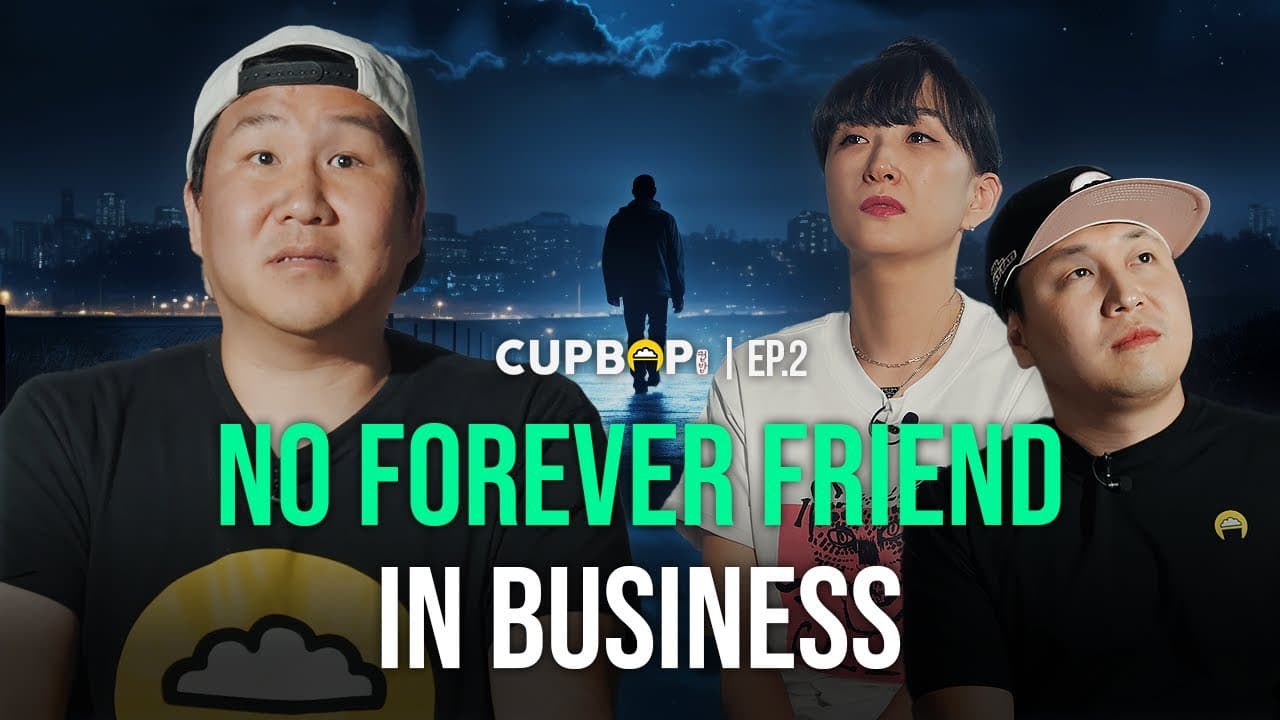
When $100M Business Ownership Ends a Friendship | CUPBOP EP.2
TL;DR
Cupbop's success story reveals challenges in business partnerships.
Transcript
Got married, 2007. One day I just decided I want to do my own business. If he says, like, you know, I want to do this, it's gotta do it. He immediately bought a food trailer on the day I guess First day, we sold out. So I thought, yeah! But second day, not a lot of people actually came to me, but I don't want to just stand up waiting the customer.... Read More
Key Insights
- The founders of Cupbop started with a food truck, quickly gaining popularity by engaging customers with unique tactics.
- Dok, a former finance professional, joined Cupbop to bring structure and organization to the rapidly growing business.
- The company faced internal challenges as roles and ownership were not clearly defined, leading to conflicts among partners.
- The importance of having aligned visions among major shareholders is crucial for the company's growth and sustainability.
- A third-party consulting firm was hired to create a fair company structure, but it led to further tensions and a coup attempt.
- The emotional impact of business conflicts on personal relationships and families is significant, as seen in the founders' experiences.
- Despite the challenges, the founders maintained resilience and received support from employees, partners, and investors.
- The story highlights the need for a strong system in business to ensure trust and avoid reliance solely on personal relationships.
Install to Summarize YouTube Videos and Get Transcripts
Explore YouTube Video Summarizer or Get YouTube Transcript Extractor
Questions & Answers
Q: What led to the initial success of Cupbop?
Cupbop's initial success was driven by the founders' innovative approach to customer engagement. They started with a food truck and quickly gained popularity by creating an interactive and entertaining experience for customers. This unique approach helped them stand out and attract a loyal customer base.
Q: How did Dok contribute to Cupbop's growth?
Dok, who had a background in finance, joined Cupbop to help bring structure and organization to the rapidly growing business. He focused on creating a five-year plan and implementing efficient systems to support the company's expansion. His expertise in finance and strategic planning played a key role in Cupbop's development.
Q: What challenges did Cupbop face as it expanded?
As Cupbop expanded, it faced challenges related to unclear roles and ownership among its founders. These issues led to conflicts and power struggles, highlighting the need for a clear separation of roles and responsibilities. The lack of alignment in shareholder visions further complicated the situation, affecting decision-making and company growth.
Q: Why was a third-party consulting firm hired by Cupbop?
A third-party consulting firm was hired by Cupbop to establish a fair and objective company structure. The goal was to create a system that allowed for fair competition and growth opportunities for employees. However, this decision led to further tensions and disagreements among the founders, as not all were willing to compete with employees.
Q: What was the impact of the internal conflicts on Cupbop's founders?
The internal conflicts at Cupbop had a significant emotional impact on the founders, affecting their personal relationships and family life. The stress of the power struggles and the coup attempt took a toll on their well-being, leading to moments of self-reflection and questioning of their business decisions.
Q: How did Cupbop regain stability after the coup attempt?
Cupbop regained stability after the coup attempt through the support of its employees, partners, and investors. The founders were able to navigate the challenges and eventually bought out the dissenting partners. This support network played a crucial role in helping the company overcome the crisis and continue its growth trajectory.
Q: What lesson does the Cupbop story highlight about business partnerships?
The Cupbop story highlights the importance of having aligned visions and clearly defined roles in business partnerships. It underscores the need for a strong system to ensure trust and avoid reliance solely on personal relationships. The experience serves as a cautionary tale about the potential pitfalls of business partnerships and the need for careful consideration.
Q: What future plans did Cupbop have after overcoming the internal conflicts?
After overcoming the internal conflicts, Cupbop aimed to solidify its position as a national brand. The founders focused on expanding their presence and continuing to innovate in the food industry. They recognized the importance of having a strong system in place to support their growth ambitions and ensure long-term success.
Summary & Key Takeaways
-
Cupbop's journey began with a food truck that gained popularity through innovative customer engagement. The founders faced challenges as the business grew, particularly in defining roles and ownership. Dok, a finance professional, joined to bring organization to the company, but internal conflicts arose.
-
The importance of aligning shareholder visions became evident when a coup attempt threatened the company's stability. A third-party consulting firm was hired to establish a fair structure, but it led to disagreements among partners. The situation highlighted the emotional toll of business conflicts on personal relationships.
-
Despite the turmoil, the founders of Cupbop received support from employees, partners, and investors, allowing them to regain control. The experience underscored the need for a strong business system to foster trust and ensure long-term success, beyond personal relationships.
Read in Other Languages (beta)
Share This Summary 📚
Summarize YouTube Videos and Get Video Transcripts with 1-Click
Try YouTube Summary with ChatGPT & Claude or YouTube Transcript Generator
Explore More Summaries from EO 📚

Summarize YouTube Videos and Get Video Transcripts with 1-Click
Try YouTube Summary with ChatGPT & Claude or YouTube Transcript Generator