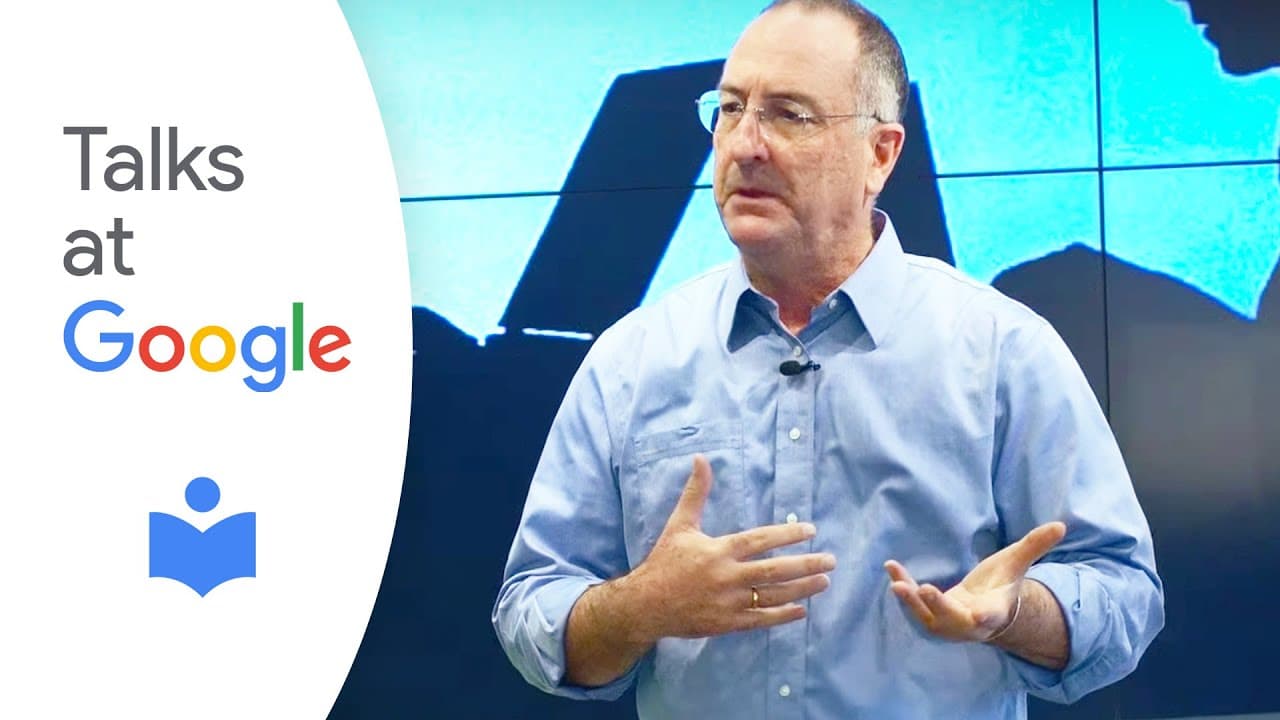
Media Against Fascism: From World War II to the Psychedelic Sixties | Fred Turner | Talks at Google
TL;DR
The rise of digital sociability, as seen through platforms like Facebook, can be traced back to World War II and the birth of "the democratic surround" - a media form designed to counter authoritarianism. However, the current state of digital sociability raises questions about the true democratic nature of these platforms.
Transcript
[MUSIC PLAYING] [APPLAUSE] FRED TURNER: Thanks, guys. Great to see you here. Thank you for coming out. Appreciate it, especially on a beautiful day. You could be out walking the campus. It's great to have you here. I'm really excited to be here, partly because I think we're standing or sitting in a place that has a history that we tend not to know.... Read More
Key Insights
- 💆 The origin of digital sociability can be found in the desire to counter authoritarianism in mass media during World War II.
- 😑 The 'democratic surround' emerged as a media design concept focused on promoting collaboration and individual expression.
- 🤨 The current state of digital sociability raises questions about its true democratic nature, especially considering the rise of echo chambers and the spread of misinformation.
Install to Summarize YouTube Videos and Get Transcripts
Explore YouTube Video Summarizer or Get YouTube Transcript Extractor
Questions & Answers
Q: How did the concept of digital sociability originate?
Digital sociability can be traced back to the desire to counter authoritarianism in mass media during World War II, resulting in the concept of the 'democratic surround'.
Q: How did the 'democratic surround' influence the 1960s counterculture and the development of digital media?
The 'democratic surround' shaped the counterculture of the 1960s, leading to the development of multimedia environments and psychedelia. This laid the foundation for the social media platforms of today.
Q: Is digital sociability truly democratic?
While digital sociability platforms like Facebook were initially seen as decentralized and democratic, the rise of Donald Trump and the spread of echo chambers on social media have raised questions about their true democratic nature.
Q: How did the 'democratic surround' concept influence propaganda efforts during World War II?
The 'democratic surround' was utilized in propaganda efforts to create a perception of democracy and collaboration in foreign countries. However, it also functioned as a form of intensive monitoring and surveillance.
Summary & Key Takeaways
-
The concept of Facebook and other digital platforms as tools for individualized, expressive sociability originated from the desire to counter authoritarianism in mass media during World War II.
-
The 'democratic surround', an architectural and media design concept, emerged during this time as a means to create a democratic mindset and promote collaboration.
-
The rise of Donald Trump and the spread of echo chambers on social media challenge the belief that decentralized, individualistic media always promote democracy.
Read in Other Languages (beta)
Share This Summary 📚
Summarize YouTube Videos and Get Video Transcripts with 1-Click
Try YouTube Summary with ChatGPT & Claude or YouTube Transcript Generator
Explore More Summaries from Talks at Google 📚
Summarize YouTube Videos and Get Video Transcripts with 1-Click
Try YouTube Summary with ChatGPT & Claude or YouTube Transcript Generator