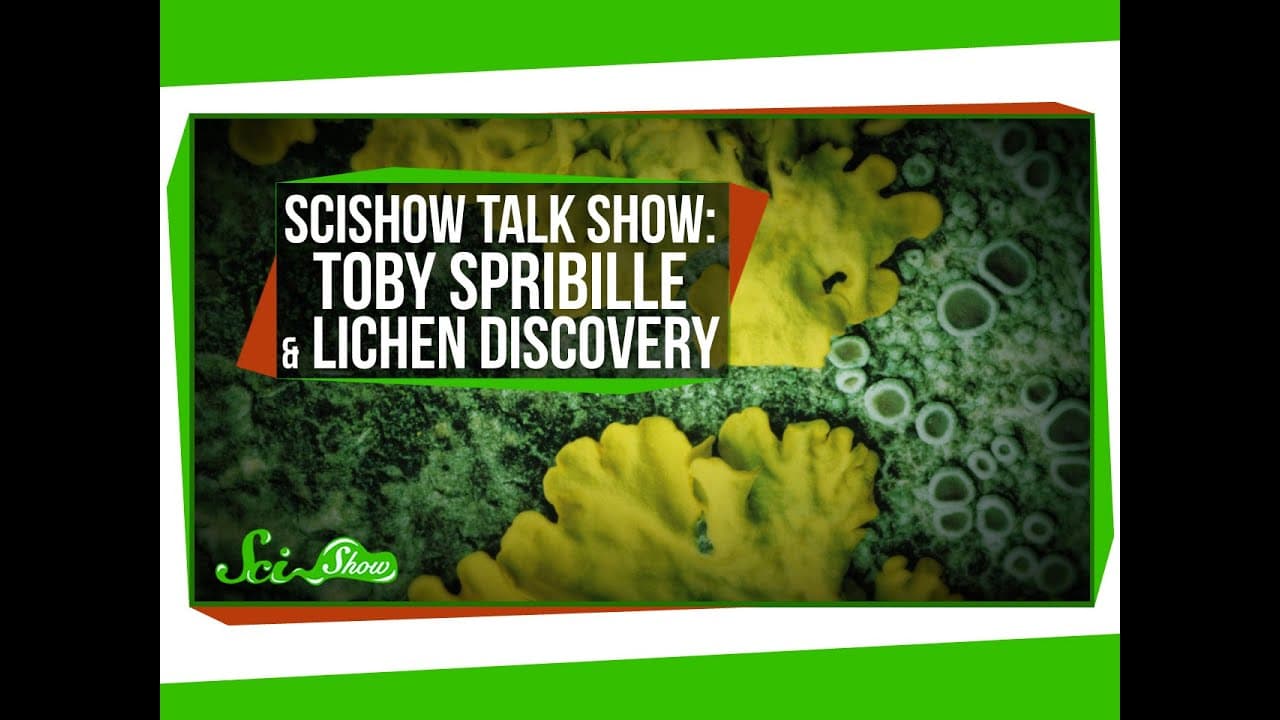
SciShow Talk Show with Toby Spribille & A New Lichen Discovery
TL;DR
Toby Revilla discusses the unique characteristics and scientific study of lichens, while Jesse unveils an African Pixie Frog, explaining its behavior and features.
Transcript
hello and welcome to scishow talk show it's that day on scishow where we talk to interesting people about interesting stuff today we're talking to Toby Revilla who I'm guessing from the contents of my table studies like him is that right that's right that's what I do and do you study like in a particular place this is well I started studying lichen... Read More
Key Insights
- 🍄 Lichens are unique microbial communities consisting of fungi and algae in a symbiotic relationship.
- 🖤 The study of lichens is challenging due to their diversity and lack of fossil records.
- 💁 Lichens have evolved multiple times on Earth and have different forms of symbiotic relationships.
- 🫤 Fungi, the main component of lichens, originated around a billion years ago, predating terrestrial plants.
- 🌥️ African Pixie Frogs, also known as African bullfrogs, are the second-largest frog species and have distinct features, such as large teeth and strong back legs.
- 💀 Pixie frogs have unique survival mechanisms, including burrowing during the dry season and creating cocoons of dead cells to retain moisture.
- 😨 Male pixie frogs take care of their eggs, ensuring their survival during the hatching process.
- 🐸 Handling frogs should be limited to avoid transferring toxins from human skin to the frog's sensitive skin.
- 🐸 Toads, a different species from frogs, have poisonous glands behind their eyes, while frogs have toxins on their skin.
- 😅 African Pixie Frogs are carnivorous and can eat small birds, lizards, and even other frogs.
Install to Summarize YouTube Videos and Get Transcripts
Explore YouTube Video Summarizer or Get YouTube Transcript Extractor
Questions & Answers
Q: What are lichens and how do they differ from plants and animals?
Lichens are microbial communities consisting of fungi and algae. Unlike plants and animals, lichens are self-assembling and self-replicating.
Q: How do lichens reproduce and grow?
Lichens can reproduce when bits of their structure break off and start anew. They can also grow in different environments, from deserts to forests.
Q: How did lichens evolve?
The origin of lichens is not well-documented, but they are believed to have evolved alongside terrestrial life. Most knowledge about ancient lichens comes from DNA sequences and preserved fossils.
Q: Are all lichens the same?
No, lichens are highly diverse and can differ in structure, color, and the types of symbiosis they form. Some lichens, like Parma Lloyd macro lichens, have been more successful in evolution.
Summary & Key Takeaways
-
Toby Revilla is an expert in lichens and discusses their unique microbial community structure and symbiosis with algae.
-
Lichens are different from plants and animals as they consist of microbial communities that self-assemble and self-replicate.
-
Lichens are crucial for the survival of algae, providing them with nutrients and a safe environment to live in.
Read in Other Languages (beta)
Share This Summary 📚
Summarize YouTube Videos and Get Video Transcripts with 1-Click
Try YouTube Summary with ChatGPT & Claude or YouTube Transcript Generator
Explore More Summaries from SciShow 📚
Summarize YouTube Videos and Get Video Transcripts with 1-Click
Try YouTube Summary with ChatGPT & Claude or YouTube Transcript Generator