(2024 Edition) Writing the GRE Issue Essay Step by Step
TL;DR
Learn to write a GRE issue essay with a structured template.
Transcript
hello everybody Welcome to the 2024 edition of writing the GRE issue essay step by step so this was one of my most popular videos on the original YouTube channel which was 6 years ago if you can believe that 6 years ago when I sat down with a really crappy microphone and no clue what I was doing at the time and I thought you know what let's... Read More
Key Insights
- The video updates a previous popular guide on writing the GRE issue essay, addressing past audio issues and refining the teaching approach.
- The recommended essay structure is a five-paragraph format, which helps in organizing thoughts and increasing word count efficiently.
- The GRE issue essay is scored from 0 to 6, with word count playing a significant role in determining the score.
- A formulaic writing style can achieve a perfect score, as it minimizes risk and maintains focus on the essay topic.
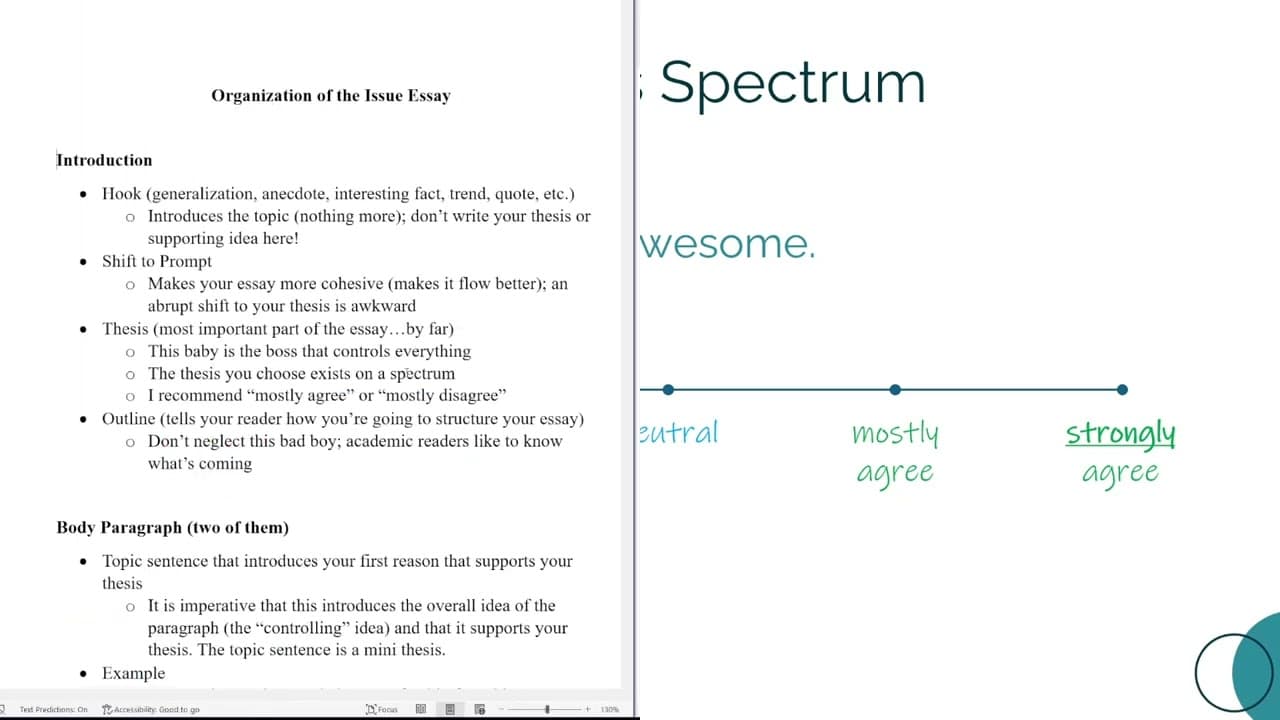
- The introduction consists of a hook, a shift to the prompt, a thesis statement, and an outline, setting the stage for the essay.
- The thesis should be nuanced, avoiding strong agreement or disagreement to reflect academic balance.
- Body paragraphs should include topic sentences, examples, counter-examples, and development to support the thesis.
- The conclusion should restate the thesis and supporting points, wrapping up the essay without introducing new information.
Install to Summarize YouTube Videos and Get Transcripts
Explore YouTube Video Summarizer or Get YouTube Transcript Extractor
Questions & Answers
Q: What is the main purpose of the video?
The video aims to provide an updated guide on writing the GRE issue essay, offering a structured, step-by-step approach to help test-takers organize their thoughts and increase their word count efficiently. It addresses past issues with audio quality and refines the teaching methodology to better prepare students for the essay portion of the GRE.
Q: Why is a five-paragraph structure recommended for the GRE issue essay?
The five-paragraph structure is recommended because it provides a clear and organized framework for presenting ideas. It helps test-takers quickly get their words out, which is crucial for increasing word count—a significant factor in the essay's scoring. This structure includes an introduction, three body paragraphs, and a conclusion, allowing for balanced argumentation and efficient communication of ideas.
Q: How does word count affect the GRE issue essay score?
Word count plays a crucial role in the GRE issue essay score, as it often correlates with the depth and breadth of the argument presented. A general rule of thumb is that higher word counts, such as 500 to 600 words, tend to receive higher scores, assuming the content is relevant and well-organized. However, excessive wordiness with poor grammar or off-topic content can negatively impact the score.
Q: What is the role of the thesis in the GRE issue essay?
The thesis is the most critical part of the GRE issue essay, as it serves as the central argument or opinion that the entire essay supports. It acts as the 'CEO' of the essay, with each body paragraph providing evidence and examples to back up the thesis. A well-crafted thesis sets the tone for the essay and guides the direction of the argument, ensuring coherence and focus throughout.
Q: Why should test-takers avoid extreme positions in their thesis?
Test-takers should avoid extreme positions in their thesis because academic writing values nuance and balance. By taking a 'mostly agree' or 'mostly disagree' stance, writers can acknowledge the complexity of the issue and present a more sophisticated argument. This approach allows for a more comprehensive discussion of the topic, incorporating both supporting and opposing viewpoints, which is favored in academic settings.
Q: How should examples be used in the body paragraphs?
Examples in the body paragraphs should be specific and directly related to the topic sentence and thesis. They should illustrate the point being made and help develop the argument further. Test-takers are encouraged to use historical, political, or economic examples, or plausible hypotheticals, rather than personal anecdotes, to maintain an academic tone. Each example should be followed by an explanation of its relevance to the thesis.
Q: What is the purpose of the concession paragraph?
The concession paragraph acknowledges the opposing viewpoint, demonstrating the writer's awareness of the complexity of the issue. It provides a counterpoint to the thesis, showing the ability to critically evaluate different perspectives. This paragraph is structured similarly to the supporting paragraphs, with a topic sentence, examples, and development, but it ultimately reinforces the thesis by addressing and refuting potential criticisms.
Q: What should be included in the conclusion of the GRE issue essay?
The conclusion should restate the thesis and summarize the main supporting points made in the essay. It serves to reinforce the argument and provide a sense of closure. The conclusion should not introduce new information or arguments but rather succinctly wrap up the essay, leaving the reader with a clear understanding of the writer's position. Its role is to reaffirm the essay's key messages and ensure coherence.
Summary & Key Takeaways
-
This video is an updated guide on writing the GRE issue essay, focusing on a structured, five-paragraph approach. It addresses audio issues from the original and refines the essay writing process.
-
The essay should include an introduction with a hook, thesis, and outline, followed by body paragraphs that support the thesis with examples and explanations. A concession paragraph acknowledges counterpoints.
-
The conclusion of the essay should succinctly restate the thesis and main points. The video emphasizes the importance of word count and a formulaic approach to achieve a high score on the GRE issue essay.
Read in Other Languages (beta)
Share This Summary 📚
Summarize YouTube Videos and Get Video Transcripts with 1-Click
Try YouTube Summary with ChatGPT & Claude or YouTube Transcript Generator