How Does Magnesium React with Water in Experiments?
TL;DR
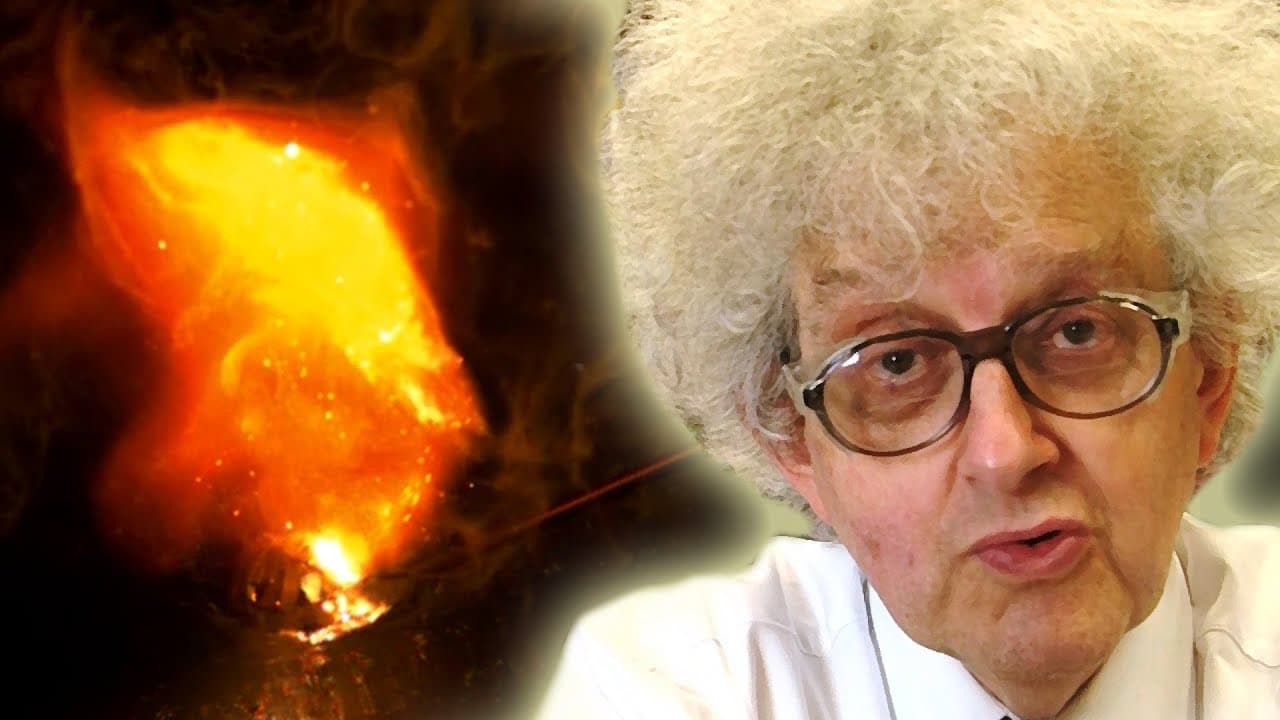
Magnesium reacts vigorously with water, producing magnesium oxide and hydrogen gas through an exothermic reaction. The reaction intensifies due to the high temperature of the burning magnesium, which allows it to overcome the protective oxide layer, leading to potential minor explosions when hydrogen ignites.
Transcript
I want to show your reaction which I didn't know could occur the reaction between magnesium and water the reason why I didn't know it can occur is quite simple let's look at this experiment here I've got a piece of magnesium ribbon and some water you see that if I add the water absolutely nothing happens I didn't really think where the magnesium co... Read More
Key Insights
- 💦 Magnesium reacts with water due to high temperatures and clean surfaces.
- ❓ The reaction produces magnesium oxide and hydrogen.
- 💦 Water intensifies the reactive properties of magnesium due to its liquid state.
- 👻 The absence of an oxide layer on magnesium allows for direct contact with water molecules.
- 🧯 High-temperature metal fires should not be extinguished with water due to the potential for explosions.
- 💦 Magnesium reacts differently with water than with carbon dioxide.
- 💦 Clean magnesium surfaces promote a more intense reaction with water.
Install to Summarize YouTube Videos and Get Transcripts
Explore YouTube Video Summarizer or Get YouTube Transcript Extractor
Questions & Answers
Q: Why does magnesium react with water?
Magnesium reacts with water due to the absence of an oxide layer on its surface, allowing for a clean reaction producing magnesium oxide and hydrogen.
Q: How does the reaction of magnesium with water compare to its reaction with carbon dioxide?
The reaction with water produces magnesium oxide and hydrogen, while the reaction with carbon dioxide yields a black residue from the carbon leaving with no explosion.
Q: Why does magnesium continue to burn when submerged in water?
The high temperature of burning magnesium and the absence of an oxide layer allow for a vigorous reaction with water, producing magnesium oxide and hydrogen.
Q: Why is it not advisable to use water to put out a magnesium fire?
Magnesium burns at high temperatures and reacts explosively with water, making it ineffective at extinguishing the fire and potentially causing more danger.
Summary & Key Takeaways
-
Magnesium reacts with water producing magnesium oxide and hydrogen.
-
The reaction is exothermic and can lead to minor explosions.
-
High temperatures and clean magnesium surfaces are key to the reaction.
Read in Other Languages (beta)
Share This Summary 📚
Summarize YouTube Videos and Get Video Transcripts with 1-Click
Try YouTube Summary with ChatGPT & Claude or YouTube Transcript Generator
Explore More Summaries from Periodic Videos 📚
Summarize YouTube Videos and Get Video Transcripts with 1-Click
Try YouTube Summary with ChatGPT & Claude or YouTube Transcript Generator