Elon Musk: What “Analysts” Get Wrong About Tesla
TL;DR
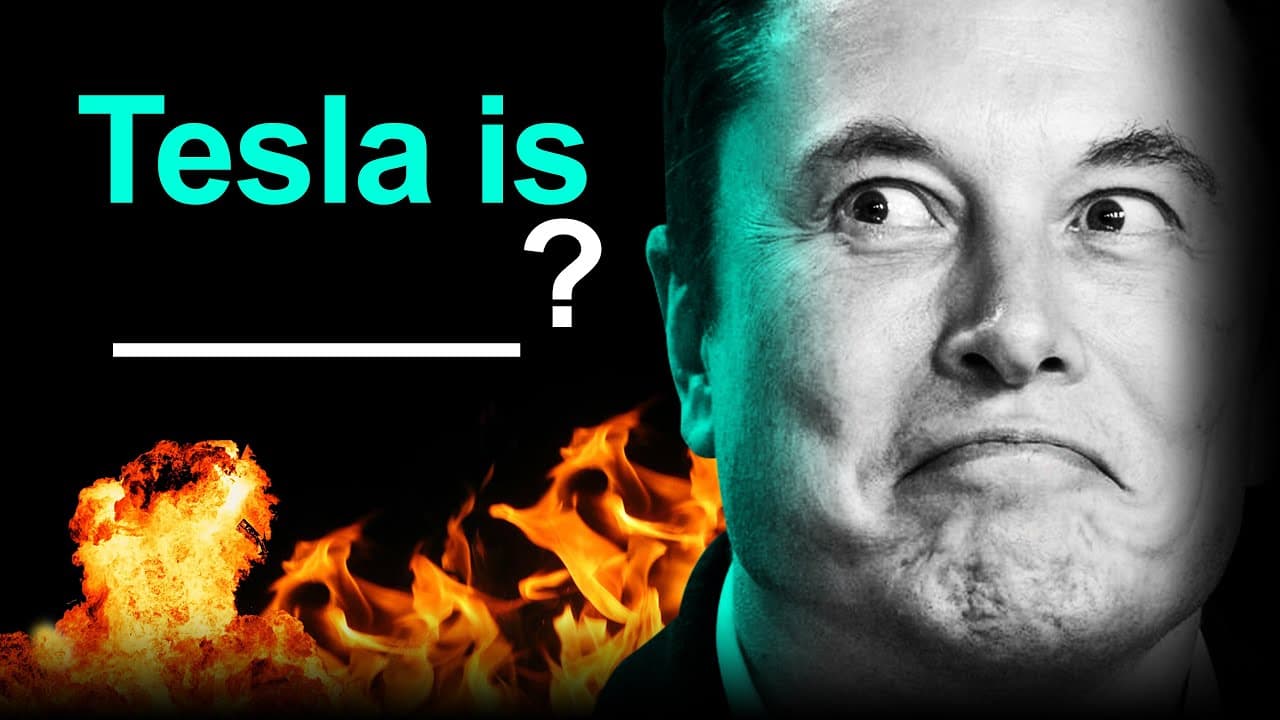
Tesla is a highly vertically integrated company with various subsidiaries and expertise in multiple areas, including electric vehicle manufacturing, software development, autonomous driving, and artificial intelligence.
Transcript
since you went public Tesla's up 22 000 11 quarters of Prof sequential profitability analysts the the price targets for Tesla despite all of this success some have it at 200 some have it at sixteen hundred it's all over the place you tweeted a couple months ago Tesla's not a company it's like six companies inside of a company like you've had to bui... Read More
Key Insights
- 🌓 Tesla has achieved consistent profitability and has been exceeding market expectations in recent quarters.
- 🧡 Wall Street analysts have a wide range of price targets for Tesla, indicating a lack of consensus and understanding about the company's valuation.
- 😫 Tesla's vertical integration strategy sets it apart from traditional automotive manufacturers and allows for better control over its operations.
- 🛰️ The company's expertise in artificial intelligence and autonomous driving gives it a significant advantage.
- 🚙 Tesla's ownership of a vast supercharger network contributes to its dominance in the electric vehicle market.
- 🚙 Tesla's future potential extends beyond electric vehicle manufacturing, with initiatives in insurance, AI development, and potential expansion into the mining industry.
- 🧘 The company's ability to overcome hurdles through innovative solutions and vertical integration enhances its competitive position.
Install to Summarize YouTube Videos and Get Transcripts
Explore YouTube Video Summarizer or Get YouTube Transcript Extractor
Questions & Answers
Q: Why do Wall Street analysts have such a wide range of price targets for Tesla?
Wall Street analysts have varying opinions on Tesla's valuation due to factors such as market volatility, uncertainty surrounding the future of electric vehicles, and differences in their evaluation models.
Q: How does Tesla differentiate itself from traditional automotive manufacturers?
Tesla stands out due to its vertical integration strategy, which involves in-house production of parts and components, the operation of its own sales and service centers, and the ownership of a vast supercharger network for electric vehicle charging.
Q: What role does artificial intelligence play in Tesla's operations?
Artificial intelligence is a crucial aspect of Tesla's business, particularly in the development of its autonomous driving technology. Tesla's real-world AI expertise gives it a significant lead over other companies, making it a pioneer in the field.
Q: Will Tesla's insurance offering impact the automotive industry?
Tesla's insurance service is expected to disrupt the traditional insurance industry as it provides real-time coverage based on individual driving behavior. This approach can lead to lower premiums and promote safer driving habits.
Summary & Key Takeaways
-
Tesla has experienced consistent profitability in the past 11 quarters and has seen its stock price soar. However, Wall Street analysts have different price targets for Tesla, ranging from $200 to $1600 per share.
-
Tesla is not just a single company but rather a conglomerate of multiple subsidiaries, each specializing in different areas such as electric vehicle assembly, software development, battery production, and supercharger network operation.
-
The company's vertical integration strategy allows it to have more control over its supply chain, production processes, and customer experience, differentiating Tesla from traditional automotive manufacturers.
Read in Other Languages (beta)
Share This Summary 📚
Summarize YouTube Videos and Get Video Transcripts with 1-Click
Try YouTube Summary with ChatGPT & Claude or YouTube Transcript Generator
Explore More Summaries from Solving The Money Problem 📚


Summarize YouTube Videos and Get Video Transcripts with 1-Click
Try YouTube Summary with ChatGPT & Claude or YouTube Transcript Generator