Editing Our DNA with CRISPR: The Promise and Peril of Rewriting Life
TL;DR
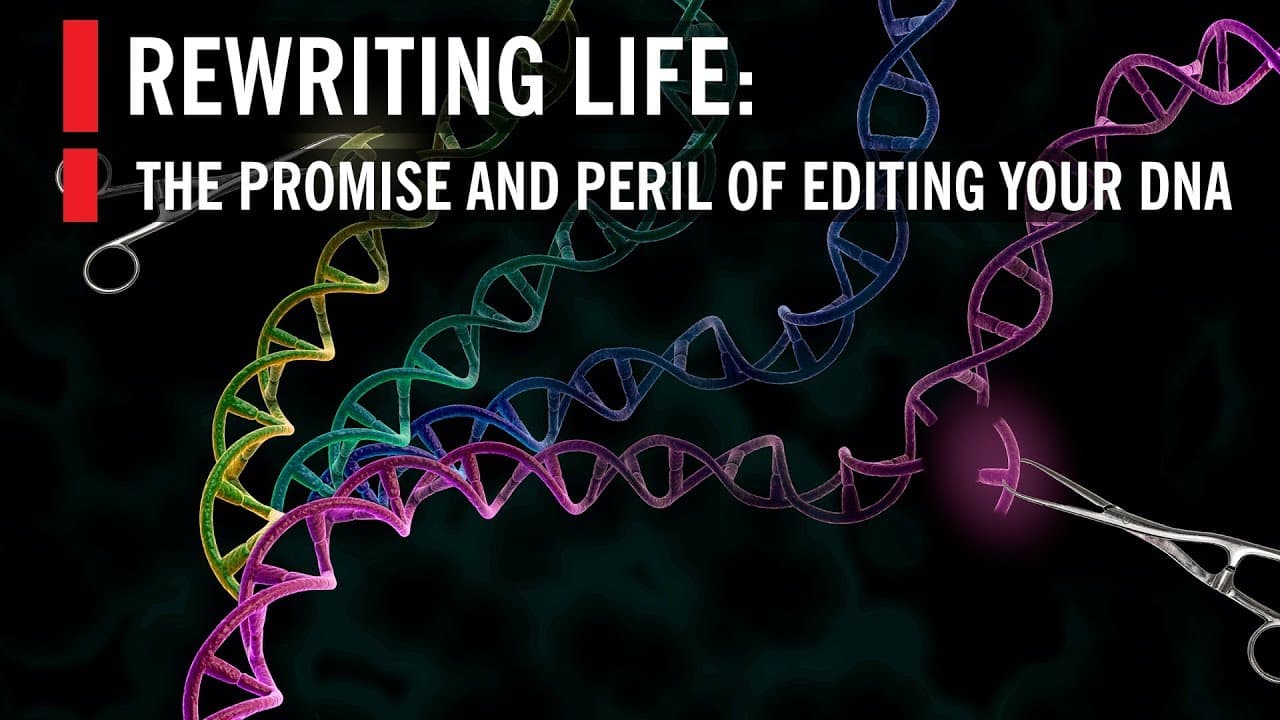
CRISPR is a groundbreaking gene-editing tool that has the potential to cure diseases and reshape the course of evolution. It allows scientists to make precise changes to the DNA of organisms, including humans. However, its use raises ethical concerns and the need for responsible regulation.
Transcript
Evolution, the natural process that shaped all life, and can lead from this to this. It's driven by random genetic mutation and natural selection. Random mutations create variation. Sometimes a change gives an advantage, like cells that can detect light to help seek out safer environments. Survivors pass along the changes to future generations, fur... Read More
Key Insights
- 🧡 CRISPR is a versatile and precise gene-editing tool that has wide-ranging applications in medicine, agriculture, and ecology.
- 😋 The technology offers great potential in curing diseases, enhancing genetic traits, and addressing global challenges like malaria and food security.
- 🎮 Regulation and ethical considerations are necessary to prevent misuse, ensure equitable access, and address concerns about safety, control, and unintended consequences.
Install to Summarize YouTube Videos and Get Transcripts
Explore YouTube Video Summarizer or Get YouTube Transcript Extractor
Questions & Answers
Q: How does CRISPR work?
CRISPR is a system derived from bacteria's natural immune system. It uses a protein called Cas9 and a guide RNA to target specific DNA sequences and make precise cuts in the genome. Researchers can then introduce desired changes to the DNA.
Q: What are the potential benefits of CRISPR in non-heritable diseases?
CRISPR allows for easy programmability, enabling researchers to study the effects of individual genes on diseases like cancer. It can help identify drug resistance and develop tailored treatments. Clinical trials are exploring its use in HIV/AIDS patients, among other diseases.
Q: Can CRISPR be used to make heritable changes in human embryos?
The ethical and social implications of heritable changes through CRISPR are currently under discussion. Some countries have laws regulating such interventions, while others are reevaluating their stance. The US National Academy of Sciences suggests allowing heritable changes in certain cases if safety and effectiveness criteria are met.
Q: Who gets to decide who can access CRISPR technology?
The availability of CRISPR technology raises questions about equitable access. The cost, regulation, and ethical considerations will shape its usage. Discussions among the scientific community, policymakers, and the public are crucial to ensure responsible and fair implementation.
Summary & Key Takeaways
-
CRISPR is a gene-editing tool that can rewrite genes with unprecedented accuracy and effectiveness, potentially curing diseases and enhancing genetic traits.
-
The tool has shown promise in treating various diseases, such as cancer, ALS, sickle cell anemia, and eye diseases, through clinical trials in different countries.
-
CRISPR also offers the possibility of creating genetically modified organisms, such as disease-resistant crops and malaria-proof mosquitoes.
Read in Other Languages (beta)
Share This Summary 📚
Summarize YouTube Videos and Get Video Transcripts with 1-Click
Try YouTube Summary with ChatGPT & Claude or YouTube Transcript Generator
Explore More Summaries from World Science Festival 📚



Summarize YouTube Videos and Get Video Transcripts with 1-Click
Try YouTube Summary with ChatGPT & Claude or YouTube Transcript Generator