Basic Principles of Rocket Propulsion | Tim Dodd and Lex Fridman
TL;DR
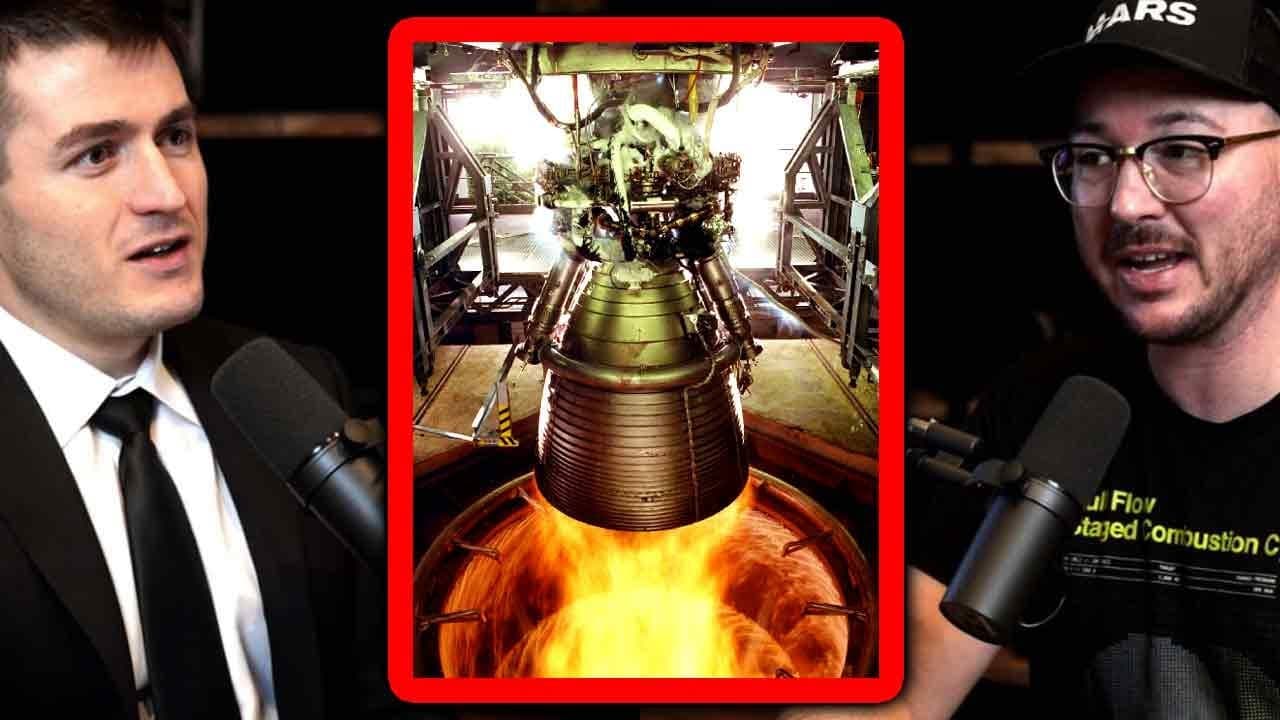
This content explores the different types of rocket engine cycles, including open cycle, closed cycle, and full flow, and discusses their advantages, trade-offs, and complexity.
Transcript
uh water rocket engine Cycles getting I think getting more to you towards your shirt question you have a really good video called that uh I mean a lot of your videos that are technical are just exceptionally well done so I just I think um you deserve all the props you get I mean thank you for for doing this work really really really really really w... Read More
Key Insights
- 🥵 Rocket engines aim to achieve high heat and pressure efficiently.
- 🚒 Open cycle engines waste fuel, while closed cycle engines reuse propellants, enhancing efficiency.
- ☕ Full flow engines pre-burn both propellants and deliver them as hot gases, providing the highest efficiency.
- 🚒 Closed cycle and full flow engines are more complex and challenging to design compared to open cycle engines.
- 😅 Closed cycle engines can face difficulties with the reaction of hot gaseous oxygen with metals.
- 😒 The Raptor engine, used by SpaceX, uses full flow for its superior efficiency and performance.
- 💐 Developing full flow engines requires significant investment and engineering expertise.
Install to Summarize YouTube Videos and Get Transcripts
Explore YouTube Video Summarizer or Get YouTube Transcript Extractor
Questions & Answers
Q: What is the difference between open cycle, closed cycle, and full flow rocket engine cycles?
Open cycle engines pump fuel and oxidizer at high pressure, but a significant amount of fuel goes unused. Closed cycle engines route the propellant back into the engine after going through a turbine, increasing efficiency. Full flow engines pre-burn both propellants and deliver them to the combustion chamber as hot gases.
Q: Why is open cycle the easiest to implement but not the most efficient?
Open cycle engines are simple, as unused fuel is expelled without much complexity. However, a large amount of fuel is wasted, reducing overall efficiency compared to closed cycle or full flow engines.
Q: What are the trade-offs of using closed cycle or full flow engines?
Closed cycle engines offer greater performance and efficiency by reusing propellant, but they are more complex to design and can face challenges with hot gaseous oxygen reacting with metals. Full flow engines are the most efficient but also the most difficult to develop due to the complexity involved.
Q: Why is SpaceX's Raptor engine using full flow?
The Raptor engine uses full flow because it provides the highest efficiency by extracting the most energy from the propellants. Despite its difficulty to develop, it offers significant advantages in terms of performance and efficiency.
Summary & Key Takeaways
-
Rocket engines require heat and pressure to function, and different types of cycles are used to achieve this efficiently.
-
Open cycle engines pump propellants into the engine at high pressure, but a significant amount of fuel goes unused, leading to wasted propellant.
-
Closed cycle engines route the propellant back into the engine after going through a turbine, increasing efficiency, but they are more complex and require careful engineering.
Read in Other Languages (beta)
Share This Summary 📚
Summarize YouTube Videos and Get Video Transcripts with 1-Click
Try YouTube Summary with ChatGPT & Claude or YouTube Transcript Generator
Explore More Summaries from Lex Clips 📚




Summarize YouTube Videos and Get Video Transcripts with 1-Click
Try YouTube Summary with ChatGPT & Claude or YouTube Transcript Generator