OpenAI CEO on misinformation | Sam Altman and Lex Fridman
TL;DR
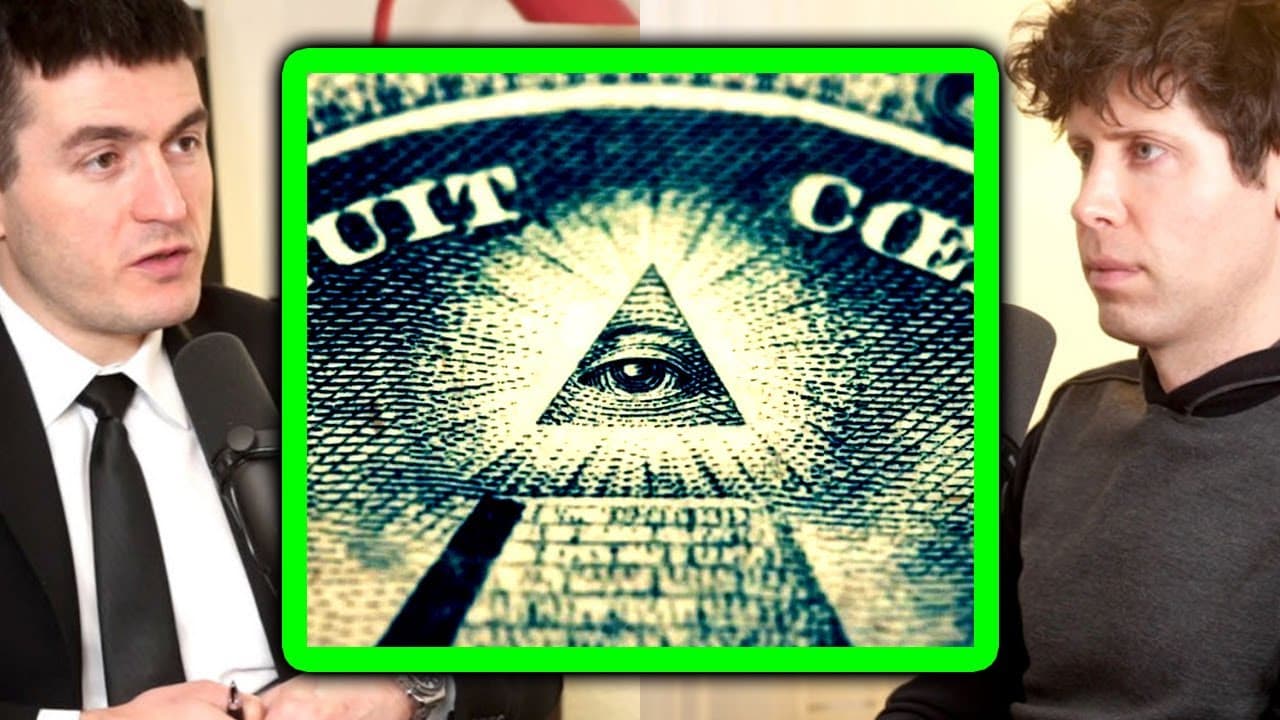
OpenAI's internal factual performance benchmark helps determine what's true, but there's still a lot of disagreement in the gray area between absolute truth and misinformation.
Transcript
to the model how do you decide what isn't isn't misinformation how do you decide what is true you actually have open ai's internal factual performance Benchmark there's a lot of cool benchmarks here uh how do you build a benchmark for what is true what is truth say I'm Alvin like math is true and the origin of covid is not agreed upon as ground tru... Read More
Key Insights
- ❓ Truth can be challenging to define, especially in the gray area between absolute truth and misinformation.
- ✋ Math and historical facts often have a high degree of truth, supported by evidence.
- ❓ Sticky theories may offer a simple narrative but should be examined critically.
- ❓ GPT models can provide nuanced answers but also highlight the existence of uncertainty.
Install to Summarize YouTube Videos and Get Transcripts
Explore YouTube Video Summarizer or Get YouTube Transcript Extractor
Questions & Answers
Q: How does OpenAI determine what is true and what isn't?
OpenAI utilizes internal factual performance benchmarks to evaluate the accuracy of information. However, there is still a gray area with varying degrees of agreement and disagreement.
Q: What are some examples of things that are considered true?
Math and historical facts, such as dates of wars, are widely accepted as having a high degree of truth. They are supported by evidence and are less subject to interpretation.
Q: Can sticky theories, like the one in "Blitzed," be considered true?
Sticky theories, while compelling, may not always be fully accurate. The book "Blitzed" suggests that excessive drug use explained aspects of Hitler and Nazi Germany, but historians have criticized it for cherry-picking evidence and oversimplifying complex events.
Q: How does GPT handle the ambiguity and complexity of determining truth?
GPT models can provide nuanced answers and acknowledge uncertainty. In the case of COVID-19's origin, GPT acknowledges the lack of direct evidence and highlights the existence of circumstantial and theoretical discussions.
Summary & Key Takeaways
-
OpenAI uses internal factual performance benchmarks to determine what is true and what isn't, but there is a lot of disagreement in the gray area.
-
Math and historical facts are examples of things that have a high degree of truth, while some theories like the one in the book "Blitzed" are considered sticky but may not be fully accurate.
-
GPT models can provide nuanced answers but also emphasize the existence of uncertainty, such as in the case of the origin of COVID-19.
Read in Other Languages (beta)
Share This Summary 📚
Summarize YouTube Videos and Get Video Transcripts with 1-Click
Try YouTube Summary with ChatGPT & Claude or YouTube Transcript Generator
Explore More Summaries from Lex Clips 📚

Summarize YouTube Videos and Get Video Transcripts with 1-Click
Try YouTube Summary with ChatGPT & Claude or YouTube Transcript Generator