How caffeine and alcohol affect your sleep | Sleeping with Science, a TED series
TL;DR
Discover the surprising impacts of caffeine and alcohol on our sleep, from reducing deep sleep to fragmenting our restful slumber.
Transcript
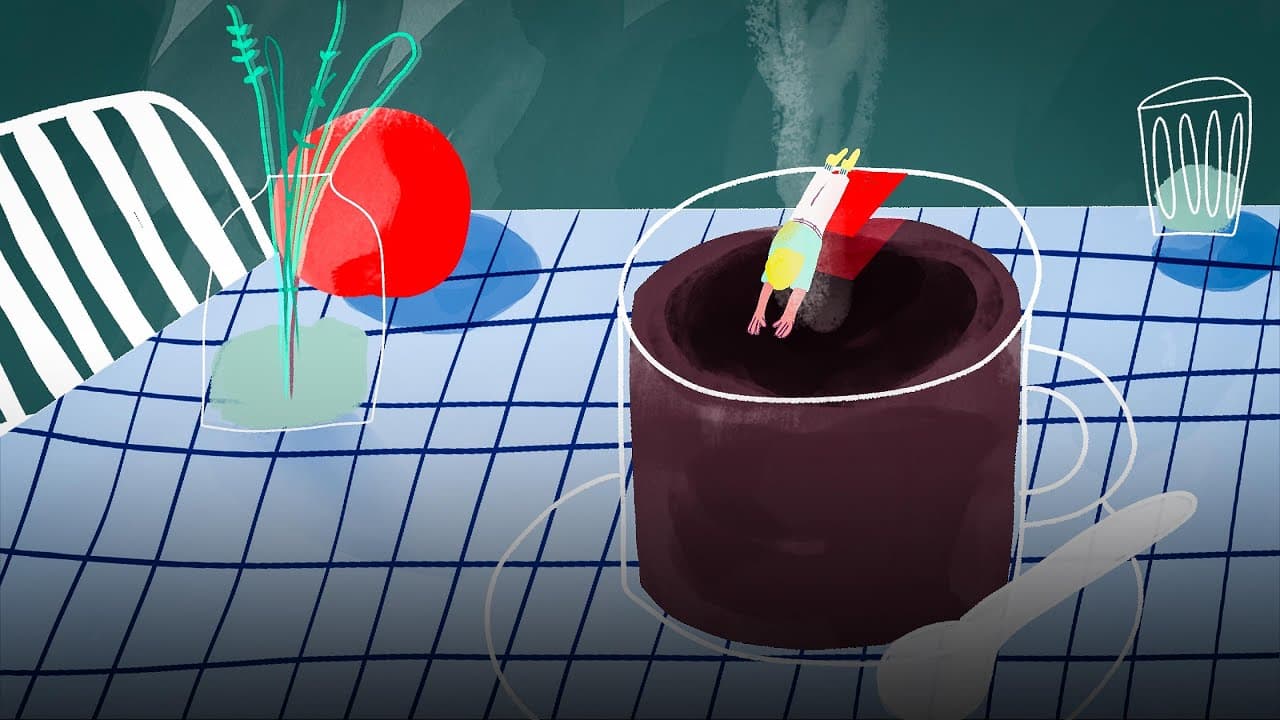
Many of us like to start the day with a cup of coffee and perhaps end the day with a glass of wine or some other kind of alcoholic drink. But it turns out that these two substances, alcohol and caffeine, can have surprising impacts on our sleep. [Sleeping with Science] (Music) Let's start with caffeine. Caffeine is in a class of drugs that we call ... Read More
Key Insights
- Caffeine has a long half-life of 5-6 hours, meaning it can still be circulating in your system even hours after consumption, potentially disrupting your ability to fall asleep.
- Caffeine can decrease the amount of deep, restorative sleep, leaving you feeling less refreshed in the morning and potentially reaching for more coffee to wake up.
- Alcohol is not a sleep aid but a sedative, which is different from natural sleep. Sedation is like temporarily switching off brain cells, while natural sleep involves coordinated brain activity.
- Alcohol can fragment your sleep, leading to more frequent awakenings during the night.
- Alcohol can activate the fight or flight response and increase alerting chemicals in the brain, further disrupting sleep.
- Alcohol can block rapid eye movement (REM) sleep, which is important for emotional and mental health, as well as creativity.
- Both caffeine and alcohol can have surprising impacts on sleep quality.
- Understanding the relationship between caffeine, alcohol, and sleep can help individuals make informed choices for prioritizing their sleep health.
Install to Summarize YouTube Videos and Get Transcripts
Explore YouTube Video Summarizer or Get YouTube Transcript Extractor
Questions & Answers
Q: How long does caffeine stay in your system?
Caffeine has a half-life of about five to six hours, meaning that after that time, 50 percent of the caffeine you consumed is still circulating in your system. It has a quarter-life of about 10 to 12 hours, so even if you have a cup of coffee at 2pm, a significant amount of caffeine may still be present in your brain at midnight.
Q: How does caffeine affect the quality of sleep?
Caffeine can actually reduce the amount of deep, restorative sleep you have, particularly stages three and four of non-rapid eye movement sleep. This means that even if you fall asleep easily after consuming caffeine, you may wake up feeling unrefreshed and reach for more caffeine in the morning to wake up properly.
Q: Is alcohol considered a sleep aid?
No, alcohol is not a sleep aid despite its sedative properties. While sedation may switch off brain cell activity in the cortex, it does not mimic natural sleep. Alcohol can fragment your sleep, causing you to wake up more frequently throughout the night. Additionally, it can block your rapid eye movement (REM) sleep, which is essential for emotional and mental health, as well as creativity.
Q: How does alcohol affect the nervous system during sleep?
Alcohol can activate the fight or flight branch of the nervous system during sleep, leading to more frequent awakenings throughout the night. It can also increase the release of alerting chemicals by the brain, further disrupting your sleep. These effects can contribute to a fragmented and less restorative sleep experience.
Summary & Key Takeaways
-
Caffeine can have a lasting impact on sleep, with a half-life of 5-6 hours and a quarter-life of 10-12 hours, making it harder to fall asleep or stay asleep soundly throughout the night.
-
Caffeine can also decrease the amount of deep, restorative sleep, leaving you feeling less refreshed in the morning and potentially relying on more caffeine to wake up.
-
Alcohol is not a sleep aid and can negatively affect sleep by mistaking sedation for deep sleep, fragmenting sleep by triggering the fight or flight response and releasing alerting chemicals, and blocking REM sleep, which is important for emotional, mental health, and creativity.
Read in Other Languages (beta)
Share This Summary 📚
Summarize YouTube Videos and Get Video Transcripts with 1-Click
Try YouTube Summary with ChatGPT & Claude or YouTube Transcript Generator
Explore More Summaries from TED 📚

Summarize YouTube Videos and Get Video Transcripts with 1-Click
Try YouTube Summary with ChatGPT & Claude or YouTube Transcript Generator