Why Earth Has Two Levels | Hypsometric Curve
TL;DR
Earth's elevation distribution has two humps due to the difference in density between the oceanic crust and continental crust.
Transcript
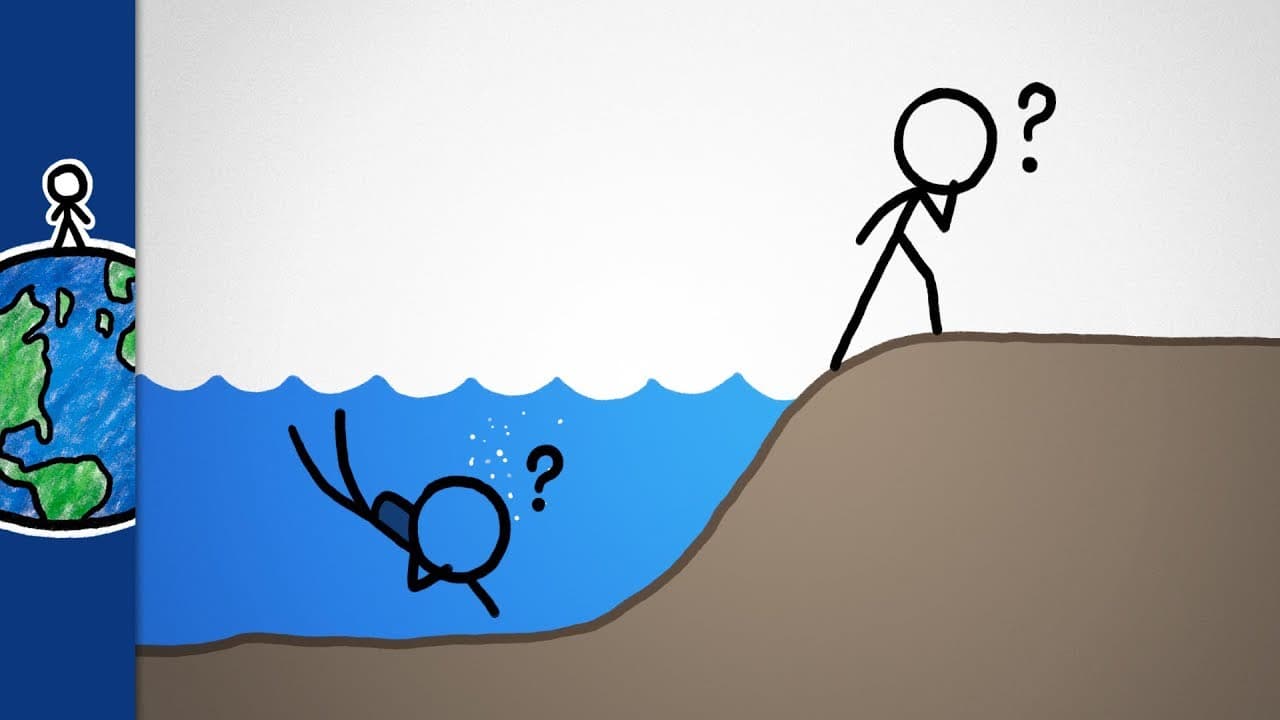
This video is sponsored by NordVPN. Hi, this is Emily from MinuteEarth. From the tip of Mt. Everest to the bottom of the Mariana trench, elevations on Earth span over 65000 feet. But we all know that those extreme elevations are super rare, and that the vast majority of our planet’s surface falls somewhere in the middle range So it seems like, if y... Read More
Key Insights
- 🐫 Earth's elevation distribution has two humps due to the difference in density between oceanic and continental crust.
- 🍽️ The denser oceanic plates sink when they collide with continental plates, leading to mountain range formation and thickening of the continental crust.
- 💥 Earth's tectonic plates ride on convection currents, causing movement and collisions that affect the distribution of elevation.
- 🤢 If Earth's elevation followed a normal distribution like Venus, only a small portion would be above sea level.
- ❓ The density difference between the oceanic and continental crust has major consequences for Earth's geology and topography.
- ✋ The continental crust is, on average, about four times thicker than the oceanic crust, contributing to its higher elevation.
- 🍽️ Subduction occurs when a denser oceanic plate sinks beneath a less dense plate during a collision.
Install to Summarize YouTube Videos and Get Transcripts
Explore YouTube Video Summarizer or Get YouTube Transcript Extractor
Questions & Answers
Q: Why does Earth's elevation follow a distribution with two humps?
The two-hump distribution is a consequence of the density difference between the oceanic and continental crust. The denser oceanic plates sink, while the less dense continental plates rise, creating two distinct levels of elevation.
Q: How are Earth's tectonic plates related to the distribution of elevation?
Earth's tectonic plates, which are composed of the crust and part of the upper mantle, ride on convection currents deep inside the planet. When oceanic and continental plates collide, the density difference determines the outcome, resulting in the two-hump distribution.
Q: What happens when two oceanic plates collide?
When two oceanic plates collide, the denser plate sinks beneath the other one as it is more dense. This process, called subduction, creates ocean trenches and volcanic activity.
Q: Why is the continental crust generally higher in elevation compared to the ocean floor?
The continental crust is, on average, about four times thicker than the oceanic crust. This thickness contributes to the higher average elevation of the continental crust, creating one of the humps in the elevation distribution.
Summary & Key Takeaways
-
Earth's elevation follows a distribution with two humps, representing the higher concentration of points near sea level and several thousand feet below, with fewer points at extreme elevations.
-
The two humps are a result of the density difference between the rock that makes up the ocean floor (denser) and the continents (less dense).
-
The denser oceanic plates sink when they collide with continental plates, creating mountain ranges and thickening the continental crust.
Read in Other Languages (beta)
Share This Summary 📚
Summarize YouTube Videos and Get Video Transcripts with 1-Click
Try YouTube Summary with ChatGPT & Claude or YouTube Transcript Generator
Explore More Summaries from MinuteEarth 📚



Summarize YouTube Videos and Get Video Transcripts with 1-Click
Try YouTube Summary with ChatGPT & Claude or YouTube Transcript Generator