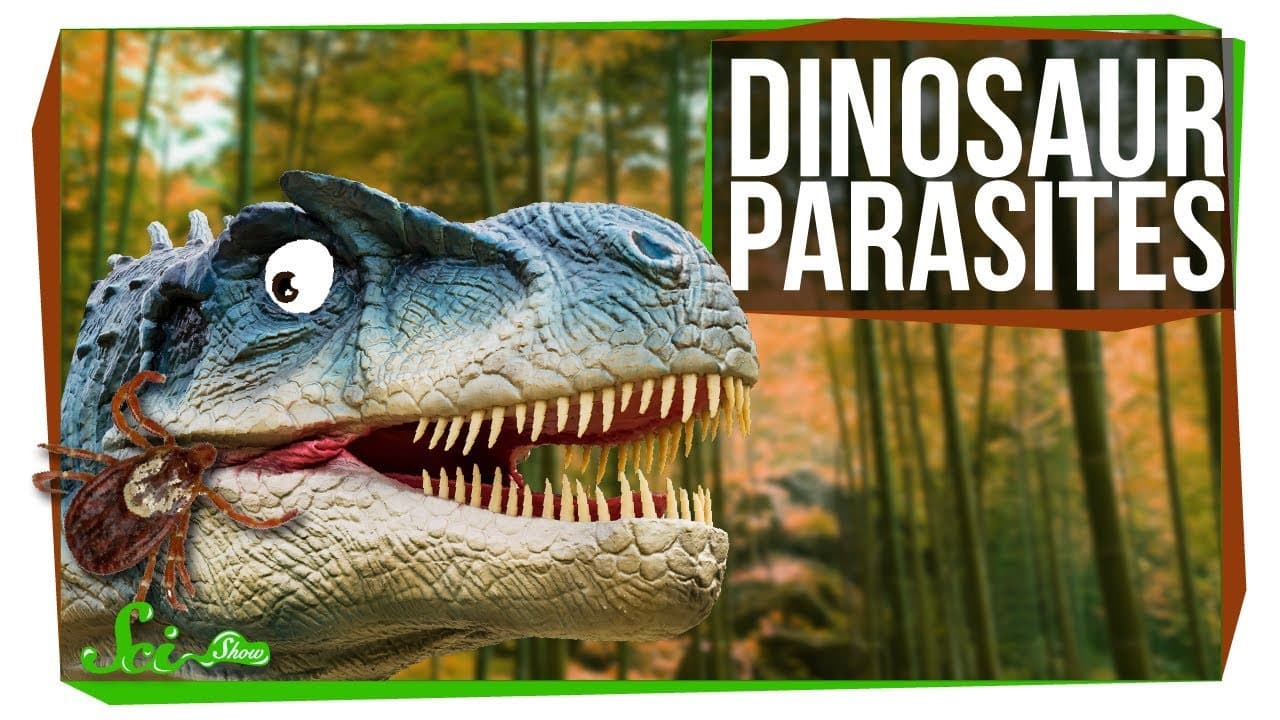
Dinosaurs Had a Bloodsucking Enemy
TL;DR
Fossilized ticks found in amber provide evidence of ticks as dinosaur parasites, while research on human subjects and a macaque monkey reveals the complex brain coordination required to stop motion.
Transcript
♩♩Intro♩♩ This week on SciShow News, we’re talking about bugs and brains. Except… not really true bugs, just some arachnids. But “arachnids and brains” didn't sound as catchy. Anyway, in a paper published this week in Nature Communications, scientists found two separate clues that teach us a little more about dinosaurs and their parasites. For one,... Read More
Key Insights
- 🙂 Fossilized ticks in amber provide valuable evidence of their relationship with dinosaurs, shedding light on the parasite-host dynamic in the Cretaceous period.
- 🦕 The presence of ticks and dermestid beetles in dinosaur nests suggests that these insects fed on feathers and skin and inhabited the same environment as dinosaurs.
- 💋 Extraction of DNA from insects preserved in amber remains a challenge, preventing the cloning of dinosaurs from DNA trapped in ticks.
- 🤕 Understanding the coordination required for stopping motion in the brain provides insights into motor control and could explain age-related issues with braking abilities.
Install to Summarize YouTube Videos and Get Transcripts
Explore YouTube Video Summarizer or Get YouTube Transcript Extractor
Questions & Answers
Q: What is the significance of the discovery of the fossilized tick preserved in amber?
The fossilized tick trapped in amber provides the oldest known example of a tick preserved with direct evidence of what it fed on, offering valuable insights into the coexistence of ticks and dinosaurs in the Cretaceous period.
Q: How do scientists know that ticks and dermestid beetles were likely living in dinosaur nests?
The presence of larval dermestid beetles on the ticks, which are known to feed on feathers and skin, suggests that both ticks and beetles were likely inhabiting dinosaur nests, where they could find a source of food.
Q: Can DNA be extracted from insects preserved in amber?
No, DNA extraction from insects preserved in amber has not been successful due to potential sources of contamination and degradation over time. The possibility of cloning a feathered dinosaur from blood trapped in ticks remains in the realm of science fiction.
Q: How did researchers determine the coordination required for stopping motion in the brain?
Using fMRI to monitor brain activity in human subjects and implanted electrodes in the brain of a macaque monkey, researchers found that stopping motion involves coordination between two regions of the prefrontal cortex and the premotor cortex, with timing playing a crucial role.
Summary & Key Takeaways
-
Scientists discover a 99-million-year-old tick preserved in amber that provides direct evidence of ticks feeding on dinosaurs, shedding light on the relationship between parasites and dinosaurs.
-
Another piece of amber reveals indirect evidence of a different tick species as a dinosaur parasite, along with larval dermestid beetles.
-
Researchers from Johns Hopkins University find that stopping motion requires coordination between different regions of the prefrontal cortex and the premotor cortex, shedding light on how our brains control our movements.
Read in Other Languages (beta)
Share This Summary 📚
Summarize YouTube Videos and Get Video Transcripts with 1-Click
Try YouTube Summary with ChatGPT & Claude or YouTube Transcript Generator
Explore More Summaries from SciShow 📚
Summarize YouTube Videos and Get Video Transcripts with 1-Click
Try YouTube Summary with ChatGPT & Claude or YouTube Transcript Generator