How to fix your life so you can get rich AF
TL;DR
A personal guide to overcoming various addictions by managing dopamine stimulation.
Transcript
I've figured out how to get rid of near enough any addiction you have and I know that this works because this is what worked for me what I'm going to be doing in this video is sharing with you how to completely rid yourself of any addictions you might have whether that could be something like video games it could be video games or it could be porno... Read More
Key Insights
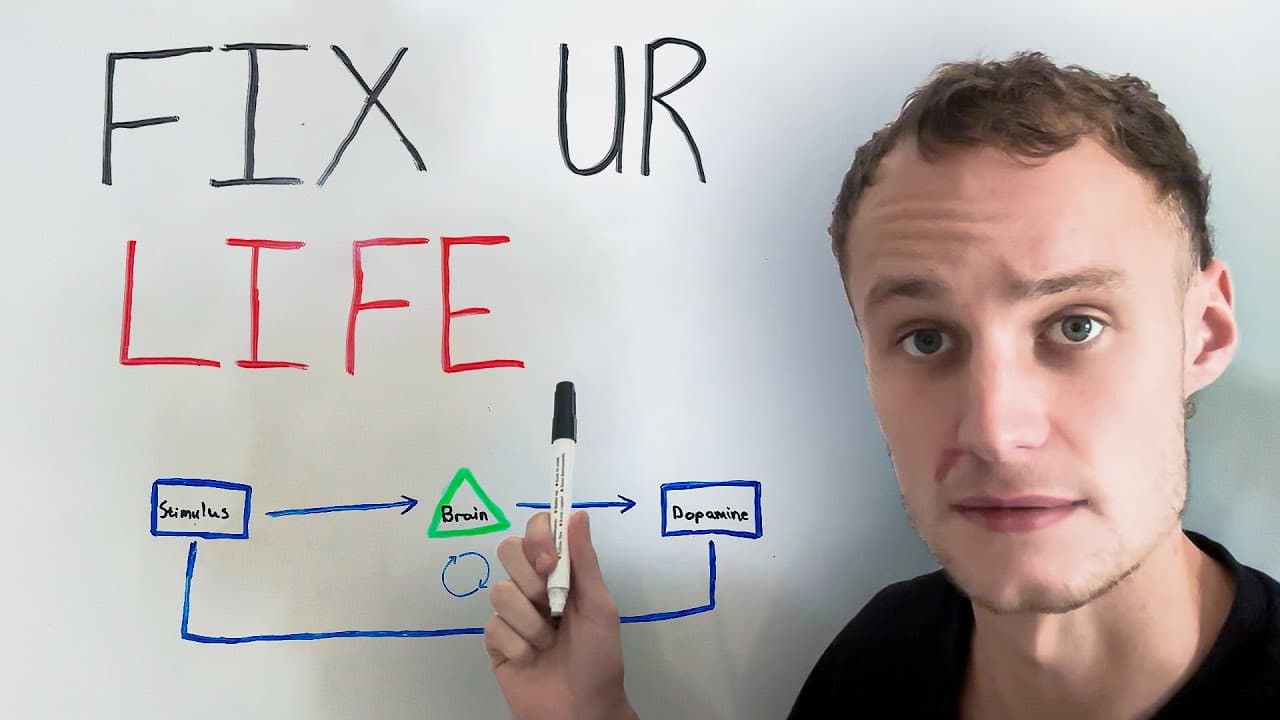
- 🧠 Addiction ultimately involves a feedback loop influenced by the dopamine-seeking behavior of the brain, regardless of the stimulus.
- ❓ Cravings following the removal of an addiction often stem from a desire for stimulation rather than the substance itself.
- 🏃 Healthy activities such as exercise and socialization can provide alternative outlets for dopamine release, reducing the urge to revert to addictive behaviors.
- 🧠 The body and brain may fight against the removal of addictive substances, highlighting the need for persistence and alternative stimulation strategies.
- ❓ Understanding dopamine's role in addiction can empower individuals to create healthier habits and eliminate dependencies.
- 🥶 The transition to a life free of addiction is challenging and requires consistent effort, attention to mental health, and supportive environments.
- 💁 Traditional forms of stimulation, like socializing and exercise, can help restore balance in a dopamine-driven life.
Install to Summarize YouTube Videos and Get Transcripts
Explore YouTube Video Summarizer or Get YouTube Transcript Extractor
Questions & Answers
Q: What is the dopaminergic system, and why is it important in understanding addiction?
The dopaminergic system in the brain is a neurological pathway that processes stimuli and associated feelings of pleasure through dopamine release. Addiction stems from overstimulation of this system, leading to a cycle of craving more stimulating experiences. Understanding this system helps individuals recognize how various behaviors create feedback loops of desire and fulfillment, enabling them to tackle their addictions more effectively.
Q: How did the speaker manage cravings after quitting an addiction?
The speaker managed cravings by recognizing that they were not necessarily craving the substance or activity itself but rather the stimulation associated with it. They introduced healthier alternatives like exercise, socializing, work, and reading that provided a lower level of stimulation. This approach allowed them to address their cravings without relapsing into previous addictions.
Q: What healthier alternatives does the speaker suggest for replacing addictive behaviors?
To counteract cravings, the speaker recommends several stimulating activities: engaging in exercise, socializing with friends, dedicating time to reading, and keeping productive by working on tasks. Additionally, exposure to cold or hot environments can also provide stimulation. These alternatives help manage dopamine levels without reverting to unhealthy habits.
Q: Why is it essential to negotiate with the brain's desire for stimulation during addiction recovery?
Negotiating with the brain's desire for stimulation is key because when an addiction is removed, the brain feels deprived and may react negatively to the sudden lack of stimulation. By introducing healthier sources of stimulation, individuals can ease the transition, maintain motivation, and better cope with cravings. This approach reduces the likelihood of relapse into previous addictive behaviors.
Summary & Key Takeaways
-
The speaker shares personal experiences with various addictions and how they managed to eliminate them by understanding the role of the dopaminergic system in addiction. They emphasize that addictions, whether to food, alcohol, or behaviors, are fundamentally about seeking stimulation.
-
To combat cravings after eliminating an addiction, the speaker recommends replacing the addictive behavior with healthier forms of stimulation, such as exercise, socializing, reading, and work. This allows the brain to gradually adjust to lower levels of stimulation.
-
The speaker underscores the importance of recognizing that when one addiction is removed, it may lead to cravings for other stimulating behaviors. Therefore, negotiation with the brain's desire for stimulation is crucial to prevent relapse.
Read in Other Languages (beta)
Share This Summary 📚
Summarize YouTube Videos and Get Video Transcripts with 1-Click
Try YouTube Summary with ChatGPT & Claude or YouTube Transcript Generator
Explore More Summaries from Charlie Morgan 📚





Summarize YouTube Videos and Get Video Transcripts with 1-Click
Try YouTube Summary with ChatGPT & Claude or YouTube Transcript Generator