How Rebel Victories Stop Civil Wars While Foreign Intervention Prolongs Them | Monica Duffy Toft
TL;DR
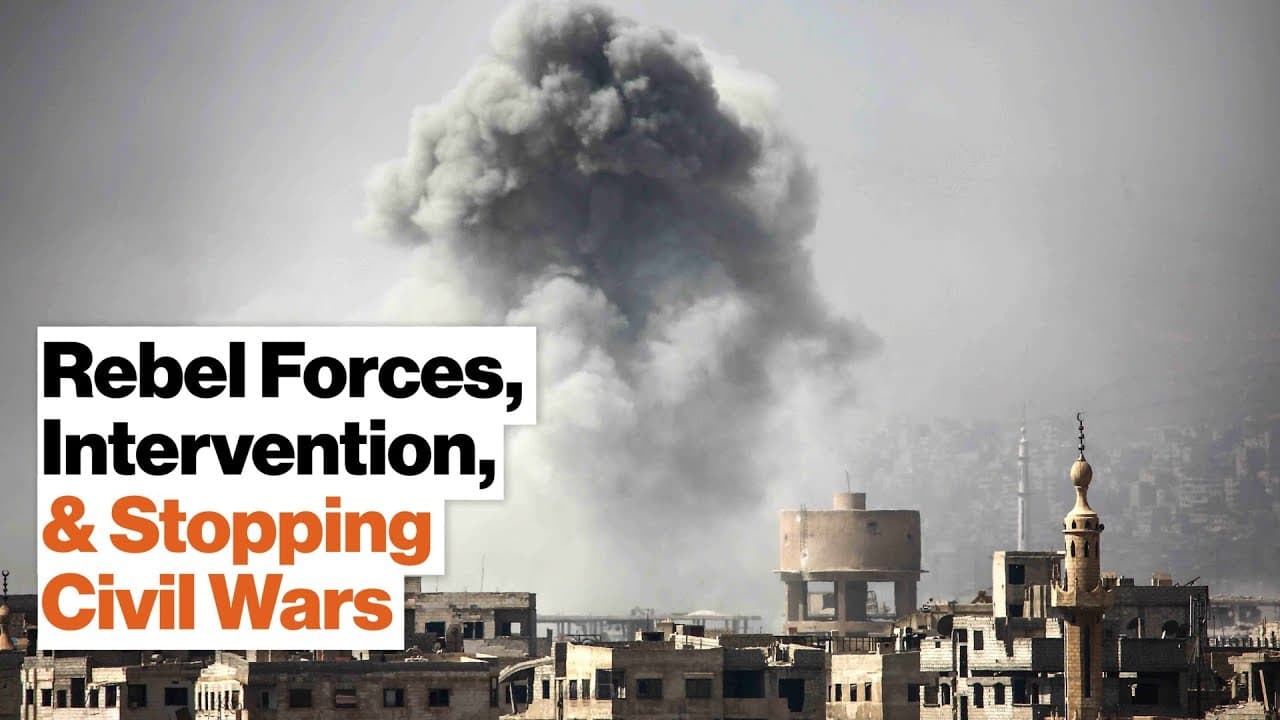
International intervention in civil wars requires careful negotiation or military victory for lasting peace.
Transcript
So when one country intervenes in another country’s civil war, one of the things that happens is: it extends the war. And if you think about it, what’s happening is that you’re having more resources coming into that conflict; and it’s bringing in new resources, bringing in new interests, basically complicating and complexifying that war that was al... Read More
Key Insights
- 🫱 International intervention can complicate civil wars by introducing new interests and resources.
- 📈 Negotiated settlements, preferred by the international community, aim to end civil wars peacefully.
- 🥺 Military victories, historically effective but less common, can lead to more robust and long-lasting settlements.
- 🖐️ The international community's capacity and will to engage in conflict resolution play a crucial role in determining the outcome.
- 🫱 Rebel victories in civil wars can bring legitimacy and support for new governments.
- 🆘 Peacekeepers and properly configured armed forces can help maintain negotiated settlements.
- ✌️ In cases where international intervention is lacking, victory for one side or another may be the only feasible resolution.
Install to Summarize YouTube Videos and Get Transcripts
Explore YouTube Video Summarizer or Get YouTube Transcript Extractor
Questions & Answers
Q: Why does international intervention in civil wars often extend the conflict?
International intervention can complicate civil wars by introducing new resources and interests, increasing the complexity and duration of the conflict.
Q: What is the preferred approach for resolving civil wars by the international community?
The international community favors negotiated settlements where both sides agree to lay down arms and negotiate a peaceful end to the conflict to achieve lasting peace.
Q: Why are military victories considered more robust in ending civil wars?
Military victories demonstrate the victor's military might and legitimacy, ensuring support from the population, and potentially leading to a longer-lasting settlement.
Q: What factors influence whether a civil war ends through negotiation or military victory?
The willingness and capacity of the international community, the commitment of parties to peace agreements, and the possibility of a strong victor often determine the resolution method.
Summary & Key Takeaways
-
International intervention in civil wars can extend the conflict by bringing in new resources and interests, complicating the situation.
-
Negotiated settlements are preferred by the international community, aiming for both sides to lay down arms and negotiate a peaceful end.
-
Military victories, although historically effective, are less common due to international reluctance to support forceful resolutions.
Read in Other Languages (beta)
Share This Summary 📚
Summarize YouTube Videos and Get Video Transcripts with 1-Click
Try YouTube Summary with ChatGPT & Claude or YouTube Transcript Generator
Explore More Summaries from Big Think 📚



Summarize YouTube Videos and Get Video Transcripts with 1-Click
Try YouTube Summary with ChatGPT & Claude or YouTube Transcript Generator