Fractured Search Intent: Understanding Mixed SERPs
TL;DR
Learn to interpret mixed search intent for better SEO ranking.
Transcript
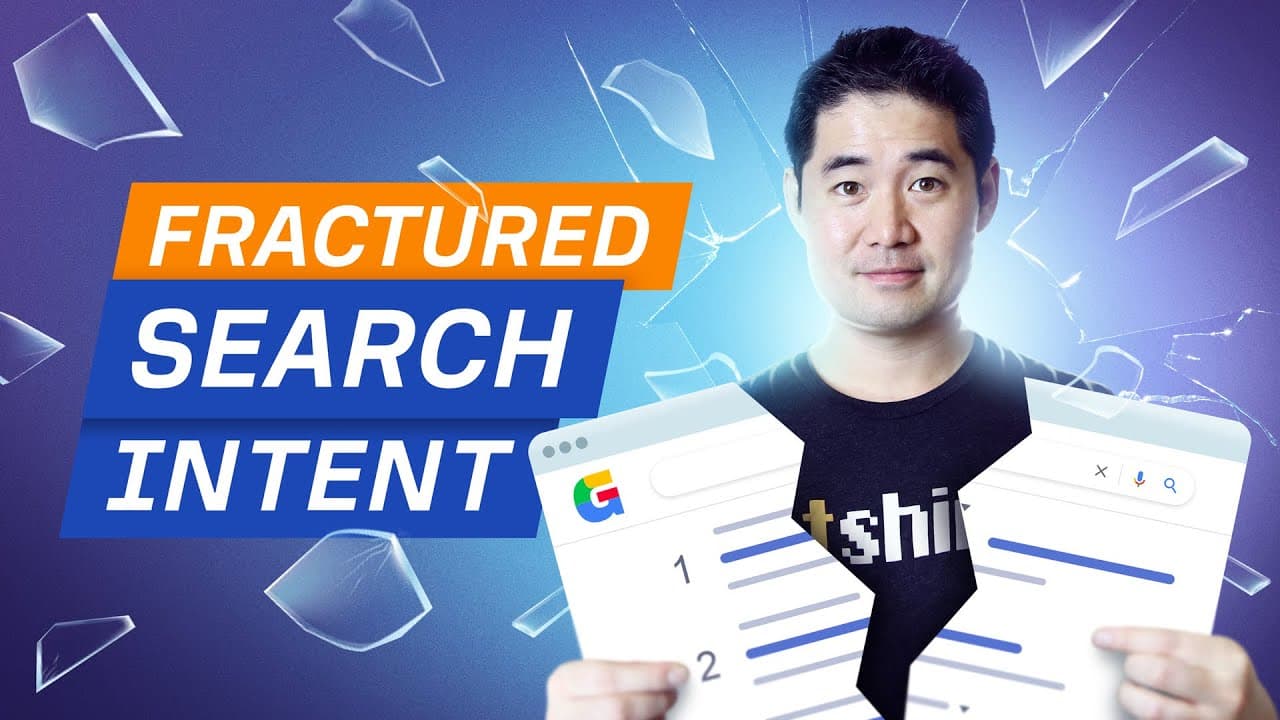
Google tries to show the most relevant results for any given query. But what happens if people want different things? I mean, if someone searches for "apple," do they want this, this, or this? This is called fractured or mixed intent. Or according to Google's Quality Rater Guidelines," queries with multiple meanings." And they actually show an exam... Read More
Key Insights
- Fractured or mixed intent occurs when a query has multiple meanings and Google's search results reflect this diversity.
- Search intent is categorized into four types: informational, navigational, commercial investigation, and transactional.
- To rank well, it's crucial to match the dominant intent of a query; failing to do so can result in poor SEO performance.
- Analyzing the top-ranking pages helps determine the intent they serve, which is key to understanding search intent.
- SERP features like ads, local packs, and knowledge panels provide clues about the intent Google associates with a query.
- Stable SERPs indicate clear search intent, while volatile SERPs suggest multiple interpretations and potential ranking opportunities.
- The interpretation of search intent can vary among individuals, highlighting the complexity in precisely defining intent buckets.
- Focusing on serving the dominant intent rather than overanalyzing can lead to more effective and efficient SEO strategies.
Install to Summarize YouTube Videos and Get Transcripts
Explore YouTube Video Summarizer or Get YouTube Transcript Extractor
Questions & Answers
Q: What is fractured or mixed search intent?
Fractured or mixed search intent occurs when a search query has multiple meanings, resulting in diverse search results that cater to different user needs. This complexity arises because people might be looking for entirely different things under the same query, making it challenging to pinpoint a single intent.
Q: Why is understanding search intent important for SEO?
Understanding search intent is crucial for SEO because it determines how well a page can satisfy a user's needs. If a webpage fails to align with the dominant intent of a search query, it is unlikely to rank well on search engines. Therefore, accurately interpreting and matching search intent is key to achieving high rankings.
Q: What are the four types of search intent?
The four types of search intent are: informational, where users seek information; navigational, where users look for a specific website or page; commercial investigation, where users are considering a purchase but are still researching options; and transactional, where users intend to make a purchase.
Q: How can you determine the dominant intent of a search query?
To determine the dominant intent of a search query, analyze the top-ranking pages to see what intent they serve. Additionally, examine SERP features and assess the stability or volatility of the SERP over time. These analyses provide insights into which intent is most prevalent and should be targeted.
Q: What role do SERP features play in understanding search intent?
SERP features, such as ads, local packs, and knowledge panels, offer clues about the intent Google associates with a query. By observing which features appear for a search query, one can infer whether the intent is informational, commercial, or otherwise, helping to guide content creation and SEO strategies.
Q: How does SERP stability versus volatility impact search intent analysis?
SERP stability indicates clear search intent, as top-ranking pages consistently hold their positions. In contrast, volatility suggests multiple interpretations of intent, as rankings fluctuate. Stable SERPs are typically harder to break into, while volatile SERPs offer more opportunities but come with uncertainty.
Q: What challenges exist in defining search intent categories?
Defining search intent categories is challenging because SERPs often serve multiple intents, and interpretations can vary among individuals. Additionally, search intent can change over time and differ based on location, making it difficult to apply strict criteria to categorize queries accurately.
Q: What is the recommended approach to handling mixed search intent?
The recommended approach is to focus on creating high-quality pages that match the dominant intent of users. If the dominant intent is not feasible to serve, consider targeting the common intent or opt not to pursue the query. This pragmatic strategy avoids overcomplication and aligns with effective SEO practices.
Summary & Key Takeaways
-
Fractured search intent arises when a search query has multiple meanings, leading to diverse search results. Understanding and interpreting these mixed SERPs is essential for effective SEO, as failing to match one of the intents can hinder ranking success.
-
Search intent is typically classified into four types: informational, navigational, commercial investigation, and transactional. However, a single SERP can serve multiple intents, complicating the categorization process and necessitating a comprehensive analysis.
-
To accurately determine the dominant intent of a query, one must analyze organic blue link search results, SERP features, and SERP stability versus volatility. This holistic approach helps clarify user intent and informs better SEO strategies.
Read in Other Languages (beta)
Share This Summary 📚
Summarize YouTube Videos and Get Video Transcripts with 1-Click
Try YouTube Summary with ChatGPT & Claude or YouTube Transcript Generator
Explore More Summaries from Ahrefs 📚
![Three Customer Acquisition Channels That Actually Work [1.2] thumbnail](/_next/image?url=https%3A%2F%2Fi.ytimg.com%2Fvi%2F1HhE_ewaOxQ%2Fhqdefault.jpg&w=750&q=75)





Summarize YouTube Videos and Get Video Transcripts with 1-Click
Try YouTube Summary with ChatGPT & Claude or YouTube Transcript Generator