Xenobot: The revolutionary new robot made from frogs | Michael Levin and Lex Fridman
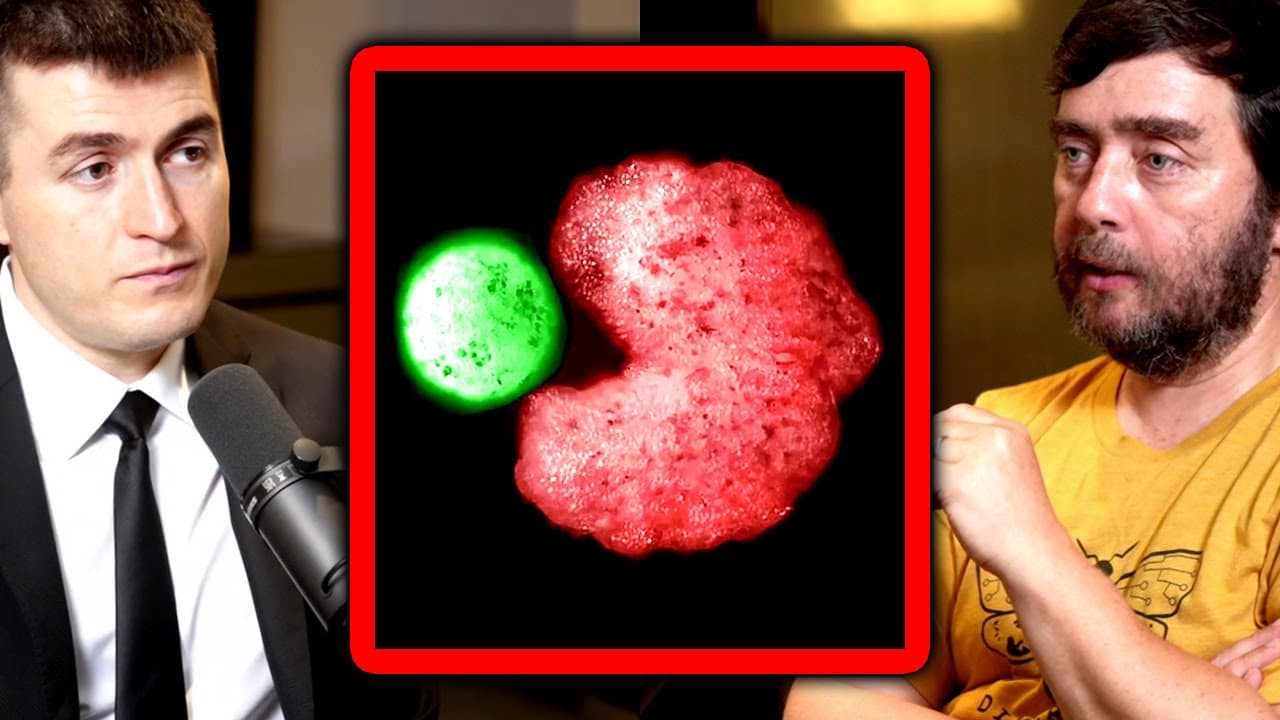
TL;DR
Scientists challenge the binary categories of biological organisms and robots, introducing the term "xenobots" to describe a new type of biobot. These xenobots, made from Xenopus laevis frog cells, demonstrate the plasticity and intelligence of biological systems and showcase the potential of regenerative development.
Transcript
you have a paper titled biological robots perspectives on an emerging interdisciplinary field and the beginning you uh you mentioned that the word xenobots is like controversial do you guys get in trouble for using xenobots or what do people not like the words endobots are you trying to be provocative with the word xenobots versus biological robots... Read More
Key Insights
- 😒 The use of the term "xenobots" challenges the binary distinction between biological organisms and robots, highlighting the need for updated terminology in interdisciplinary fields.
- 🥅 Developmental biology demonstrates the plasticity and adaptability of biological systems, with cells achieving their goals even when circumstances deviate from expectations.
- 🐸 Xenobots, made from Xenopus laevis frog cells, serve as a robotics platform to showcase the potential of regenerative development and the intelligence of biological systems.
Install to Summarize YouTube Videos and Get Transcripts
Explore YouTube Video Summarizer or Get YouTube Transcript Extractor
Questions & Answers
Q: Why is the term "xenobots" controversial?
The term "xenobots" challenges the traditional distinction between biological organisms and robots, which some people find problematic. It aims to break down outdated binary categories and highlight the potential of biobots as a new type of robotics platform.
Q: Are xenobots specifically made from Xenopus laevis frog cells?
Initially, the researchers used Xenopus laevis frog cells to create xenobots because they were convenient and well-studied. However, the term "xenobots" is not limited to frog cells. The researchers have also successfully created xenobots using other cell types, showing that this phenomenon is not specific to frogs.
Q: How do cells coordinate during embryogenesis and specialization?
During embryogenesis, cells divide and become specialized through a complex process. While the exact mechanisms are well-studied in developmental biology, the most crucial aspect is the ability of cells to adapt and coordinate their actions. Cells have incredible tolerances for changes not being what is expected, allowing them to achieve their goals even when circumstances deviate.
Q: What makes the field of developmental biology and embryogenesis so fascinating?
Developmental biology is captivating because it involves the process of creating a fully-formed organism from a single cell. The ability of cells to coordinate, adapt, and achieve the same goal through different means showcases the intelligence and plasticity of biological systems. Reverse engineering these processes is incredibly challenging but essential for understanding life's complexity.
Summary & Key Takeaways
-
Scientists introduce the term "xenobots" to describe a new type of biobot made from Xenopus laevis frog cells.
-
The use of the term "xenobots" is controversial because it challenges the traditional distinction between biological organisms and robots. However, the authors argue that these binary categories are outdated and will not survive in the future.
-
Xenobots demonstrate the plasticity and intelligence of biological systems, as they can self-organize and perform useful functions without the need for genetic modification or external control.
Read in Other Languages (beta)
Share This Summary 📚
Summarize YouTube Videos and Get Video Transcripts with 1-Click
Try YouTube Summary with ChatGPT & Claude or YouTube Transcript Generator
Explore More Summaries from Lex Clips 📚




Summarize YouTube Videos and Get Video Transcripts with 1-Click
Try YouTube Summary with ChatGPT & Claude or YouTube Transcript Generator