An Untouched Instrument: The Theramin Explained
TL;DR
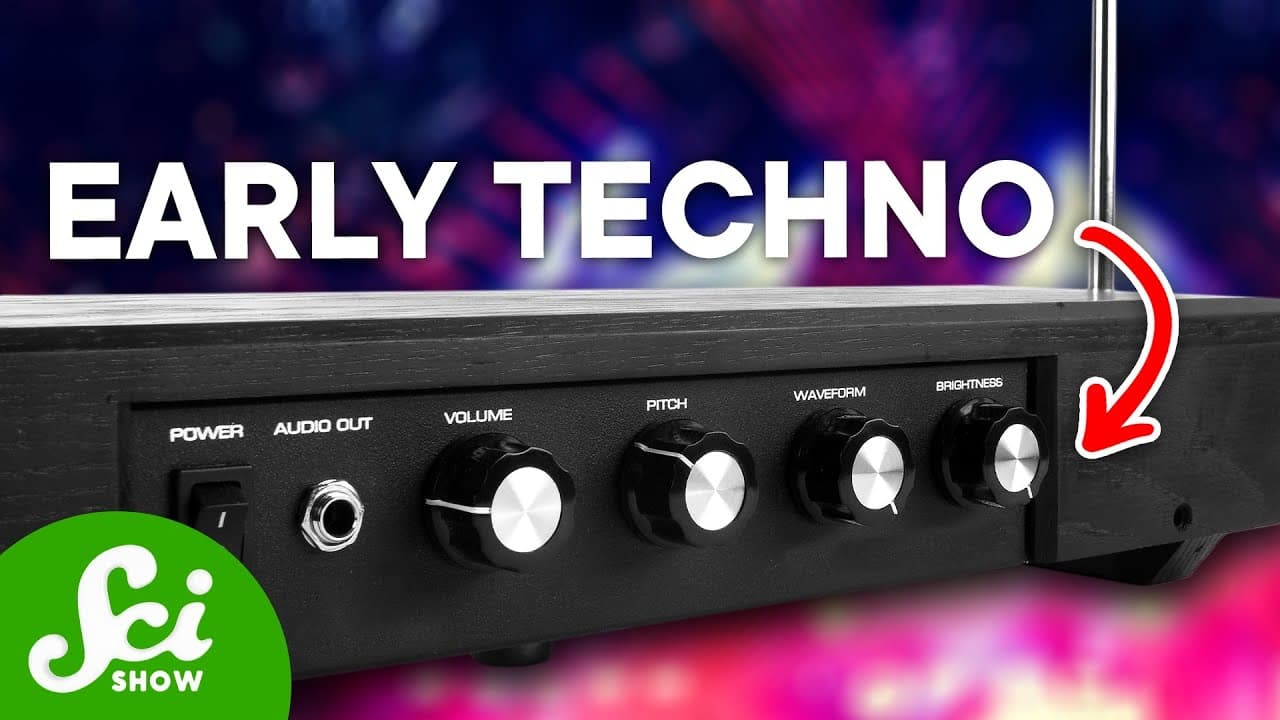
The theremin, one of the first electronic instruments invented in the 1920s, allows players to create music without touching it by manipulating an oscillating current and using heterodyning to convert frequencies for pitch and volume.
Transcript
Electronic music is … not for everyone. Whether it’s dubstep, or techno, or electro-swing, or darkstep, or acid jazz, the unique sounds, beats, and rhythms are only possible thanks to some pretty slick, but simple, technology. Even though they seem like a modern invention, electronic instruments have been around for a lot longer than you might thin... Read More
Key Insights
- 👋 Electronic instruments, like the theremin, rely on manipulating oscillating currents to create sound waves.
- 👏 The theremin uses a simple setup with one plate of a capacitor being the antenna and the other plate being the player's hand.
- 🔇 Heterodyning is a process in the theremin that mixes currents to change their frequencies, enabling the production of human-friendly frequencies for pitch and volume.
- 🖐️ The theremin's ability to manipulate oscillations and frequencies makes it an instrument that can be played without physical contact.
- 🔇 The theremin's current is amplified and sent to a speaker, where it vibrates the air to create sound waves.
- 🧡 The range of the theremin's frequencies is within that of a piano, making it a versatile instrument.
- 🎼 The theremin's unique features and electronic components have contributed to its enduring popularity in electronic music.
Install to Summarize YouTube Videos and Get Transcripts
Explore YouTube Video Summarizer or Get YouTube Transcript Extractor
Questions & Answers
Q: How does the theremin work without being touched?
The theremin utilizes the player's proximity to antennas to create a capacitor, allowing the oscillations of an electrical current to be controlled through hand movements and produce sound.
Q: What is the purpose of a capacitor in electronic instruments?
A capacitor stores electric charges and plays a crucial role in creating an alternating current that enables electronic instruments, like the theremin, to vibrate a speaker and create sound waves.
Q: How does heterodyning work in the theremin?
Heterodyning is the process of mixing two currents to change their frequencies. In the theremin, it involves mixing the player's oscillating current with a preset current to produce a final current with a human-friendly frequency.
Q: How does the theremin convert frequencies for pitch and volume?
The theremin uses the manipulation of oscillating currents and heterodyning to convert frequencies. The closer the player's hand is to the theremin, the lower the frequency for pitch, and the further away, the higher the frequency. The same principle applies to volume.
Summary & Key Takeaways
-
Electronic instruments, like the theremin, have been around since the 1920s and rely on simple technology to create unique sounds and rhythms.
-
The theremin is played by manipulating the oscillations of an electrical current, changing the frequency to control pitch and volume.
-
Heterodyning is used to mix currents and produce a final current with a human-friendly frequency, allowing the theremin to create music.
Read in Other Languages (beta)
Share This Summary 📚
Summarize YouTube Videos and Get Video Transcripts with 1-Click
Try YouTube Summary with ChatGPT & Claude or YouTube Transcript Generator
Explore More Summaries from SciShow 📚


Summarize YouTube Videos and Get Video Transcripts with 1-Click
Try YouTube Summary with ChatGPT & Claude or YouTube Transcript Generator