Magnetospheric Multiscale mission launches
TL;DR
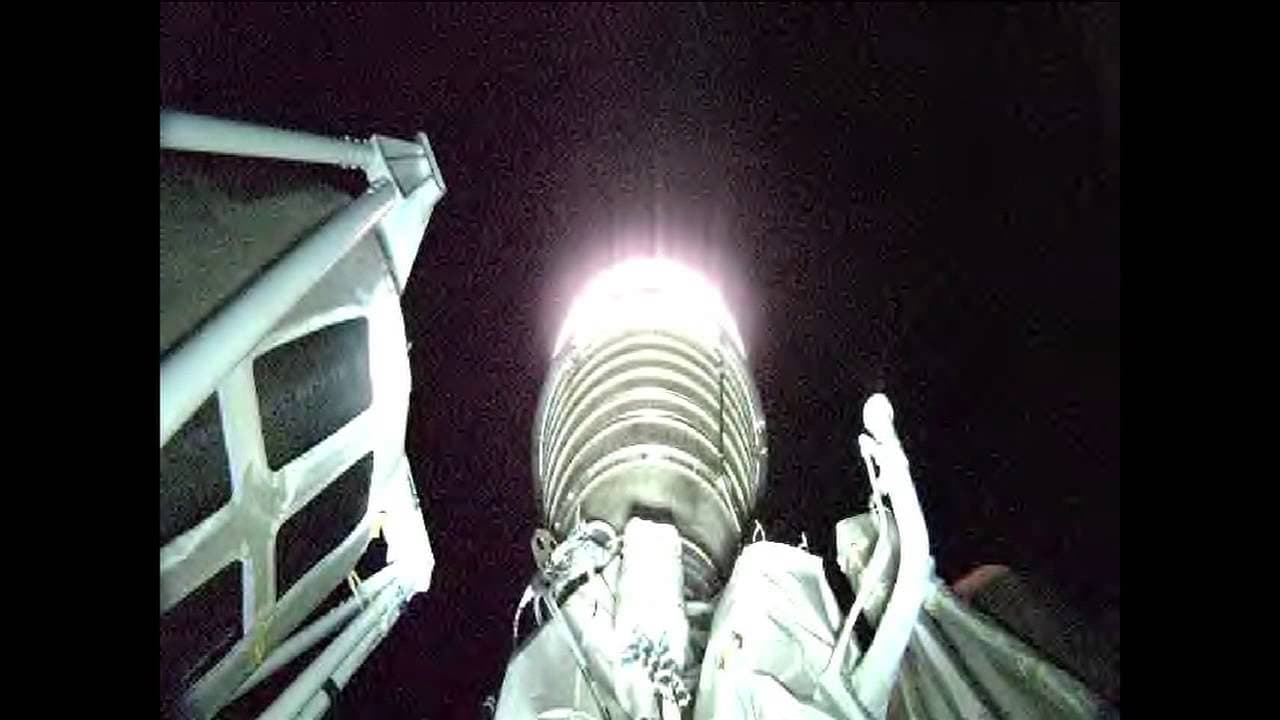
The Atlas V rocket successfully launched the Magnetospheric Multiscale mission (MMS) to study space weather and magnetic reconnection.
Transcript
25 status check go atlas go centaur go mms t minus 15 seconds t minus 10 9 8 7 6 5 go for main engine start 3 2 1 zero and liftoff of the atlas v with mms using magnetic reconnection to fill in pieces of the puzzle of space weather engine response looks appropriate sov chamber pressures are going on fine zero angle attack phase of flight and booste... Read More
Key Insights
- 👾 The Atlas V rocket successfully launched the MMS mission, which will study space weather and magnetic reconnection.
- 👋 The booster throttled backward and then back up during the launch, indicating good engine performance.
- 🚒 The Centaur upper stage performed well throughout the mission, with the RL10 engine and other systems functioning within expected parameters.
- 👾 The MMS mission aims to deepen our understanding of space weather and its impact on Earth.
- 👾 Magnetic reconnection is a crucial process in space weather events like solar flares and geomagnetic storms.
- 🚒 The RL10 engine on the Centaur upper stage demonstrated excellent performance.
- 🔥 The coast period between the first and second burns of the Centaur stage will last for almost an hour before the second burn takes place.
Install to Summarize YouTube Videos and Get Transcripts
Explore YouTube Video Summarizer or Get YouTube Transcript Extractor
Questions & Answers
Q: What is the purpose of the MMS mission?
The MMS mission is designed to study space weather and the process of magnetic reconnection, which plays a crucial role in phenomena like solar flares and geomagnetic storms.
Q: How did the Atlas V rocket perform during the launch?
The Atlas V rocket performed excellently, with the booster throttling backward and then back up, and the RD180 engine continuing to operate as expected.
Q: What is the role of the Centaur upper stage in the mission?
The Centaur upper stage is responsible for delivering the MMS spacecraft to its intended orbit. It performed well, with the RL10 engine and other systems functioning within expected parameters.
Q: How long will the coast period between the first and second burns of the Centaur stage be?
The coast period between the first and second burns of the Centaur stage will last for 58 minutes and 58 seconds before the second burn, which will be 5 minutes and 40 seconds in duration.
Summary & Key Takeaways
-
The Atlas V rocket launched the MMS mission, which aims to study space weather and the phenomenon of magnetic reconnection.
-
The rocket performed well throughout the launch, with the booster throttling and then throttling back up, and the RD180 engine continuing to perform as expected.
-
The Centaur upper stage also performed well, with the RL10 engine and other systems functioning within expected parameters.
Read in Other Languages (beta)
Share This Summary 📚
Summarize YouTube Videos and Get Video Transcripts with 1-Click
Try YouTube Summary with ChatGPT & Claude or YouTube Transcript Generator
Explore More Summaries from NASA 📚

Summarize YouTube Videos and Get Video Transcripts with 1-Click
Try YouTube Summary with ChatGPT & Claude or YouTube Transcript Generator