The Natural Building Blocks of Sustainable Architecture | Michael Green | TED
TL;DR
This content discusses the importance of sustainable building practices and introduces a new structural material called "Five" made from organic plant fibers.
Transcript
I live in big, beautiful British Columbia, and my life is fueled by exploring nature both at home and around the world. In fact, this is from the Himalaya just a few months ago when I was climbing there. Nature is a huge part of my life and it inspires my creative and professional world as well. I work hard with my team inspired by nature in Vancou... Read More
Key Insights
- 🌲 Nature is a major source of inspiration for the speaker in both their personal and professional life, fueling their passion for exploring and designing sustainable buildings.
- 🌍 The built environment, particularly buildings, has a significant impact on climate change and greenhouse gas emissions, representing a larger portion than transportation. Materials used in buildings, such as concrete and steel, have high carbon footprints.
- 🔨 Wood is the only material in the building industry that is renewable and sequesters carbon, making it a crucial solution for carbon-neutral buildings. The speaker's architecture practice solely uses wood in their buildings to advocate for its sustainability.
- 🌐 However, relying on wood as a sustainable material is not a global solution as forests around the world are under threat. It is essential to maintain sustainable forest practices.
- ⚙️ Concrete and steel, two major building materials, have limited potential for carbon footprint reduction, making it challenging to achieve carbon-neutral or carbon-negative buildings.
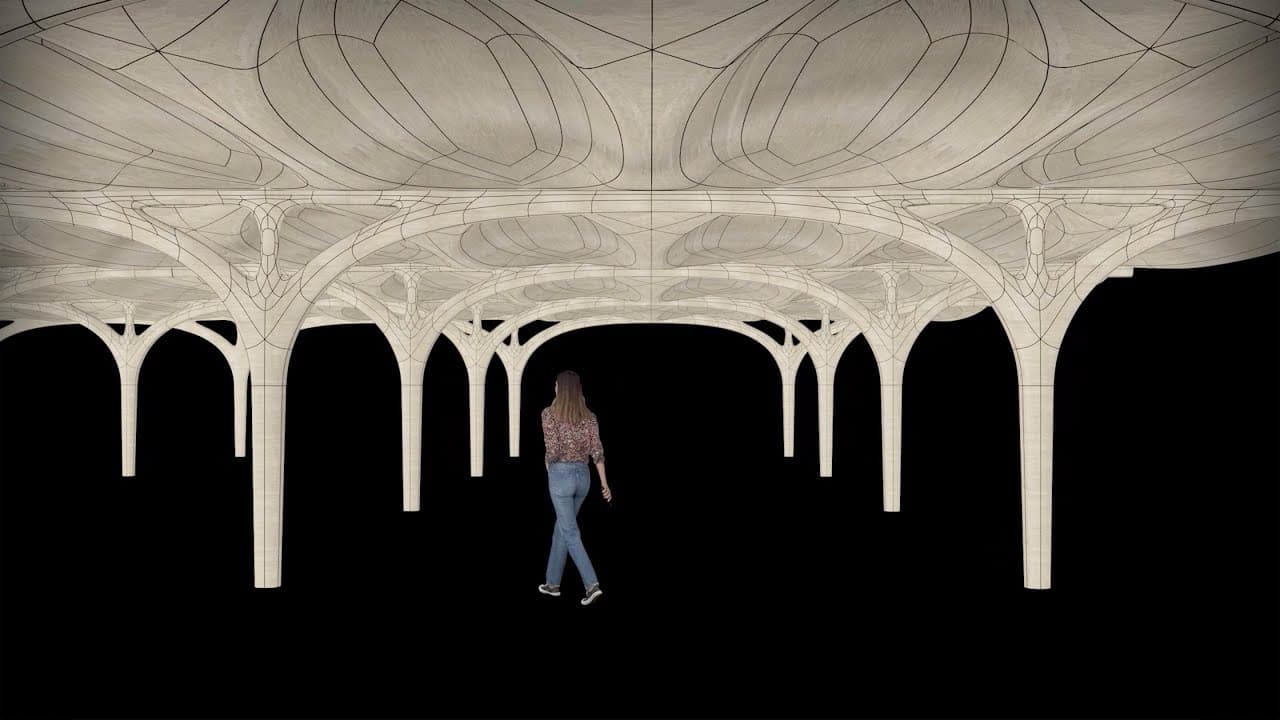
- 🔬 The speaker proposes a fifth structural material called "Five" that combines nature's structures, modern biotechnology, and computer modeling to create an organic material made from forests and crops, aiming to replace materials like concrete and steel.
- 🏭 A growing biomaterials industry offers various products made from natural materials. The speaker's focus is on transforming the biggest material use in buildings, the building structure, to be more efficient and sustainable.
- 💡 The speaker envisions a future with buildings that use fewer resources, have less environmental impact, and create strong, healthy communities. By listening to nature and adopting biomaterials, we can solve the combination of human and planetary needs.
Install to Summarize YouTube Videos and Get Transcripts
Explore YouTube Video Summarizer or Get YouTube Transcript Extractor
Questions & Answers
Q: What are the two main missions of the architecture practice in the video?
The two main missions of the architecture practice in the video are to focus on making beautiful buildings that serve the community and respond to the needs of the people within them, and to work towards reducing the impact of their buildings on the planet and climate change.
Q: Why does the speaker believe that the term "sustainable building" is often not true?
The speaker believes that the term "sustainable building" is often not true because the built environment uses a significant amount of the world's resources, and the majority of those resources are not renewable. Additionally, buildings contribute a significant percentage of greenhouse gas emissions, much higher than the transportation sector, making them a big part of the problem.
Q: Why does the speaker advocate for the use of wood in buildings?
The speaker advocates for the use of wood in buildings because it is a renewable resource that sequesters carbon. Unlike other materials like concrete and steel, wood has a lower carbon footprint, making it the only material that can help achieve carbon-neutral buildings and contribute to sustainability.
Q: What is the speaker's proposed solution for more sustainable structures?
The speaker's proposed solution is the development of a new structural material called "Five." Five is an all-organic material made from forests and crops that can be grown worldwide. By studying nature's structures, combining them with modern biotechnology, computer modeling, and robotics, Five aims to replace materials like concrete, steel, masonry, and wood with a more sustainable alternative.
Summary & Key Takeaways
-
The speaker, an architect from British Columbia, emphasizes the importance of nature in both their personal and professional life, and the need to address the environmental impact of buildings.
-
They advocate for the use of wood as a renewable resource in buildings, as it is the only material on the list of major building materials that sequesters carbon.
-
The speaker introduces a new structural material called "Five," which is all-organic and made from plant fibers, binders, and lignin, with the goal of using fewer resources and creating more efficient and sustainable buildings.
Read in Other Languages (beta)
Share This Summary 📚
Summarize YouTube Videos and Get Video Transcripts with 1-Click
Try YouTube Summary with ChatGPT & Claude or YouTube Transcript Generator
Explore More Summaries from TED 📚



Summarize YouTube Videos and Get Video Transcripts with 1-Click
Try YouTube Summary with ChatGPT & Claude or YouTube Transcript Generator