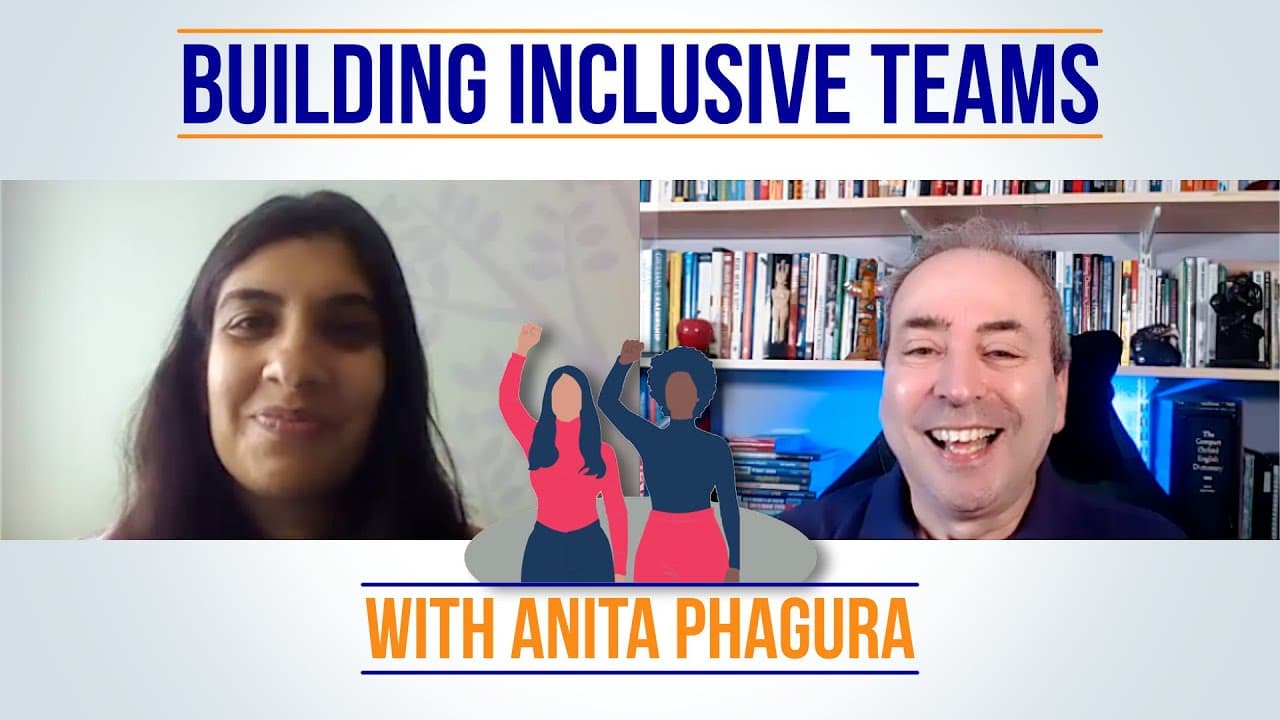
Building Inclusive Teams: A Conversation with Anita Phagura of Fierce Project Management
TL;DR
Building inclusive teams is about embracing diversity, creating an environment where everyone feels heard, respected, and involved in decision-making, and fostering a sense of belonging.
Transcript
anita welcome thank you for having me it's my pleasure anita anita fergura is the founder of fierce project management and she is a passionate advocate for more diversity among our leadership of projects programs and beyond she knows that if you want to bring about real meaningful change we have to shift the status quo and we need leaders who can r... Read More
Key Insights
- 🤪 Diversity goes beyond skill sets and includes various aspects of identity to ensure representation of end users.
- 🥰 Inclusion creates an environment where everyone feels heard, respected, and involved in decision-making.
- 👻 Belonging recognizes and accepts differences, allowing individuals to bring their authentic selves to work and thrive.
- 😤 Diverse and inclusive teams outperform homogeneous teams, bringing varied perspectives, challenging each other, and effectively identifying opportunities and risks.
- 👥 Advocacy and allyship are important in supporting underrepresented groups and creating positive change.
- 🤗 Building inclusive teams requires conscious effort, overcoming biases, and creating space for open conversations.
- ♻️ Toxic environments and personal agendas can hinder inclusivity and diversity.
Install to Summarize YouTube Videos and Get Transcripts
Explore YouTube Video Summarizer or Get YouTube Transcript Extractor
Questions & Answers
Q: What is the difference between diversity and inclusion in a team?
Diversity refers to having different skill sets and varied aspects of identity in a team, while inclusion ensures that everyone feels heard, respected, and involved in decision-making processes. Diversity brings representation, while inclusion fosters a sense of belonging.
Q: Why is diversity important in project teams?
Diversity in project teams leads to better performance, as diverse teams bring different perspectives, challenge each other, and have varied risk tolerances. They are better equipped to represent end users and can identify opportunities and potential pitfalls more effectively.
Q: What challenges can arise in building inclusive teams?
Challenges in building inclusive teams include a lack of genuine belief in inclusion from leaders, fear of losing power or privilege, personal agendas, and a focus on personal gain rather than the organizational benefit. Toxic environments and unconscious biases can also hinder inclusivity.
Q: How can project managers harness diversity in their teams?
Project managers can structure meetings to ensure everyone has a voice, actively celebrate wins and provide opportunities for self-promotion, create mentorship and sponsorship programs, and be mindful of hiring practices to avoid unconscious biases and promote cultural add rather than cultural fit.
Summary & Key Takeaways
-
Diversity in teams goes beyond different skill sets, encompassing various aspects of identity such as gender, race, mental health, physical disabilities, class, age, and sexuality.
-
Inclusion is about creating an environment where everyone feels heard, respected, and involved in decision-making, while diversity ensures representation of end users.
-
Belonging recognizes and accepts differences, allowing individuals to bring their authentic selves to work and creating an environment where everyone can thrive.
Read in Other Languages (beta)
Share This Summary 📚
Summarize YouTube Videos and Get Video Transcripts with 1-Click
Try YouTube Summary with ChatGPT & Claude or YouTube Transcript Generator
Explore More Summaries from Online PM Courses - Mike Clayton 📚




Summarize YouTube Videos and Get Video Transcripts with 1-Click
Try YouTube Summary with ChatGPT & Claude or YouTube Transcript Generator