Freud on: Sublimation
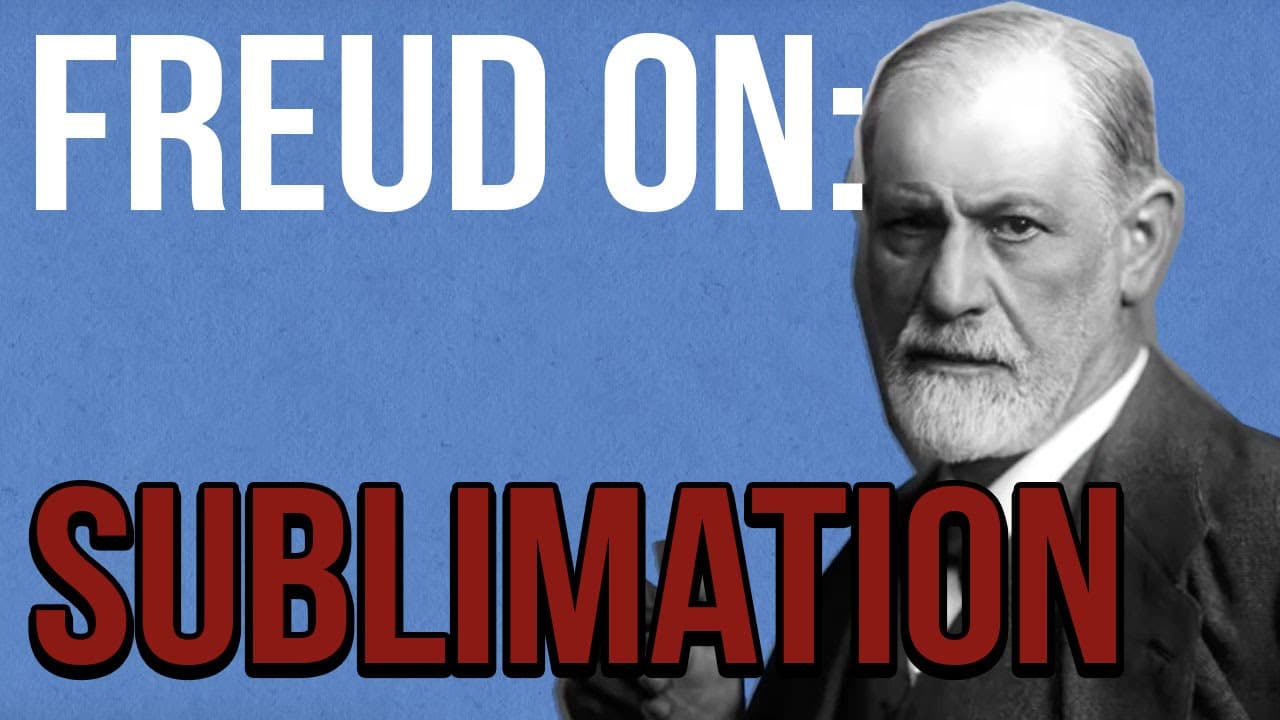
TL;DR
Freud's sublimation shows how we transform dark desires into productive actions.
Transcript
Some of what we want deep down in our primitive unconscious threatens to be pretty dark We may want to do no work, to steal, to injure others, to give way to despair Or to have sex in very taboo and damaging ways yet most of us do very little of this. In fact we often pour our energies into worthwhile projects and go out of our way to try to be goo... Read More
Key Insights
- 🍔 Freud's concept of sublimation serves as a mechanism for individuals to channel primitive urges into positive and productive actions.
- 🥺 Transformational figures like Deffenbaugh show how past negativity can lead to exceptional contributions in adulthood.
- 🥳 Disappointment and frustration are essential parts of personal development, often leading to greater achievements through sublimation.
- ↩️ Sublimation encourages creativity, turning unmet desires into artistic and intellectual breakthroughs for individuals and society alike.
- 🧑 Freud highlights that many adults often manage residual childhood narcissism by redistributing their energies towards ethical pursuits.
- ⛽ The theory of sublimation addresses the pattern of negative experiences potentially fueling positive behavioral outcomes across various domains.
- 🧑 Healthy adult functioning involves recognizing and maturing beyond primal instincts while developing compensatory strategies.
Install to Summarize YouTube Videos and Get Transcripts
Explore YouTube Video Summarizer or Get YouTube Transcript Extractor
Questions & Answers
Q: What is the primary psychological process described by Freud in this content?
Freud discusses sublimation, a process wherein individuals redirect their primitive and often destructive desires into constructive and socially acceptable behaviors. He suggests that this mechanism allows people to contribute positively to society, transforming potentially harmful instincts into creative achievements, scientific discoveries, and altruistic actions.
Q: Can you provide an example that illustrates Freud's concept of sublimation?
One notable example Freud references is that of Johann Friedrich Deffenbaugh, who, despite a sadistic childhood involving cruel acts with a knife, evolved into a selfless and innovative surgeon. This transformation exemplifies how deeply negative urges, when properly sublimated, can result in profound contributions in fields like medicine.
Q: How does Freud relate disappointment to the process of sublimation?
Freud posits that disappointment is an inevitable part of life as our desires often exceed reality. Instead of succumbing to bitterness or nihilism due to unmet desires, sublimation offers us a way to channel frustrations into creative and productive endeavors, allowing us to find alternate fulfillments and achieve personal growth.
Q: Why is the concept of sublimation considered hopeful according to Freud?
Freud views sublimation as a hopeful concept because it highlights our potential to transform pain and disappointment into productivity and creativity. This ability to find fulfillment beyond our initial desires allows us to live enriched lives, despite inherent frustrations, and symbolizes our capacity for personal development and ethical behavior.
Q: What does Freud suggest about childhood desires and adult behavior?
Freud suggests that our childhood desires were often narcissistic and self-centered, focused purely on immediate gratification. As we mature, we must learn to sublimate these desires into more altruistic and socially acceptable behaviors, showcasing a significant transformation from infantile wishes to ethical adult actions.
Q: In what ways does Freud believe sublimation can benefit society?
Freud argues that sublimation not only aids individual development but also positively impacts society by fostering creativity, innovation, and moral responsibility. Individuals who successfully sublimate their darker desires can contribute significantly to various fields, including arts, politics, and science, driving societal progress.
Summary & Key Takeaways
-
The concept of sublimation, introduced by Freud, describes the process of channeling negative urges into positive, productive behaviors, allowing us to create meaningful contributions despite darker instincts.
-
Freud observed that individuals can transform harmful desires into noble pursuits, citing examples like Johanne Deffenbaugh and Leonardo da Vinci to illustrate this psychological evolution.
-
He emphasized that while disappointment and frustration are part of life, sublimation can lead to artistic, scientific, and altruistic achievements, helping us manage unmet desires constructively.
Read in Other Languages (beta)
Share This Summary 📚
Summarize YouTube Videos and Get Video Transcripts with 1-Click
Try YouTube Summary with ChatGPT & Claude or YouTube Transcript Generator