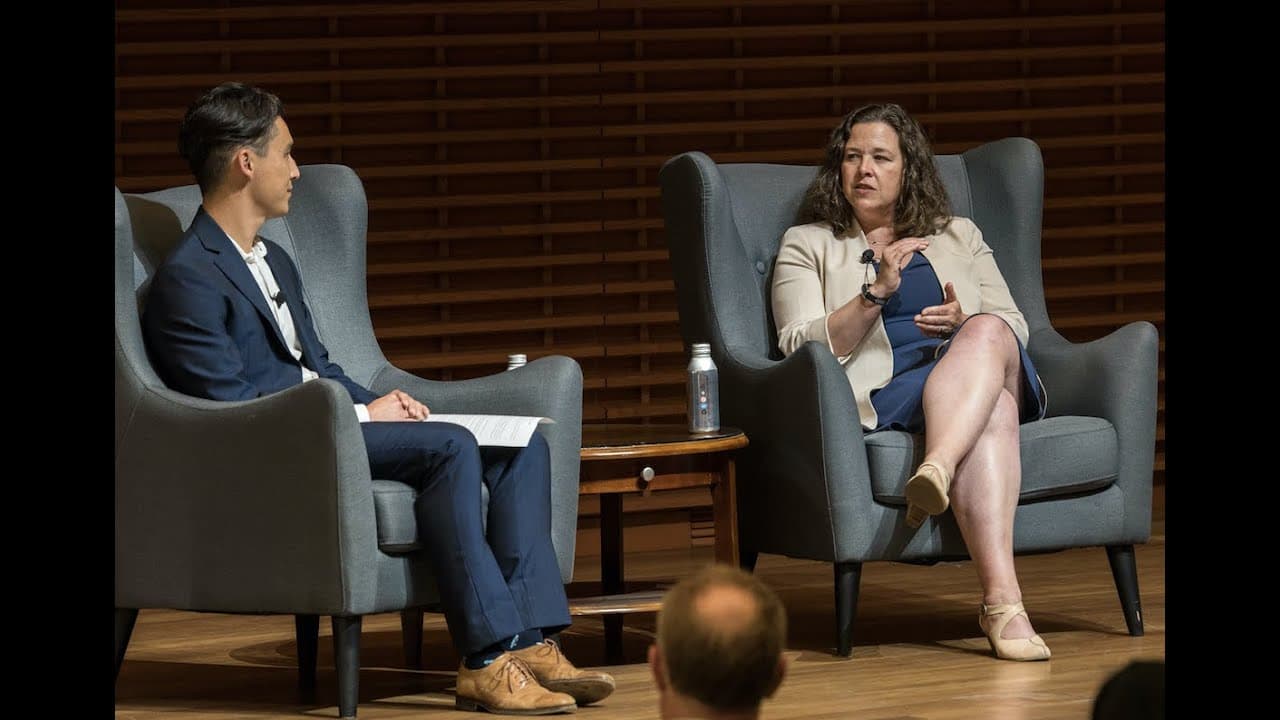
Kate Gordon, Senior Advisor to Energy Secretary Jennifer Granholm, U.S. Department of Energy
TL;DR
Former senior advisor on climate Kate Gordon discusses the connection between climate change and economic development, emphasizing the need for diverse perspectives and addressing the moral, economic, and scientific aspects of the issue.
Transcript
[MUSIC] Okay, thank you so much for coming. It's such an honor to have you here. >> It's so great to be here. >> So you are now one of our nation's top experts on climate change. You were previously the senior advisor on climate to Gavin Newsom, and now the senior advisor to the secretary of energy Jennifer Granholm. But like me, and I'm sure many ... Read More
Key Insights
- 💱 Climate change is an economic issue as it impacts economic development, opportunities, and transitions.
- 👂 Engaging people in conversations about climate change requires listening and understanding their specific concerns and interests.
- 😫 The relationship between federal and state governments is critical for effective climate action, with each playing a role in setting policies and implementing them at different levels.
- 🏛️ Building a sustainable and equitable clean energy economy requires addressing industrial development, supply chain issues, and resource conservation.
Install to Summarize YouTube Videos and Get Transcripts
Explore YouTube Video Summarizer or Get YouTube Transcript Extractor
Questions & Answers
Q: Why did Kate Gordon come into climate change work from an economic development perspective?
Kate Gordon was influenced by the economic impacts she witnessed in her childhood community due to factory closures, leading her to view climate change as an issue of economic development and opportunity.
Q: Why is it important to approach climate change from an economic perspective rather than solely as a moral or scientific issue?
Gordon believes in starting conversations where people are, and for some, climate change is a moral imperative, while for others, it is about economic prosperity and equity. Approaching it from an economic perspective allows for diverse engagement and a focus on opportunity.
Q: How can we effectively engage people in conversations about climate change and bring them into the fold?
The most effective way to engage people is by listening to their specific concerns and interests. By starting with what they care about and highlighting how climate change intersects with those issues, it becomes easier to have meaningful conversations with individuals from various backgrounds.
Q: How does the relationship between federal and state governments influence climate action?
There is a symbiotic relationship between federal and state governments, with the federal government setting the table for action and states implementing and adapting policies to their unique contexts. Close collaboration and coordination are essential to navigating the complex nature of climate change and economic development.
Summary & Key Takeaways
-
Kate Gordon shares her personal journey into climate change work, driven by the economic impacts of factory closures in her childhood community.
-
She highlights the importance of recognizing climate change as an economic issue, engaging with different perspectives and starting conversations based on economic opportunity and equity.
-
Gordon stresses the need to listen to people's concerns about the economic transition that accompanies climate action and the importance of addressing fear and opportunity in discussions.
Read in Other Languages (beta)
Share This Summary 📚
Summarize YouTube Videos and Get Video Transcripts with 1-Click
Try YouTube Summary with ChatGPT & Claude or YouTube Transcript Generator
Explore More Summaries from Stanford Graduate School of Business 📚

Summarize YouTube Videos and Get Video Transcripts with 1-Click
Try YouTube Summary with ChatGPT & Claude or YouTube Transcript Generator