La mujer más antigua de América | Sabías que...
TL;DR
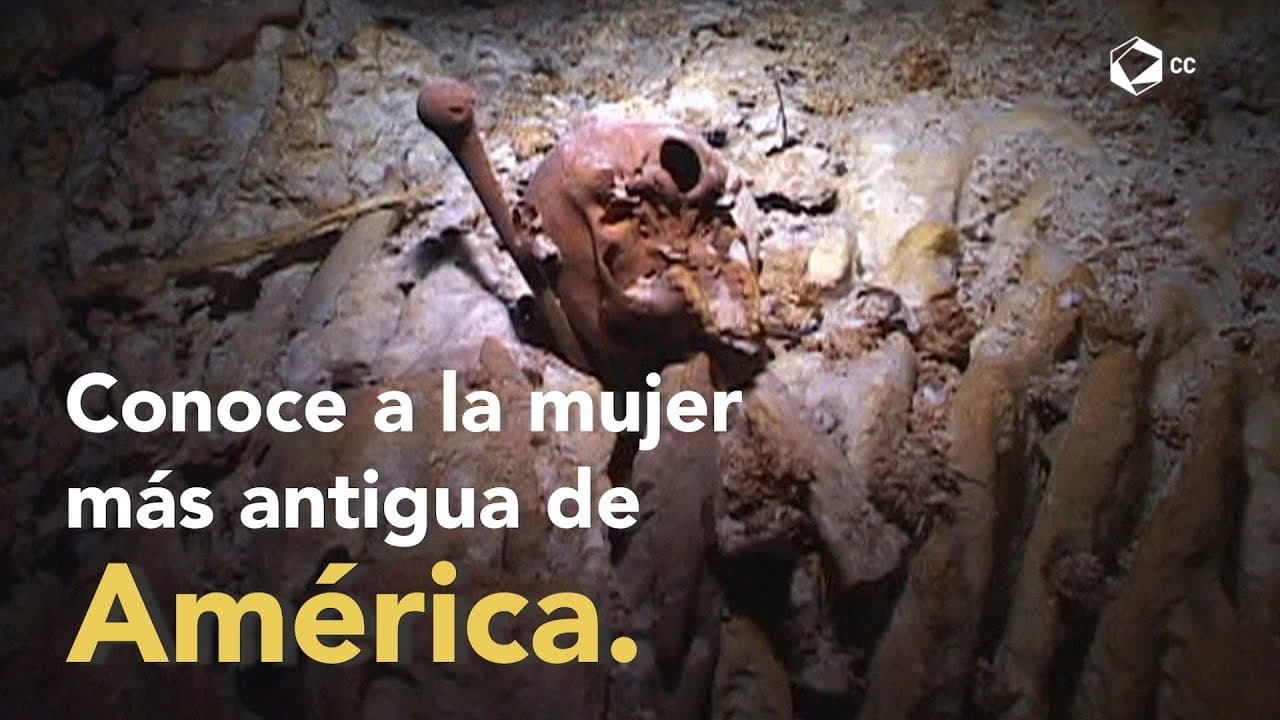
12,000-year-old skeleton found, possibly early American inhabitant.
Transcript
m IND h h [Music] Read More
Key Insights
- The Instituto Nacional de Antropología discovered a skeleton estimated to be around 12,000 years old, suggesting it belongs to one of America's earliest settlers.
- The discovery provides significant insights into the migration patterns and lifestyles of early human inhabitants in the Americas.
- The skeleton, referred to as 'Naia,' offers a unique glimpse into the physical characteristics and health of ancient populations.
- This archaeological finding contributes to the understanding of human evolution and adaptation in prehistoric environments.
- The site of the discovery is crucial for further research into the early human presence and their interaction with the environment.
- The research emphasizes the importance of interdisciplinary approaches, combining archaeology, anthropology, and genetic studies.
- The discovery has sparked interest in the scientific community, leading to potential collaborative research opportunities.
- Public engagement and dissemination of the findings are essential to raise awareness and appreciation of cultural heritage.
Install to Summarize YouTube Videos and Get Transcripts
Explore YouTube Video Summarizer or Get YouTube Transcript Extractor
Questions & Answers
Q: What is the significance of the skeleton discovered by the Instituto Nacional de Antropología?
The skeleton, estimated to be 12,000 years old, is significant because it potentially represents one of the earliest human inhabitants of America. This discovery provides crucial insights into the migration patterns, physical characteristics, and lifestyles of early populations, contributing to the broader understanding of human evolution and prehistoric life.
Q: How does the discovery of Naia contribute to the study of human evolution?
Naia's discovery offers a rare opportunity to examine the physical and genetic traits of early American populations, shedding light on their evolutionary adaptations. By studying Naia, scientists can gain insights into the health, diet, and environmental interactions of ancient humans, enhancing the understanding of human evolution and migration in the prehistoric era.
Q: What research methodologies are being used to study the ancient skeleton?
The study of the ancient skeleton involves interdisciplinary research methodologies, combining archaeology, anthropology, and genetic analysis. These approaches allow scientists to reconstruct the life and environment of early humans, examining their physical attributes, health conditions, and migration patterns, thereby offering a comprehensive understanding of prehistoric human history.
Q: Why is public engagement important in the context of this archaeological discovery?
Public engagement is crucial as it raises awareness and appreciation for cultural heritage. By disseminating findings through social media and educational platforms, the public becomes informed about significant historical discoveries, fostering interest and support for ongoing research and preservation efforts, which are essential for understanding and valuing human history.
Q: What potential collaborations could arise from the discovery of the 12,000-year-old skeleton?
The discovery of the 12,000-year-old skeleton opens avenues for collaborative research among archaeologists, anthropologists, and geneticists. These collaborations can lead to a more comprehensive understanding of early human life, migration, and adaptation, potentially resulting in joint studies, shared findings, and advancements in the field of human evolutionary research.
Q: How does the discovery impact the understanding of migration patterns in prehistoric America?
The discovery impacts the understanding of migration patterns by providing concrete evidence of early human presence in America. It helps trace the routes and timelines of human migration, offering insights into how ancient populations adapted to new environments, which is crucial for reconstructing the history of human settlement in the Americas.
Q: What role does interdisciplinary research play in the study of ancient human remains?
Interdisciplinary research is vital in studying ancient human remains as it integrates diverse scientific perspectives. By combining archaeology, anthropology, and genetics, researchers can create a holistic view of early human life, examining physical characteristics, cultural practices, and genetic evolution, thereby enriching the understanding of human history and prehistoric societies.
Q: How can social media contribute to the dissemination of archaeological findings?
Social media is a powerful tool for disseminating archaeological findings, as it reaches a broad audience quickly and effectively. By sharing discoveries and educational content online, researchers can engage the public, promote awareness, and generate interest in cultural heritage, encouraging support for archaeological research and preservation efforts.
Summary & Key Takeaways
-
The Instituto Nacional de Antropología has unearthed a 12,000-year-old skeleton, potentially one of the earliest inhabitants of America. This discovery, known as 'Naia,' offers valuable insights into the physical and cultural attributes of prehistoric populations, contributing significantly to the understanding of human evolution and migration patterns.
-
The ancient skeleton, found in Mexico, provides a rare opportunity for scientists to study early human life in the Americas. Through interdisciplinary research, including archaeology and genetics, this finding enhances knowledge about ancient migration routes, health, and adaptation strategies, offering a comprehensive view of early human history.
-
The archaeological discovery has garnered attention from the scientific community, emphasizing the importance of preserving and studying cultural heritage. Public engagement initiatives, such as social media sharing and educational content, play a crucial role in raising awareness and fostering appreciation for these significant historical findings.
Read in Other Languages (beta)
Share This Summary 📚
Summarize YouTube Videos and Get Video Transcripts with 1-Click
Try YouTube Summary with ChatGPT & Claude or YouTube Transcript Generator