Carnivorous Sponges — So That's a Thing
TL;DR
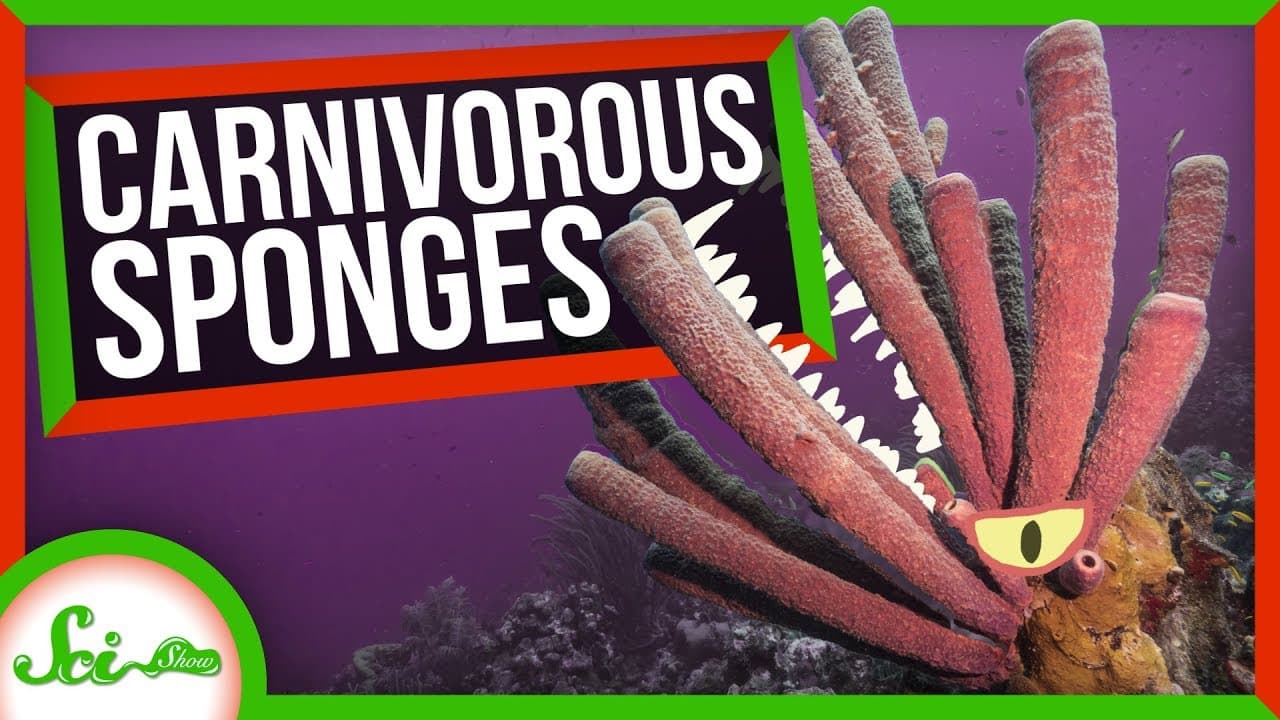
Some sponges are carnivorous, catching and eating small animals with hook-like spicules and using migrating cells as mobile stomachs.
Transcript
♪♪♪ So, sponges are pretty chill, right? They’re just gentle filter-feeders that bask in the sunlight and absorb nutrients from the water around them. Except, that’s not true of all sponges. And here’s something you might not have expected: Some of them are carnivores! Normally, a sponge absorbs nutrients with the help of its aquiferous system: an ... Read More
Key Insights
- 👪 Carnivorous sponges belong to the family Cladorhizidae and have either reduced or absent aquiferous systems.
- 👪 Sponges of this family have developed unique adaptations, including plant-like shapes with stalks and branches.
- 🥘 Hook-like spicules on their filaments allow carnivorous sponges to capture small animals as food.
- 🚗 Migrating cells in carnivorous sponges serve as mobile stomachs, multiplying and digesting prey.
- 🦻 Digestive cells and enzyme-producing bacteria aid in the digestion process.
- 🥺 Carnivorous sponges have been found in nutrient-poor environments, leading to the evolution of this feeding behavior.
- 🧽 There are more than 175 known species of carnivorous sponges, suggesting a relatively widespread occurrence.
Install to Summarize YouTube Videos and Get Transcripts
Explore YouTube Video Summarizer or Get YouTube Transcript Extractor
Questions & Answers
Q: How do carnivorous sponges catch their prey?
Carnivorous sponges have spicules lining their filaments, acting like hook-and-loop fasteners to trap the legs and hairs of small crustaceans or other animals.
Q: What is the role of migrating cells in carnivorous sponges' feeding process?
The migrating cells in carnivorous sponges serve as mobile stomachs. Stem cells near the base of the sponge multiply, transform into digestive cells, and surround the captured prey to digest and absorb nutrients.
Q: How do carnivorous sponges adapt to their nutrient-poor environments?
Carnivorous sponges live in nutrient-poor waters, such as sea caves or deep below the surface. They have evolved to catch and eat small animals as an alternative food source due to the lack of filter-feeding opportunities.
Q: How many species of carnivorous sponges have scientists identified?
Scientists have identified over 175 species of carnivorous sponges, indicating that this feeding behavior is not as rare as expected.
Summary & Key Takeaways
-
Sponges of the family Cladorhizidae have evolved to become carnivorous, deviating from the usual filter-feeding behavior.
-
These sponges have developed plant-like shapes with filaments covered in hook-like spicules to catch small crustaceans or other animals.
-
They use migrating cells as mobile stomachs, multiplying and turning into digestive cells to consume and absorb nutrients from captured prey.
Read in Other Languages (beta)
Share This Summary 📚
Summarize YouTube Videos and Get Video Transcripts with 1-Click
Try YouTube Summary with ChatGPT & Claude or YouTube Transcript Generator
Explore More Summaries from SciShow 📚


Summarize YouTube Videos and Get Video Transcripts with 1-Click
Try YouTube Summary with ChatGPT & Claude or YouTube Transcript Generator