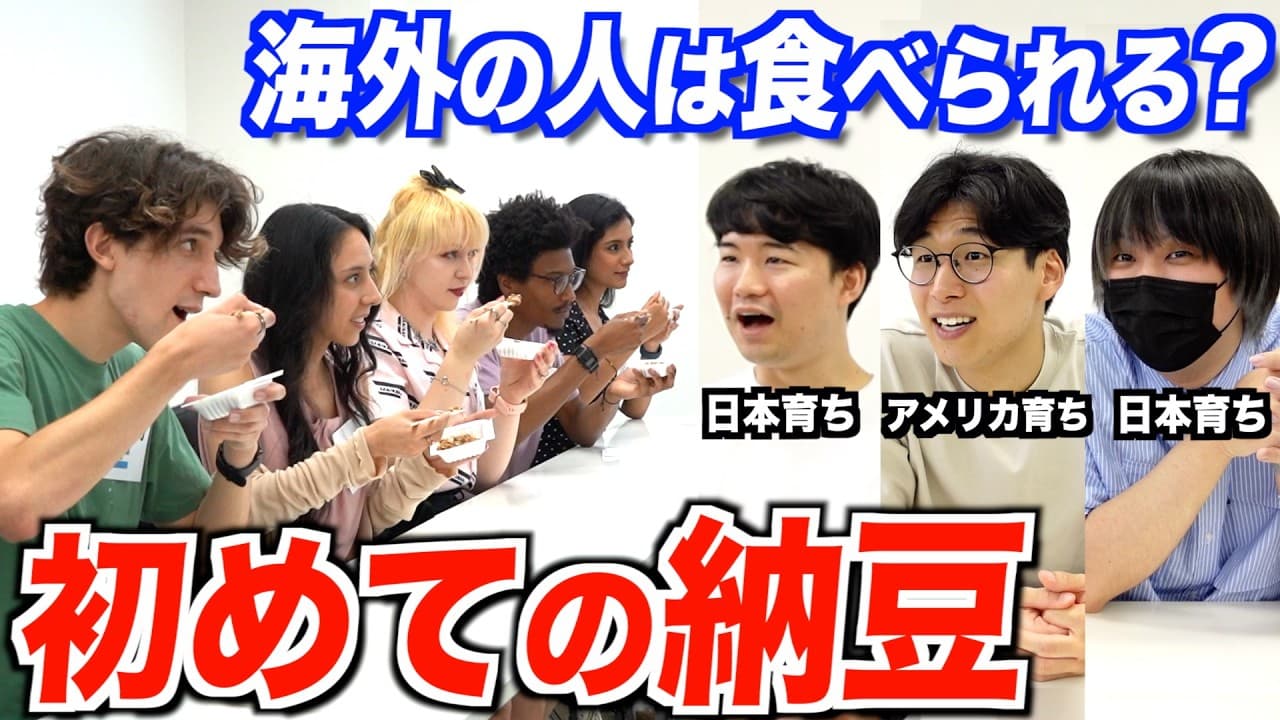
海外の人が初めて納豆を食べる瞬間をレポートしてみた!全員悶絶でヤバいww
TL;DR
Foreigners try natto for the first time with mixed reactions.
Transcript
oh no I'm afraid don't worry this is [Applause] foreign hi foreign [Laughter] Merry Christmas and I came from Argentina I've been in Japan just a month ago so I am really new here I don't even try so many Japanese food so I'm not sure about this my name is Ray and I'm from America I've been in Japan almost four months now I'm a little nervous I've ... Read More
Key Insights
- Natto is a traditional Japanese food known for its unique smell and texture, often polarizing to newcomers.
- Participants from various countries, including Argentina, America, Finland, and India, shared their initial apprehensions about trying natto.
- The primary concern among participants was the strong odor, which some compared to rotting food or damp basements.
- Despite the initial hesitation, most participants found the taste and texture of natto not as unpleasant as expected.
- The addition of sauces and spices was shown to improve the flavor of natto, making it more palatable for some.
- The slimy texture of natto was a significant factor in participants' reactions, with comparisons made to foods like okra.
- Several participants expressed willingness to try natto again, suggesting it might be an acquired taste.
- Cultural exchange and openness to new experiences were highlighted as positive outcomes of the natto tasting.
Install to Summarize YouTube Videos and Get Transcripts
Explore YouTube Video Summarizer or Get YouTube Transcript Extractor
Questions & Answers
Q: What were the initial concerns of the participants about trying natto?
Participants were primarily concerned about the strong odor of natto, which they had heard was quite unpleasant. Some compared it to the smell of rotting food or damp basements, which made them apprehensive about eating it. Additionally, the slimy texture was a concern for some.
Q: How did the participants describe the smell of natto?
The smell of natto was described in various unflattering ways, such as resembling something rotting, a damp basement, or even a garage. Despite these descriptions, some participants noted that they had encountered worse smells in other contexts.
Q: What role did sauces play in the natto tasting experience?
Sauces played a crucial role in improving the taste of natto for the participants. The addition of sauces and spices helped mask the strong odor and made the flavor more acceptable, contributing to a more positive tasting experience for some individuals.
Q: Did any participants express a willingness to try natto again?
Yes, several participants expressed a willingness to try natto again, suggesting that it might be an acquired taste. They acknowledged that repeated exposure could lead to a greater appreciation for the dish, similar to other foods like coffee or alcohol.
Q: How did participants compare the texture of natto to other foods?
The texture of natto was often compared to other slimy foods, such as okra. While some participants found the sliminess off-putting, others noted that it was not as bad as they had anticipated and could potentially be more enjoyable when paired with rice.
Q: What cultural insights were gained from the natto tasting experience?
The natto tasting experience provided cultural insights into the openness required to adapt to new environments and try unfamiliar foods. It highlighted the importance of cultural exchange and the willingness to embrace local customs and culinary traditions, even when they initially seem daunting.
Q: How did participants' expectations compare to their actual experience with natto?
Participants generally found that their expectations of natto being extremely unpleasant were not entirely accurate. While the smell was strong, the taste was often described as not as bad as anticipated. This discrepancy between expectation and reality led some to reconsider their initial apprehensions.
Q: What were some of the more humorous or exaggerated reactions during the tasting?
Some participants had humorous or exaggerated reactions, such as comparing the smell to their grandmother's garage or stating that the taste was like wet socks. These reactions added a lighthearted element to the tasting experience and underscored the diversity of personal taste preferences.
Summary & Key Takeaways
-
A diverse group of foreigners in Japan tried natto for the first time, expressing mixed feelings about its strong smell and slimy texture. While initial reactions were apprehensive, many found the taste more acceptable than anticipated, with some willing to try it again.
-
Participants compared natto's odor to various unpleasant smells, but the taste was generally considered less offensive. The addition of sauces helped improve the flavor, and the experience highlighted the cultural significance of trying new foods in a foreign country.
-
The experiment showcased the varied reactions to natto, emphasizing its status as an acquired taste. The participants' openness to trying unfamiliar foods reflects the broader theme of cultural exchange and adaptation in a new environment.
Read in Other Languages (beta)
Share This Summary 📚
Summarize YouTube Videos and Get Video Transcripts with 1-Click
Try YouTube Summary with ChatGPT & Claude or YouTube Transcript Generator
Explore More Summaries from Kevin's English Room / 掛山ケビ志郎 📚
Summarize YouTube Videos and Get Video Transcripts with 1-Click
Try YouTube Summary with ChatGPT & Claude or YouTube Transcript Generator