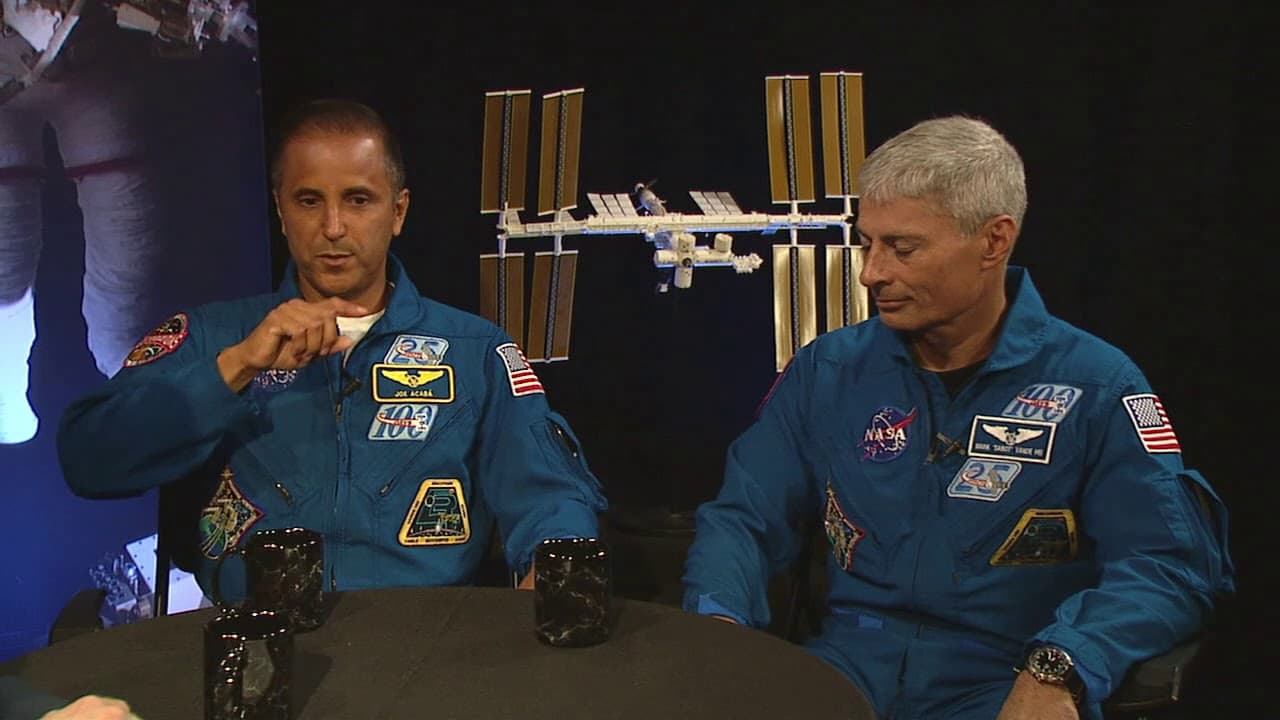
NASA Administrator Bridenstine Chats with Astronauts Acaba and Vande Hei
TL;DR
Two astronauts talk about their backgrounds, careers, and experiences on the International Space Station (ISS).
Transcript
IF YOU WOULD FOR THE NASA AUDIENCE, JUST SHARE WITH US WHAT YOUR BACKGROUND IS, EDUCATION, WHERE YOU WENT TO SCHOOL, WHAT YOU STUDIED, AND ULTIMATELY WHAT YOU DID AS A CAREER AND WHAT YOU DID TO BECOME AN ASTRONAUT. >> I WENT TO ST. JOHN'S FOR PHYSICS. I WAS IN THE ROTC PROGRAM SO IMMEDIATELY AFTER GRADUATION I BECAME AN ARMY OFFICER. AT SOME PO... Read More
Key Insights
- 😘 Astronauts clean the ISS regularly to maintain a sterile environment and protect against the transmission of illnesses.
- 🚀 Launching on a Soyuz rocket provides a smooth and controlled experience, with a brief jolt during the transition between stages.
- 😘 Algebra is crucial in astronauts' daily activities on the ISS, highlighting the importance of STEM education.
- 😘 The ISS conducts hundreds of scientific experiments, contributing to various fields of research and understanding the challenges of living in a self-contained environment.
Install to Summarize YouTube Videos and Get Transcripts
Explore YouTube Video Summarizer or Get YouTube Transcript Extractor
Questions & Answers
Q: What does a combat engineer do?
Combat engineers assist ground tactical units in ensuring mobility and overcoming obstacles, contributing to critical decision-making in life and death situations.
Q: How long does it take for astronauts to adjust to the 1G force after returning from space?
The adjustment period varies for each astronaut, but generally, it takes a few hours to days to regain balance and overcome muscle soreness in smaller muscles that aid in balance and coordination.
Q: What is the process of protecting the ISS from space debris?
The ISS is monitored for space debris, and if necessary, its orbit is adjusted to avoid collisions. The smaller debris may leave dings on the space station's surfaces, but the larger objects are actively tracked and avoided.
Q: What is the astronauts' favorite geological feature to observe from the space station?
One astronaut enjoys observing the diverse geological features of Africa, such as different rock formations, dunes, and mountain ranges. The other astronaut was fascinated by the American West's lights at night under a full moon.
Summary & Key Takeaways
-
The first astronaut studied physics in college, served as an Army officer, earned a master's degree in applied physics, and transitioned to a space operations officer.
-
The second astronaut worked various jobs before becoming a teacher and was later chosen by NASA to be an educator astronaut.
-
Both astronauts spent time on the ISS, sharing their experiences with students and conducting numerous scientific experiments.
Read in Other Languages (beta)
Share This Summary 📚
Summarize YouTube Videos and Get Video Transcripts with 1-Click
Try YouTube Summary with ChatGPT & Claude or YouTube Transcript Generator
Explore More Summaries from NASA 📚

Summarize YouTube Videos and Get Video Transcripts with 1-Click
Try YouTube Summary with ChatGPT & Claude or YouTube Transcript Generator