What Are Patents, Prizes, and Subsidies for Innovation?
TL;DR
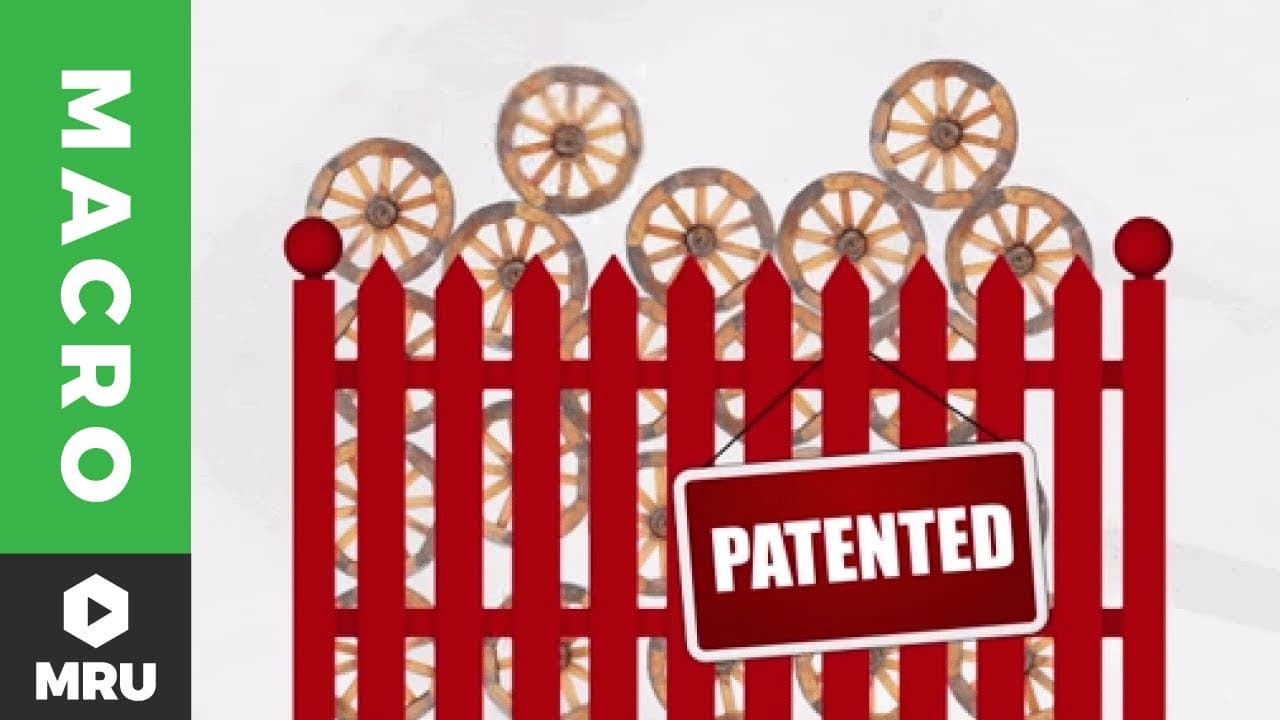
Patents, prizes, and subsidies are mechanisms to incentivize innovation while promoting the spread of ideas. Patents grant temporary monopolies to recover R&D costs but may slow idea dissemination. Prizes reward successful problem-solving, and subsidies support basic research, each with unique benefits and challenges in fostering economic growth.
Transcript
♪ [music] ♪ [Alex] Growth on the cutting edge is all about the creation of new ideas. So we want institutions that create incentives to produce new ideas. Ideas, however -- they've got some odd properties and it makes this kind of tricky. Two people can't use the same shovel at the same time. If one person's using the shovel, the other person can't... Read More
Key Insights
- Ideas are nonrivalrous, meaning they can be shared by many without diminishing their value, unlike physical goods.
- Patents provide a temporary monopoly to innovators, allowing them to recoup research and development costs.
- The duration and scope of patents are contentious issues, affecting the spread and use of ideas.
- Subsidies support basic research, particularly in fields with significant positive externalities, like basic sciences.
- Prizes incentivize solving specific problems, offering flexibility in how solutions are reached.
- Each incentive method—patents, prizes, and subsidies—has its own trade-offs and limitations in promoting innovation.
- Determining what research or innovation goals deserve subsidies or prizes is a complex decision-making process.
- Institutions must balance incentives for creating ideas and allowing them to spread widely to maximize societal benefits.
Install to Summarize YouTube Videos and Get Transcripts
Explore YouTube Video Summarizer or Get YouTube Transcript Extractor
Questions & Answers
Q: Why are ideas considered nonrivalrous?
Ideas are nonrivalrous because they can be used by multiple people simultaneously without being depleted. Unlike physical goods, which can only be used by one person at a time, ideas can be shared and utilized by many, allowing for widespread benefits and advancements without diminishing the original idea's value.
Q: What role do patents play in innovation?
Patents provide innovators with a temporary monopoly on their creations, allowing them to profit from their ideas before competitors can enter the market. This exclusivity helps innovators recover the substantial costs involved in research and development, thereby incentivizing the creation of new ideas and technologies.
Q: How do subsidies support basic research?
Subsidies support basic research by providing financial assistance to universities and research institutions. This funding helps cover the costs of exploratory research, particularly in fields with significant positive externalities, such as mathematics and physics, where the results may not have immediate commercial applications but are crucial for long-term advancements.
Q: What are the advantages of using prizes as an incentive?
Prizes offer flexibility by rewarding the successful resolution of specific problems without dictating how the solutions should be achieved. This open-ended approach encourages innovative and unexpected solutions, motivating researchers to tackle significant challenges with the promise of recognition and financial rewards upon success.
Q: What challenges are associated with determining patent duration?
Determining the optimal duration for patents is challenging because it involves balancing the need to incentivize innovation with the desire to allow ideas to spread widely. Longer patents provide more time for innovators to profit, but they can also delay the dissemination of ideas, potentially hindering further innovation and societal benefits.
Q: Why might subsidies lead to less useful research?
Subsidies might lead to less useful research because they fund the research process rather than specific outcomes. Researchers may pursue projects that align with their interests rather than addressing pressing societal needs, resulting in research that, while intellectually stimulating, may not yield practical applications or solutions to real-world problems.
Q: How do prizes differ from patents in encouraging innovation?
Prizes differ from patents by rewarding the achievement of specific goals rather than granting temporary monopolies. While patents incentivize innovation by protecting intellectual property, prizes encourage diverse approaches to problem-solving, potentially leading to breakthroughs that patents might not stimulate due to their structured nature.
Q: What is the main trade-off when using patents as an incentive?
The main trade-off when using patents is between incentivizing innovation and allowing ideas to spread widely. Patents provide financial motivation for innovators by granting temporary monopolies, but they can also restrict access to new ideas, slowing down further innovation and limiting the societal benefits that come from widespread idea dissemination.
Summary & Key Takeaways
-
The video discusses the challenges of incentivizing innovation, focusing on the unique nature of ideas as nonrivalrous goods. It explores how patents, prizes, and subsidies serve as mechanisms to encourage the creation and dissemination of new ideas, each with its own benefits and drawbacks.
-
Patents offer temporary monopolies to innovators, enabling them to recover R&D expenses but potentially hindering the rapid spread of ideas. Subsidies and prizes are alternative incentives, supporting basic research and rewarding problem-solving, respectively, though they come with their own challenges.
-
The complexity of determining the optimal mix of incentives highlights the difficulty in fostering innovation while ensuring ideas are accessible. The video underscores the importance of balancing these incentives to drive economic growth and technological advancement.
Read in Other Languages (beta)
Share This Summary 📚
Summarize YouTube Videos and Get Video Transcripts with 1-Click
Try YouTube Summary with ChatGPT & Claude or YouTube Transcript Generator
Explore More Summaries from Marginal Revolution University 📚

Summarize YouTube Videos and Get Video Transcripts with 1-Click
Try YouTube Summary with ChatGPT & Claude or YouTube Transcript Generator