How Bitcoin Works - Computerphile
TL;DR
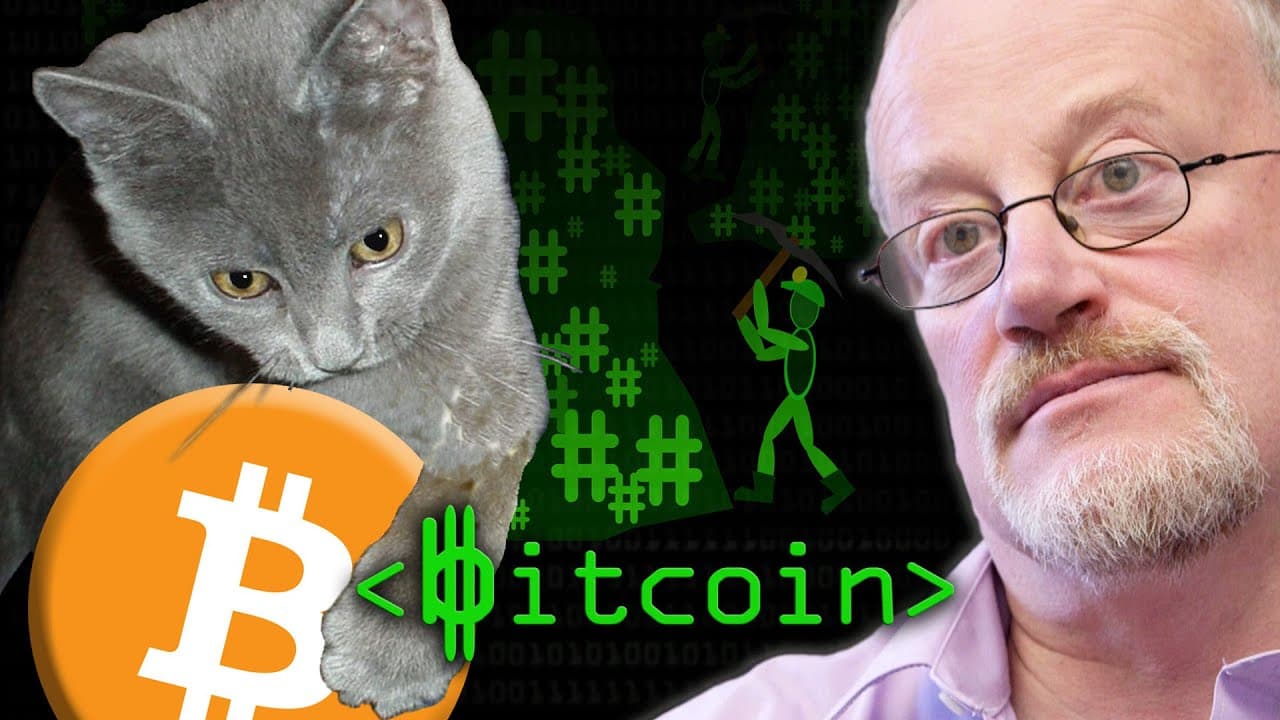
Bitcoin works through a public blockchain that preserves its transaction history, while miners compete to add each new batch of transactions by finding a qualifying hash. A new hash was found about every ten minutes, earning 25 Bitcoins at the time described, and mining pools divided rewards among their members. Read on to understand transaction processing, mining rewards, halvings, consensus, and Bitcoin’s disputed authorship.
Transcript
some of the earlier ideas at digital money simply took the form of a public ledger. You know you start off with money you have a list of who owns how many coins and then people call in and say I hereby transfer so many coins to such-and-such and you then update the ledger. Now of course in real life proper money actually works like that it's just ... Read More
Key Insights
- 🫥 Bitcoin operates on a public ledger called the blockchain, which records all transactions and is visible to everyone.
- #️⃣ Miners compete to find the next hash in the blockchain and are rewarded with 25 Bitcoins for their efforts.
- ❓ Bitcoin mining is currently profitable, but the upcoming halving of rewards may pose challenges for miners.
Install to Summarize YouTube Videos and Get Transcripts
Explore YouTube Video Summarizer or Get YouTube Transcript Extractor
Questions & Answers
Q: How does the Bitcoin blockchain work?
The blockchain is a publicly visible ledger containing Bitcoin transactions back to the first transaction in 2008 or 2009. Each new hash binds together the previous hash and a batch of pending transactions, allowing anyone to trace a Bitcoin from when it was mined through its later transfers or subdivisions.
Q: How are Bitcoin transactions processed?
A user signs a transaction specifying a payment, and it is collected with hundreds of other pending transactions from around the world. Miners combine that batch with the blockchain’s last hash and repeatedly test random numbers until one produces a hash with the required property.
Q: What do Bitcoin miners do?
Bitcoin miners compete to find the blockchain’s next qualifying hash. The described property appears only about once every sixty million, million, million attempts, so thousands or millions of computers repeatedly test possibilities.
Q: How often is a new Bitcoin hash found?
A new qualifying hash is found about every ten minutes in the system described. When a miner finds it, the pending transaction batch is added to the blockchain one hash at a time.
Q: How were Bitcoin miners rewarded?
At the time described, the successful miner received 25 Bitcoins for finding a qualifying hash. The transcript says this reward was designed to fall over time to prevent inflation and eventually stabilize the amount of Bitcoin in circulation.
Q: How do Bitcoin mining pools work?
Miners join pools that distribute hashing work among many participants and share each reward when the pool succeeds. At the time described, three large pools served tens of thousands of miners, and each pool won a reward about once every half hour.
Q: Why did the Bitcoin mining reward fall from 25 to 12.5 Bitcoins?
Bitcoin’s rules scheduled the reward to decline from 25 Bitcoins to 12.5 per successful hash. The inventor designed falling rewards so the work required per Bitcoin would increase over time and the amount in circulation would eventually become stable.
Q: Who created Bitcoin?
Nobody in the transcript knows for sure who wrote Bitcoin, and Satoshi Nakamoto appears to be a pseudonym. Hal Finney, a cipher-punk, cryptographer, and coder involved in the first Bitcoin transaction, could have created it, but he denied doing so.
Summary & Key Takeaways
-
Bitcoin operates on a public ledger called the blockchain, where all transactions are visible forever.
-
Bitcoin miners solve complex mathematical problems to find the next hash in the blockchain and are rewarded with 25 Bitcoins every ten minutes.
-
Miners work in pools and share rewards; however, the reward for finding a new hash is set to halve, presenting future difficulties.
Read in Other Languages (beta)
Share This Summary 📚
Summarize YouTube Videos and Get Video Transcripts with 1-Click
Try YouTube Summary with ChatGPT & Claude or YouTube Transcript Generator
Explore More Summaries from Computerphile 📚

Summarize YouTube Videos and Get Video Transcripts with 1-Click
Try YouTube Summary with ChatGPT & Claude or YouTube Transcript Generator