Why Moldy Food is More Dangerous Than You Thought
TL;DR
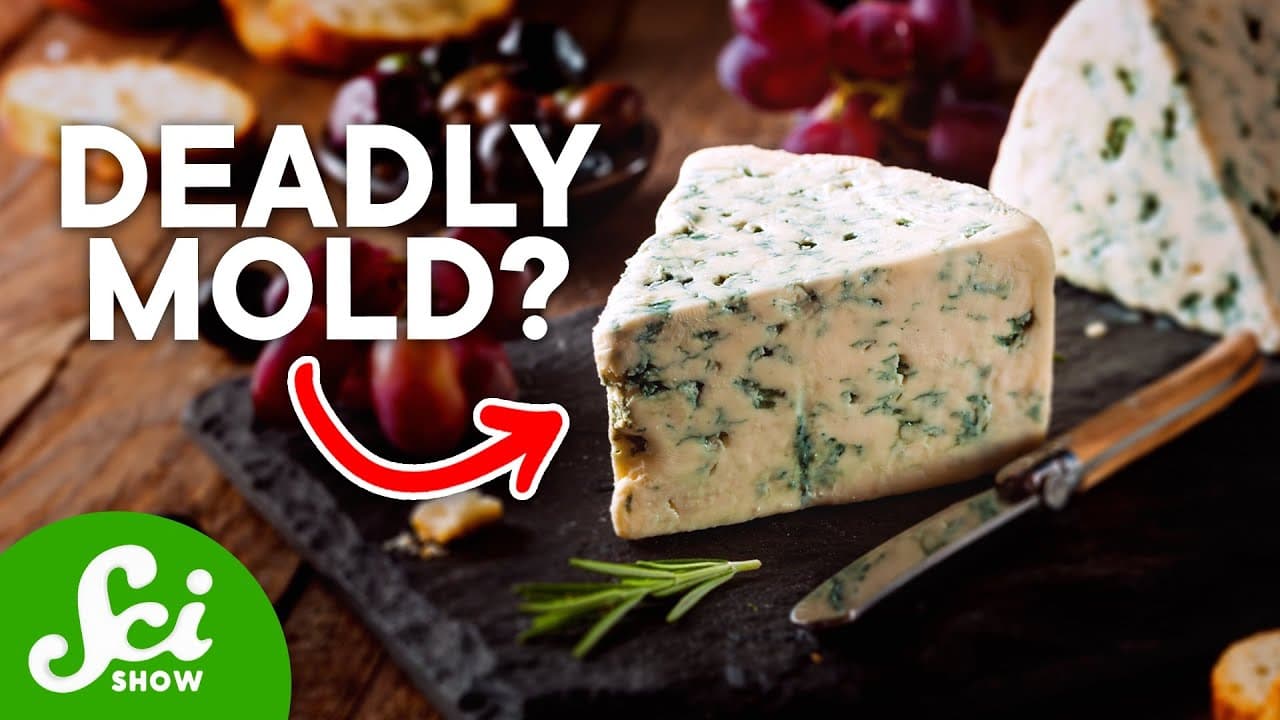
Mold is a type of microscopic fungi that can grow on food. While some molds are safe to eat, others can produce mycotoxins, which can be harmful to our health.
Transcript
You know when you got, like, three-quarters of a loaf left, And then you see that little blue-green fuzzy spot. And you're like, aagh! Should I? Should I not eat, but... You know, you probably shouldn't eat it. But why? And why can I eat this? But not this? It's a moldy world out there, especially in the kitchen. And we have answers for you. [Intro... Read More
Key Insights
- 😋 Mold is a type of microscopic fungi that can grow on food when conditions are right.
- 🫥 Visible signs of mold, such as weird fur or green dots, are actually the stalks and spores of the mold.
- 🥩 While cutting away mold from harder foods is generally safe, it is not recommended for soft cheeses, berries, meats, and produce.
- 😋 Mycotoxins, toxic compounds produced by certain molds, can be present in moldy food and may cause allergic reactions, infections, and even cancer.
- 🧀 Some molds, like those found in certain cheeses, are intentionally introduced and safe to consume.
- 🧀 Moldy cheeses can still be susceptible to other molds.
- 🥜 Aflatoxin, a dangerous mycotoxin, is commonly found in grains, nuts, and peanuts.
Install to Summarize YouTube Videos and Get Transcripts
Explore YouTube Video Summarizer or Get YouTube Transcript Extractor
Questions & Answers
Q: Why does mold grow on food?
Mold grows on food when the conditions are right, such as when there is enough moisture, warmth, and nutrients. Mold spores are present in the air, and when they settle on food, they can start growing.
Q: Are all molds harmful?
No, not all molds are harmful. Some molds, like those found in certain types of cheeses, are intentionally introduced and safe to eat. However, molds can produce mycotoxins, which are toxic compounds, and certain types of molds can be dangerous if consumed.
Q: Can cutting away the moldy parts make food safe to eat?
Cutting away mold from harder foods like apples and potatoes is generally safe because the mycelia cannot penetrate deep into the food. However, it is not recommended to do the same for soft cheeses, berries, meats, and produce, as the mycotoxins produced by the mold can still be present.
Q: What are mycotoxins and why are they dangerous?
Mycotoxins are toxic compounds produced by certain molds. They can survive processing or cooking and are associated with various health problems, including allergies, rashes, infections, and even cancer. Aflatoxin, one of the most dangerous mycotoxins, is commonly found in grains, nuts, and peanuts.
Summary & Key Takeaways
-
Mold is a type of microscopic fungi that grows from spores present in the air. It thrives in warm, moist environments and can even form in refrigerated food.
-
Mold grows by releasing root threads called mycelia into the food, which are difficult to see. The visible signs of mold are actually the stalks and spores that form on the surface of the food.
-
Cutting away mold from harder foods like apples and potatoes is generally safe, but it is advised to avoid consuming moldy soft cheeses, berries, meats, and other produce due to the potential presence of mycotoxins.
Read in Other Languages (beta)
Share This Summary 📚
Summarize YouTube Videos and Get Video Transcripts with 1-Click
Try YouTube Summary with ChatGPT & Claude or YouTube Transcript Generator
Explore More Summaries from SciShow 📚
Summarize YouTube Videos and Get Video Transcripts with 1-Click
Try YouTube Summary with ChatGPT & Claude or YouTube Transcript Generator