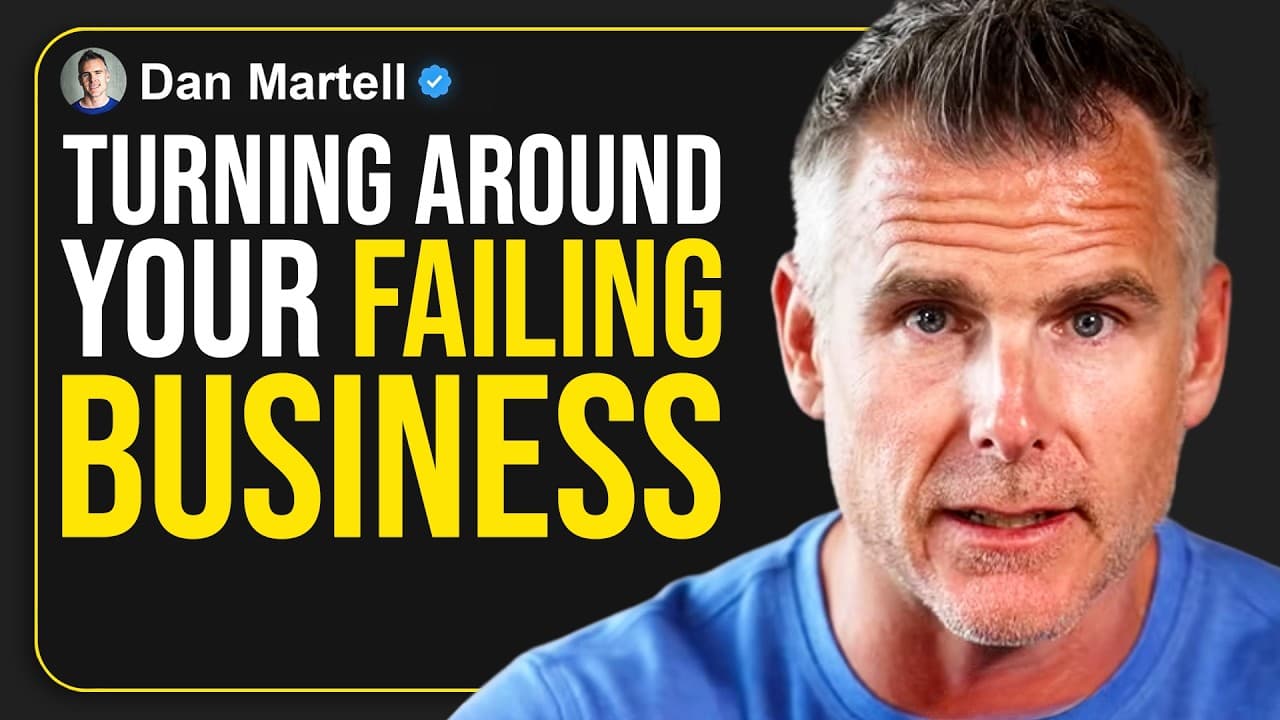
How To Turn Around a Failing Business
TL;DR
Steps to revive a struggling business and regain profitability.
Transcript
- Am I in frame? - [Josh] That's exactly what I need you to do. (upbeat music) How to turn around your business. This is a very serious video. If every month you're looking at the numbers and it's going slim, alright, if you're feeling embarrassed because you don't feel like you've made some great decisions or your arguing or frustrated or you ha... Read More
Key Insights
- Entrepreneurs often focus on revenue growth without considering profitability, leading to financial strain.
- Accountants are not responsible for business decisions; entrepreneurs must develop financial literacy.
- Gathering comprehensive financial data is crucial to understanding the true state of a business.
- Creating a financial model helps in assessing income, expenses, and liabilities accurately.
- Deep cost-cutting, including layoffs, may be necessary to stabilize finances.
- Maintaining strong customer relationships is vital during restructuring to ensure continued revenue.
- Reflecting on past mistakes and learning from them prevents future financial mismanagement.
- Rebuilding the business should focus on proven strategies rather than risky expansions.
Install to Summarize YouTube Videos and Get Transcripts
Explore YouTube Video Summarizer or Get YouTube Transcript Extractor
Questions & Answers
Q: What is the first step in turning around a failing business?
The first step is to gather all financial information, including credit card transactions, bank accounts, and financial statements. This comprehensive data collection is crucial for understanding the business's true financial state and making informed decisions.
Q: Why is financial literacy important for entrepreneurs?
Financial literacy is crucial because it enables entrepreneurs to understand how their decisions impact revenue, expenses, and profitability. Without it, they may rely too heavily on accountants who are not responsible for business decisions, leading to potential financial mismanagement.
Q: How should entrepreneurs approach cost-cutting in a struggling business?
Entrepreneurs should approach cost-cutting by making deep cuts rather than surface-level reductions. This may involve difficult decisions like layoffs and eliminating non-essential expenses to stabilize the business financially and prevent insolvency.
Q: What role do customers play in a business turnaround strategy?
Customers play a crucial role in a business turnaround strategy. Entrepreneurs should focus on maintaining strong relationships with existing customers, ensuring their satisfaction, and preventing revenue loss from unpaid invoices or terminated contracts.
Q: How can entrepreneurs learn from past business mistakes?
Entrepreneurs can learn from past mistakes by conducting a postmortem analysis to identify what led to financial difficulties. This reflection helps prevent future mismanagement and informs better decision-making in areas like financial oversight and hiring practices.
Q: What should entrepreneurs focus on when rebuilding their business?
When rebuilding, entrepreneurs should focus on proven strategies that have previously worked for their business. This involves optimizing pricing, ensuring proper margin structures, and avoiding risky expansions or new ventures that could destabilize the business.
Q: Why is it important to remove emotion from business decisions?
Removing emotion from business decisions is important because it allows entrepreneurs to make objective, rational choices based on financial data rather than personal feelings. This approach is essential for stabilizing a struggling business and ensuring its long-term success.
Q: What is the ultimate goal of the turnaround process?
The ultimate goal of the turnaround process is to stabilize the business financially, achieve profitability, and rebuild entrepreneur confidence. By following structured steps and learning from past mistakes, entrepreneurs can create a sustainable business model that supports growth and success.
Summary & Key Takeaways
-
The video discusses strategies for turning around a failing business by focusing on financial literacy, cost-cutting, and customer relations. Entrepreneurs often overlook profitability in favor of revenue growth, leading to financial difficulties.
-
A detailed financial analysis is essential for understanding the business's true state. This includes gathering all financial data, creating a financial model, and making informed decisions based on accurate projections.
-
To stabilize a struggling business, entrepreneurs may need to make difficult decisions such as layoffs and expense cuts. Maintaining customer satisfaction and learning from past mistakes are crucial for long-term success.
Read in Other Languages (beta)
Share This Summary 📚
Summarize YouTube Videos and Get Video Transcripts with 1-Click
Try YouTube Summary with ChatGPT & Claude or YouTube Transcript Generator
Explore More Summaries from Dan Martell 📚





Summarize YouTube Videos and Get Video Transcripts with 1-Click
Try YouTube Summary with ChatGPT & Claude or YouTube Transcript Generator