How Extreme Is The Weather In Our Universe?
TL;DR
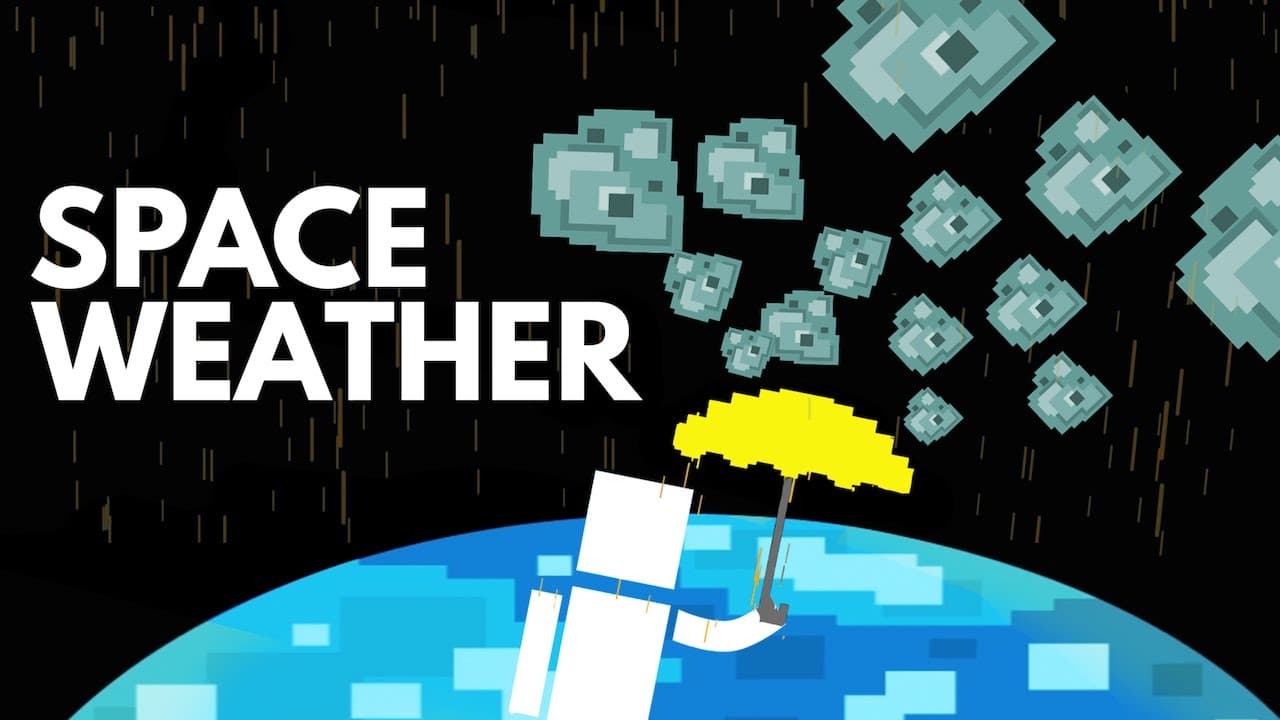
Explore extreme weather phenomena on Jupiter, a planet that rains molten glass, crystal rain on a star, and a planet with wildly changing temperatures.
Transcript
Hey there and welcome to Life Noggin! Something I’ve noticed about you humans is that you love to talk about the weather. Especially when it’s not going well. But, trust me, Earth weather pales in comparison to the weather on some other planets and stars. To start off, let’s take a 600 million kilometer trip over to Jupiter. Once there, you’d be ab... Read More
Key Insights
- 🚄 Jupiter's Great Red Spot is a long-lasting high pressure storm with wind speeds exceeding 400 km/h.
- 😎 Exoplanet HD 189733b features temperatures exceeding 900 degrees Celsius, leading to molten glass rain.
- ⛈️ Crystal rain on star HOPS-68 involves olivine mineral crystals forming in lava-like temperatures and falling from surrounding gas clouds.
- 🔯 Planet HD 80606b's temperature doubles due to its highly elliptical orbit, receiving 800 times more light at its closest point to the star.
- ☀️ Extreme weather phenomena on other planets and stars provide fascinating insights into the diversity of weather patterns in the universe.
- ☀️ Studying weather on distant planets can offer valuable insights into how weather systems function and vary across different celestial bodies.
- 🥳 The extreme conditions on planets like HD 189733b and HD 80606b highlight the vast differences in weather patterns compared to Earth.
Install to Summarize YouTube Videos and Get Transcripts
Explore YouTube Video Summarizer or Get YouTube Transcript Extractor
Questions & Answers
Q: What is the Great Red Spot on Jupiter, and how does it form?
The Great Red Spot is a high pressure storm on Jupiter that has been raging for centuries due to intricate jetstreams sustaining its position, preventing it from moving north or south but allowing it to shift east and west.
Q: How do temperatures on planet HD 189733b lead to molten glass rain?
Temperatures on HD 189733b, exceeding 900 degrees Celsius, heat silicate particles, potentially creating molten glass rain as the planet orbits close to its star, similar to a Hot Jupiter.
Q: How does crystal rain occur on the star HOPS-68?
HOPS-68 star experiences crystal rain made of olivine mineral as tiny green crystals form in lava-like temperatures near the star's surface, then fall from surrounding gas clouds, resembling glitter.
Q: What causes the extreme temperature changes on planet HD 80606b?
HD 80606b's extreme temperatures doubling within six hours result from its highly elliptical orbit, where it receives 800 times more light when closest to its star than when farthest away.
Summary & Key Takeaways
-
Jupiter's Great Red Spot is a massive storm that has been ongoing for 400 years, with winds exceeding 400 km/h.
-
Exoplanet HD 189733b rains molten glass due to extreme temperatures reaching over 900 degrees Celsius.
-
HOPS-68 star experiences crystal rain made of olivine mineral, falling from surrounding gas clouds.
Read in Other Languages (beta)
Share This Summary 📚
Summarize YouTube Videos and Get Video Transcripts with 1-Click
Try YouTube Summary with ChatGPT & Claude or YouTube Transcript Generator
Explore More Summaries from Life Noggin 📚






Summarize YouTube Videos and Get Video Transcripts with 1-Click
Try YouTube Summary with ChatGPT & Claude or YouTube Transcript Generator