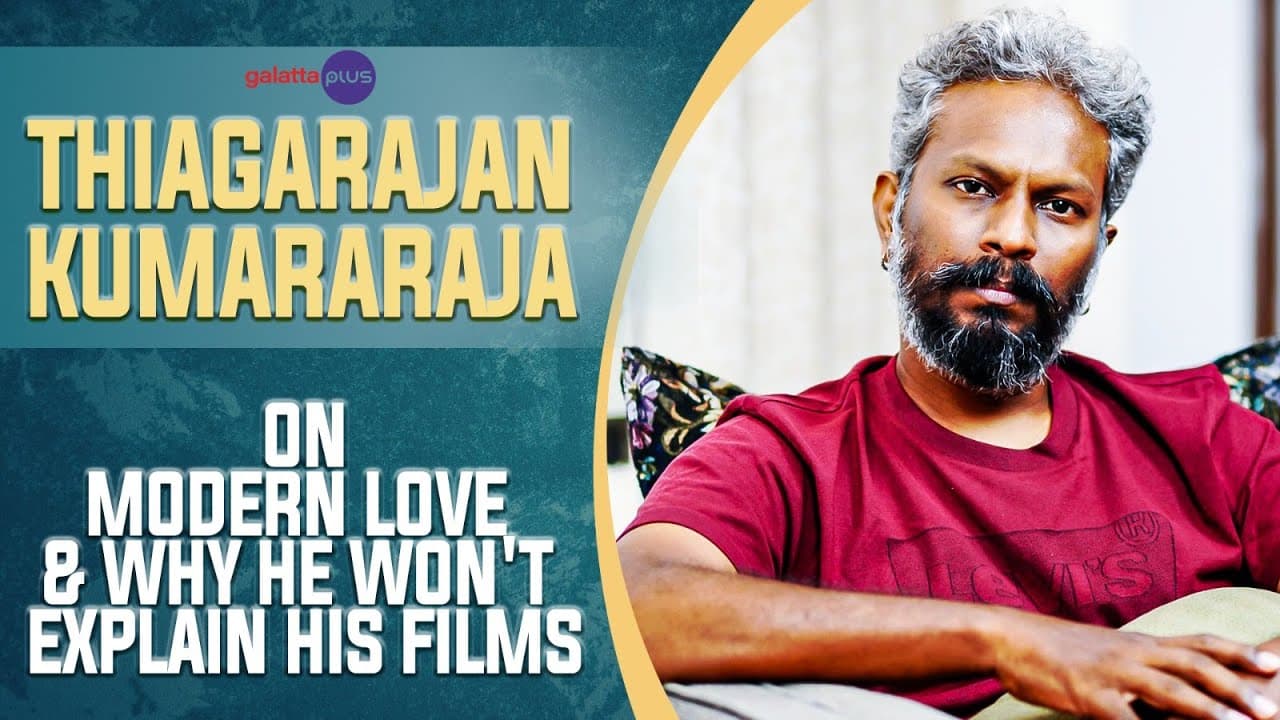
Thiagarajan Kumararaja Interview With Baradwaj Rangan | #modernlovechennai | #primevideo | Subtitled
TL;DR
Kumar Raja discusses his unique approach to filmmaking, the importance of individual interpretation, and his thoughts on film education.
Transcript
Institute of Science and Technology thanjavur great learning greater future why don't you like giving interviews but people want to hear your music so one how was this experience or uh Productions foreign uh so uh yeah restrictions Plus foreign so can you give me original example about Yana like uh like like I'm not looking controversial like a col... Read More
Key Insights
- 🎵 The experience of giving interviews and restrictions on music production: The filmmaker does not enjoy giving interviews but understands that people want to hear their music. They face restrictions in their foreign productions.
- 🌎 Examples of unique films and influences: The filmmaker cites examples of unique films such as "A Mirror" and "The Great Beauty" that have left impressions on them. They appreciate films that entertain and provoke thought.
- 🎥 Aesthetics and creating a unique cinematic experience: The filmmaker derives inspiration from various sources, including colors, textures, and sound, to create a unique cinematic experience. They analyze how different elements contribute to the overall mood and impact of a film.
- 📽️ Using sensuality in filmmaking: The filmmaker is unafraid to use the sensuality of the cinematic medium to create a distinct on-screen experience. They aim to produce films that engage and evoke emotions in the audience.
- 🖼️ The importance of creating personal interpretations: The filmmaker encourages audiences to have their own interpretations of their films, allowing them to create their own meaning and future based on their perspectives. They believe in the power of open-ended storytelling.
- 🎬 Film education and visual literacy: The filmmaker believes that film education and visual literacy are important to those who are curious and seek knowledge. However, they also emphasize the value of multiple perspectives and the need to keep doors open for different interpretations.
- 🎶 The role of music in filmmaking: The filmmaker considers music to be an integral part of their films, using it to construct the grammar and atmosphere of the storytelling. They collaborate with music directors and look for integrity and honesty in their work.
- 📝 The role of the director in the filmmaking process: The filmmaker serves as a creative producer and collaborates with other directors, technicians, and assistant directors. They provide guidance and feedback, but ultimately respect the decisions and vision of their team members.
Install to Summarize YouTube Videos and Get Transcripts
Explore YouTube Video Summarizer or Get YouTube Transcript Extractor
Questions & Answers
Q: How does Kumar Raja approach creating unique aesthetics in his films?
Kumar Raja explains that he analyzes various elements such as cinematography, colors, textures, and shapes to create a specific visual style for each film. He also draws inspiration from music and sound design to enhance the sensory experience for the audience.
Q: What is Kumar Raja's perspective on film education?
Kumar Raja believes that film education is not necessary for everyone. He argues that films should be open to interpretation and that audience members should be able to create their own meaning from the work. He values engaging the audience and sparking conversations rather than explaining the intention behind every creative choice.
Q: How does Kumar Raja handle the selection process for his assistant directors?
Kumar Raja looks for individuals who are honest, open to learning, and have a sense of integrity in their work. He acknowledges that working as an assistant director can be challenging due to his attention to detail and specific standards.
Q: Why does Kumar Raja not enjoy giving interviews about his films?
Kumar Raja believes that the film should speak for itself and that associating himself with the work is unnecessary. He prefers to let the audience interpret the film on their own rather than provide explanations or sell his personal image. He values the medium of film as an independent entity.
Summary & Key Takeaways
-
Kumar Raja talks about his experience with film production and the restrictions he faces.
-
He emphasizes the importance of individual interpretation and creating unique aesthetics in his films.
-
He discusses the role of music in his films and his approach to working with assistant directors.
Read in Other Languages (beta)
Share This Summary 📚
Summarize YouTube Videos and Get Video Transcripts with 1-Click
Try YouTube Summary with ChatGPT & Claude or YouTube Transcript Generator
Explore More Summaries from Galatta Plus 📚


Summarize YouTube Videos and Get Video Transcripts with 1-Click
Try YouTube Summary with ChatGPT & Claude or YouTube Transcript Generator