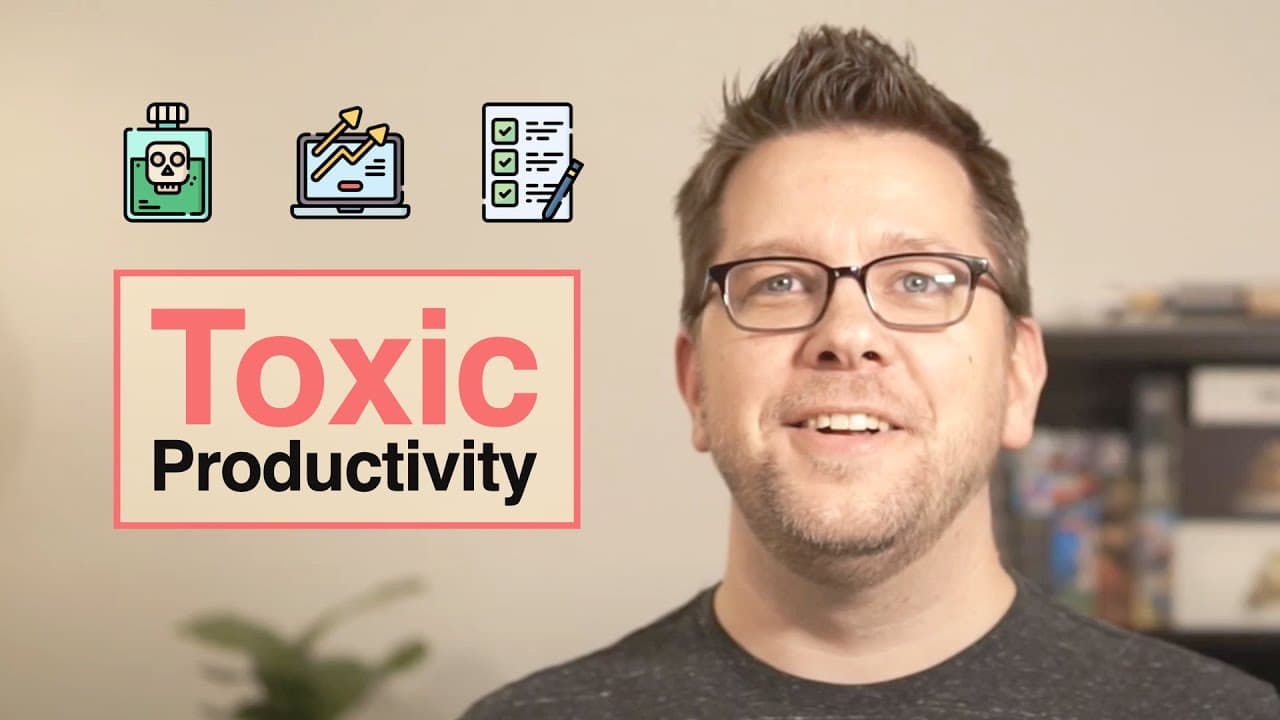
Avoiding Toxic Productivity Advice for ADHD
TL;DR
Learn how to effectively navigate productivity with ADHD by embracing the four C's of motivation: captivate, create, compete, and complete.
Transcript
hey my name is jesse j anderson it's great to be here with you today i'm really excited to talk about toxic productivity and specifically how toxic productivity affects our adhd brains so for me i didn't find out i had adhd until just a few years ago as an adult probably like a lot of you but i knew something was different about my brain early on i... Read More
Key Insights
- 🧠 People with ADHD often struggle with productivity and feel like they're not living up to their potential, leading to a reliance on trying harder, which doesn't work well for them.
- ⚙️ Traditional productivity systems were not built with ADHD brains in mind, leading to a lack of trust and the systems eventually falling apart.
- 📚 Neurotypical productivity advice, such as "eating the frog first" or breaking projects into smaller steps, doesn't work for most people with ADHD and can result in self-blame.
- 💡 People with ADHD find motivation through the four C's: captivate, create, compete, and complete. Finding tasks that align with these interests can fuel motivation and help build momentum. ⏰ Pomodoro timers and creating time-based goals can help with focusing and breaking tasks down into manageable chunks.
- 🔄 Embracing the inevitability of needing to pivot and change productivity systems can alleviate shame and provide freedom to explore new approaches.
- 🌟 Changing the environment and approaching tasks as games can make them more interesting and engaging, increasing motivation and productivity.
- 🌍 By embracing strategies tailored to their unique needs, people with ADHD can make a difference in the world and overcome challenges in their productivity.
Install to Summarize YouTube Videos and Get Transcripts
Explore YouTube Video Summarizer or Get YouTube Transcript Extractor
Questions & Answers
Q: How can people with ADHD find motivation to get things done?
People with ADHD can tap into their motivation by finding tasks or activities that captivate their interest, allowing them to harness their energy and build momentum. This can involve pursuing topics of personal fascination or engaging in creative activities that provide a sense of novelty. Competing with challenges or setting deadlines can also drive motivation. By embracing these four C's, individuals with ADHD can find the motivation they need to accomplish tasks and goals effectively.
Q: Why do traditional productivity systems often fail for people with ADHD?
Traditional productivity systems are designed with neurotypical individuals in mind, focusing on factors like importance, rewards, and consequences as sources of motivation. However, these motivations do not always resonate with individuals with ADHD. Furthermore, distractions and overwhelm, common challenges for people with ADHD, are not adequately addressed in these systems. As a result, individuals with ADHD may struggle to adapt and find success using conventional productivity methods.
Q: How can micro commitments aid in productivity for individuals with ADHD?
Micro commitments involve breaking down tasks into small, manageable steps or setting very short time-limited goals. By starting with small commitments, such as completing a few dishes or spending 10 minutes working on a project, individuals with ADHD can overcome the initial difficulty of getting started. This strategy helps build momentum and often leads to increased productivity as the individual becomes more engaged in the task at hand.
Q: What role does environment play in ADHD productivity?
For individuals with ADHD, novelty and stimulation are often necessary to maintain focus and motivation. Changing the environment, such as working in a coffee shop or a different location, can provide the novelty needed to spark creativity and enhance productivity. It is essential to strike a balance, as too many distractions can be counterproductive. By experimenting with different environments, individuals with ADHD can find the setting that best supports their productivity and focus.
Q: How can setting time-based goals help individuals with ADHD?
ADHD individuals often struggle with accurately estimating time and may feel overwhelmed by open-ended tasks. Setting time-based goals, such as writing for 20 minutes or cleaning for 10 minutes, provides a tangible and achievable objective. This strategy helps manage expectations and allows individuals to focus on the task at hand without becoming overwhelmed by the entire project. Additionally, it helps build awareness of how long certain tasks actually take, improving time management skills in the long run.
Q: What is the "embrace the pivot" strategy mentioned in the talk?
"Embrace the pivot" is a mindset and approach that acknowledges the likelihood of productivity systems failing or losing effectiveness over time. This strategy encourages individuals with ADHD to accept that change is natural and to pivot to new systems or strategies when necessary. Rather than feeling defeated by perceived failures, embracing the pivot allows individuals to experiment, adapt, and continue refining their approach to productivity. By letting go of self-blame and shame, individuals can maintain a positive mindset and focus on finding what works best for them.
Q: How can individuals with ADHD use side quests effectively without getting distracted?
Side quests can be both beneficial and distracting for individuals with ADHD. To use side quests effectively, individuals should set boundaries and time limits to prevent excessive distraction. It is essential to prioritize the main task while allowing small bursts of novelty or exploration that may boost creativity and motivation. By approaching side quests with intentionality and self-awareness, individuals can strike a balance between productive focus and satisfying their craving for new experiences.
Q: How can individuals with ADHD apply the four C's of motivation in their daily lives?
To apply the four C's of motivation (captivate, create, compete, complete), individuals with ADHD should seek out tasks and activities that align with these categories. They can leverage their personal interests and curiosities to find captivating tasks that hold their attention. Engaging in creative activities can provide the novelty and anticipation that sparks motivation. Competitive challenges and time-based goals can tap into the desire to prove oneself and stimulate productivity. Lastly, setting deadlines or creating a sense of urgency helps individuals with ADHD stay on track and complete tasks effectively.
Summary & Key Takeaways
-
The speaker shares personal experiences with ADHD and the struggles of trying to be productive using conventional methods.
-
Traditional productivity systems are not designed for ADHD brains, resulting in feelings of inadequacy and self-blame.
-
The speaker introduces the concept of the four C's of motivation (captivate, create, compete, complete) and provides strategies for implementing them in daily life.
Read in Other Languages (beta)
Share This Summary 📚
Summarize YouTube Videos and Get Video Transcripts with 1-Click
Try YouTube Summary with ChatGPT & Claude or YouTube Transcript Generator