Gavin Schmidt: The emergent patterns of climate change
TL;DR
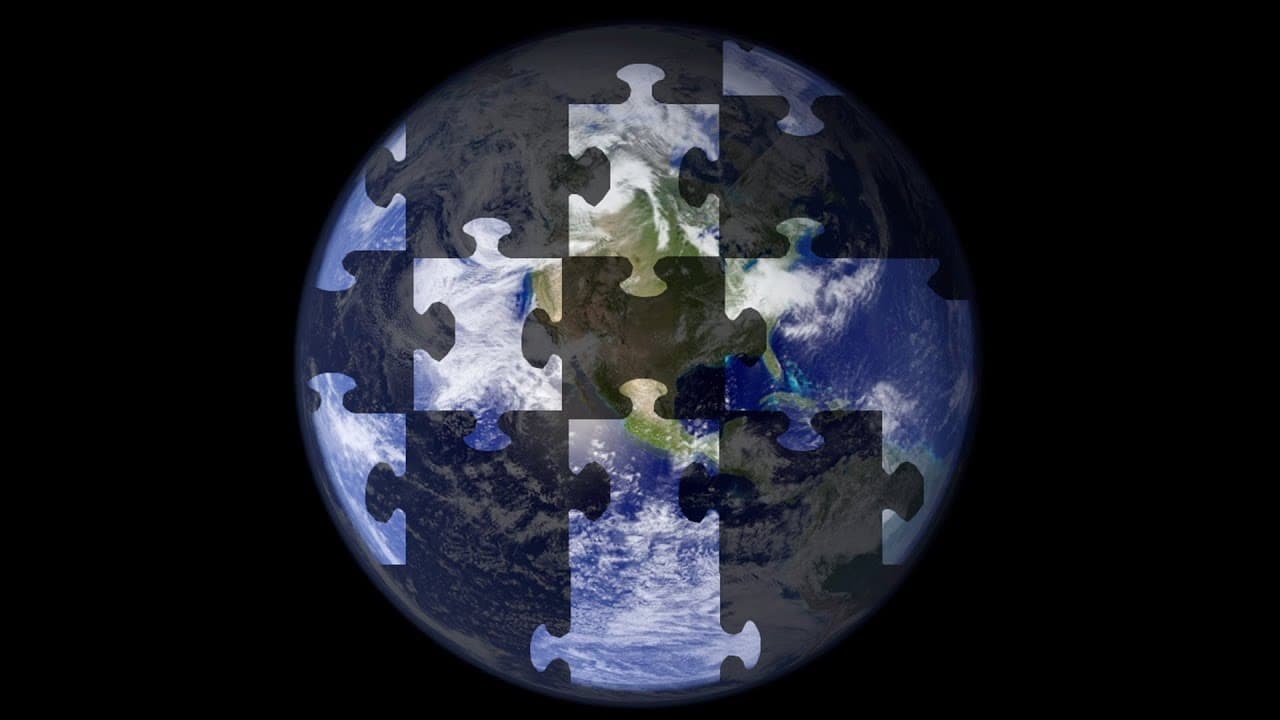
Climate modeling is a complex task that involves capturing small-scale processes to understand emergent properties and make predictions about the future.
Transcript
We live in a very complex environment: complexity and dynamism and patterns of evidence from satellite photographs, from videos. You can even see it outside your window. It's endlessly complex, but somehow familiar, but the patterns kind of repeat, but they never repeat exactly. It's a huge challenge to understand. The patterns that you see are the... Read More
Key Insights
- 🌍 Understanding complexity: Our environment is endlessly complex, with patterns that repeat but never exactly. This complexity poses a challenge for understanding and studying it.
- 🔍 Different scales: The patterns we observe in the environment span a huge range of spatial and temporal scales, from microscopic particles to the planet itself, and from milliseconds to millennia.
- 🖥️ Climate modeling challenges: Climate models aim to simulate the climate system, but they can only capture a fraction of its complexity. Models have evolved over time, but still have a long way to go in terms of capturing all the processes and scales involved.
- 📝 Building models piece by piece: Climate models consist of millions of lines of code that encapsulate various processes, such as ice growth, cloud formation, radiation absorption, and ocean currents. Each piece contributes to the emergent patterns we observe in the climate system.
- 🌍 Kicking the system: Various factors and events, such as Earth's orbital wobbles, volcanic eruptions, deforestation, and greenhouse gas emissions, can "kick" the climate system and change its emergent properties. These events provide targets to assess our understanding of the system.
- 🎯 Assessing model skills: Models are never completely right, but they can provide valuable information. Models have shown skill in simulating regional patterns and historical events, such as the impact of the ozone hole and volcanic eruptions.
- 💡 Expanding model scope: The success of models in simulating past events and patterns leads to expanding their scope. Models can now explore interactions between different elements, such as dust and tropical cyclones, air pollution and climate coexistence, and the impact of storms on sea salt particles.
- 🔮 The uncertain future: While models can accurately simulate past climate changes, they cannot predict the future with certainty. The choices we make regarding carbon dioxide emissions and mitigation efforts will shape the future climate, and model projections can only inform these choices.
Install to Summarize YouTube Videos and Get Transcripts
Explore YouTube Video Summarizer or Get YouTube Transcript Extractor
Questions & Answers
Q: What is the challenge in understanding the complexity of the environment?
The challenge in understanding the complexity of the environment lies in the fact that the patterns observed in satellite photographs and videos, as well as outside our windows, are endlessly complex and never repeat exactly. The different scales at which these patterns occur, ranging from microscopic particles to the size of the planet, make it difficult to break down and study in isolation.
Q: How do climate models attempt to capture the complexity of the climate system?
Climate models capture the complexity of the climate system by dividing it into smaller pieces. Each component, such as sea ice, clouds, radiation, winds, ocean currents, and vegetation, is studied individually and encapsulated into code. These models are continuously growing, with millions of lines of code and tens of thousands of lines added every year.
Q: What are emergent properties in the climate system?
Emergent properties in the climate system refer to the patterns that arise as a result of the interactions between the various small-scale processes captured in the climate models. These emergent properties include swirls in the Southern Ocean, tropical cyclones, rivers of atmospheric water, and many more. They are not explicitly programmed into the models but emerge as a collective outcome of the underlying processes.
Q: How do climate models evaluate the impact of different factors on the climate system?
Climate models evaluate the impact of different factors on the climate system by using them as "kicks" to the system. These factors can include changes in Earth's orbit, solar cycles, volcanic eruptions, biomass burning, ozone depletion, deforestation, contrails, and greenhouse gases. By simulating these changes in the models and comparing the results to observed data, scientists can assess the skill of the models in capturing the climate response to these factors.
Q: Are climate models accurate in predicting future climate scenarios?
Climate models are not designed to precisely predict future climate scenarios. They are approximations and always contain some level of uncertainty. However, they are considered skillful if they provide more information than what would have been known otherwise. While models have successfully explained past climate trends, making predictions about the future depends on the choices we make – whether we mitigate carbon dioxide emissions or continue with business-as-usual. The future remains unknown and uncertain.
Summary & Key Takeaways
-
The complexity and dynamism of the environment make it challenging to understand, as patterns repeat but never exactly. The different scales of these patterns range across magnitudes, from microscopic particles to the size of the planet itself.
-
Climate models have improved over time, but there are still many orders of magnitude to simulate. Each piece of the climate system, such as sea ice, clouds, and ocean currents, adds to the overall understanding.
-
Climate models have shown skill in predicting and explaining various phenomena, such as the impact of the ozone hole, volcanic eruptions, solar cycles, and ice sheet changes. However, the future is unknown, and choices about mitigating carbon dioxide emissions depend on more than just models.
Read in Other Languages (beta)
Share This Summary 📚
Summarize YouTube Videos and Get Video Transcripts with 1-Click
Try YouTube Summary with ChatGPT & Claude or YouTube Transcript Generator
Explore More Summaries from TED 📚





Summarize YouTube Videos and Get Video Transcripts with 1-Click
Try YouTube Summary with ChatGPT & Claude or YouTube Transcript Generator