The Forbidden RED ZONE in Europe, Where Life is No More
TL;DR
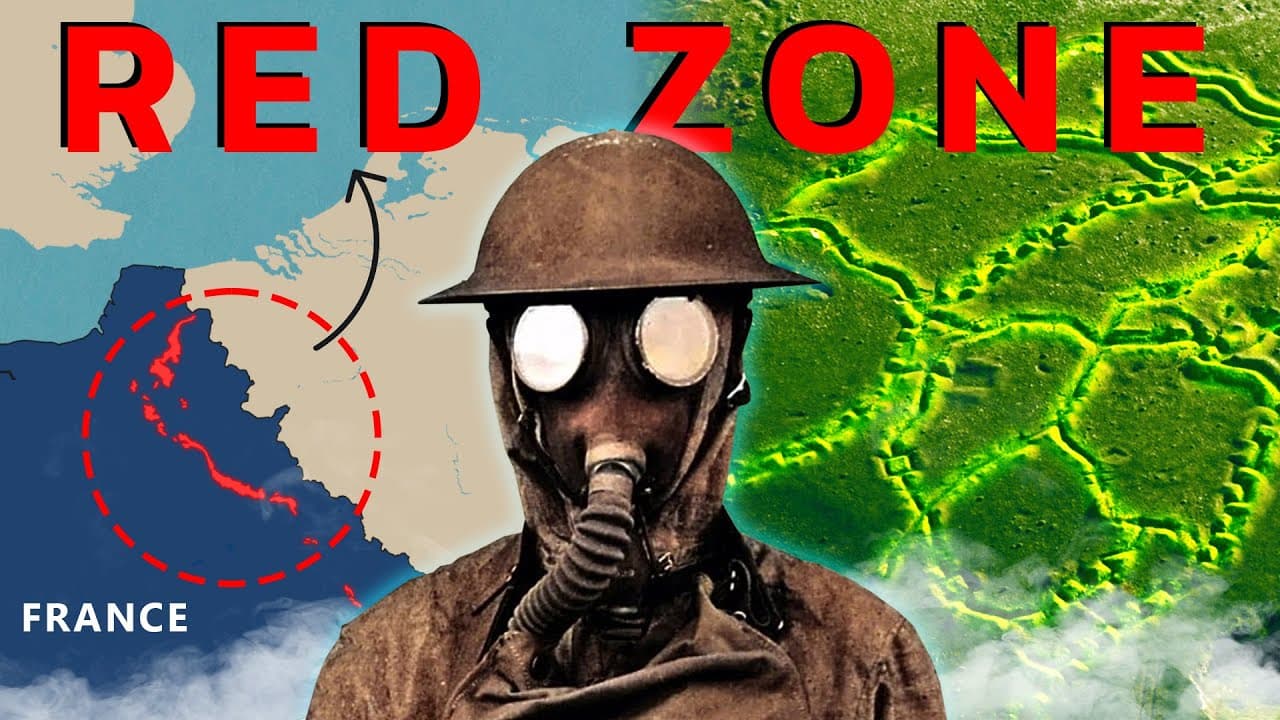
The Battle of Verdun during World War I resulted in a toxic wasteland, known as the Zone Rouge, where unexploded ordnance and chemical waste still pose a threat to this day.
Transcript
"If you haven't seen Verdun, you haven't seen anything." So wrote a French soldier from the front in 1916. It was in fact just outside Verdun that one of the bloodiest battles in human history and one of the decisive acts of World War I was fought. A carnage said by many to be unnecessary. The French believed that the network of fortific... Read More
Key Insights
- 🌍 Despite being one of the bloodiest battles in history, the Battle of Verdun in 1916 is often considered unnecessary. The French believed their fortifications were invincible, but the Germans took advantage of this mistake to bleed the enemy dry.
- 💀 Verdun became a symbol of resistance, heroism, suffering, death, and madness. It is estimated that every French soldier fought there for at least one day during World War I.
- 🚧 The aftermath of war left behind a devastated landscape known as the Zone Rouge, a non-contiguous wasteland filled with unexploded ordnance and contaminated with chemical waste from weapons and buried remains.
- ☠️ The Zone Rouge is severely poisoned, with high levels of toxic agents like lead, mercury, and arsenic. It is virtually devoid of life and considered hazardous for humans due to the risk of detonating unexploded ordnance and exposure to chemicals.
- 🔒 Remediation works have reduced the Zone Rouge to only 100 square kilometers from its original size, but it will still take an estimated 700 years to fully secure the area. Rushed cleanup efforts have exposed farmers and communities to remaining chemicals.
- 🌾 Farming and hunting have returned to some recovered territories, despite the ongoing contamination. Stricter controls would harm the already struggling local economy.
- 💣 The "place à gaz" north of Verdun is the most dangerous and poisoned area. It was created when officers detonated unexploded ordnance, releasing even more toxic substances into the already polluted soil.
- 🗺️ The impact of World War I extends beyond Verdun. Many areas in France, Belgium, and the Nord and Pas-De-Calais departments suffer from pollution and hazards due to unexploded ordnance and chemical waste.
Install to Summarize YouTube Videos and Get Transcripts
Explore YouTube Video Summarizer or Get YouTube Transcript Extractor
Questions & Answers
Q: How did the Battle of Verdun become a symbol of resistance and suffering?
The Battle of Verdun, with its intense fighting, casualties, and destruction, became a symbol of both heroism and the horrors of war. The French soldiers defending Verdun were determined to protect the city, leading to a prolonged battle that took a tremendous toll on both sides. The suffering and sacrifices made at Verdun encapsulated the brutal reality of warfare during World War I.
Q: How did the French government handle the aftermath of the Battle of Verdun?
After the war, the French government designated the contaminated areas of the battlefield as the Zone Rouge, prohibiting agricultural use and resettling the few remaining residents. However, the total reclamation work would take years, if not centuries, due to the extensive damage caused by the fighting. The government conducted some reclamation works, but it would take several centuries to fully secure the area.
Q: What is the current state of the Zone Rouge?
The Zone Rouge has been reduced to a restricted area of 100 square kilometers, but it still poses significant risks due to unexploded ordnance and toxic chemicals. The French government has carried out remediation works in some parts of the zone, but the slow progress and the return of farming and hunting have exposed communities to the remaining pollutants.
Q: What is the significance of the "place à gaz" in the Zone Rouge?
The "place à gaz" is an area north of Verdun where officers detonated unexploded ordnance containing toxic chemicals such as mustard gas and phosgene. The extensive detonations further polluted the soil, rendering it unable to support vegetation. The "place à gaz" serves as a stark reminder of the devastating impact of chemical weapons during World War I and the lasting environmental consequences.
Summary & Key Takeaways
-
The Battle of Verdun in World War I was one of the bloodiest battles in history, resulting in massive casualties and destruction.
-
The French government designated a large portion of the battlefield as the Zone Rouge, a contaminated wasteland, due to unexploded ordnance and chemical waste.
-
The process of reclaiming and securing the Zone Rouge has been slow, and the area still poses a threat to the environment and public health.
Read in Other Languages (beta)
Share This Summary 📚
Summarize YouTube Videos and Get Video Transcripts with 1-Click
Try YouTube Summary with ChatGPT & Claude or YouTube Transcript Generator