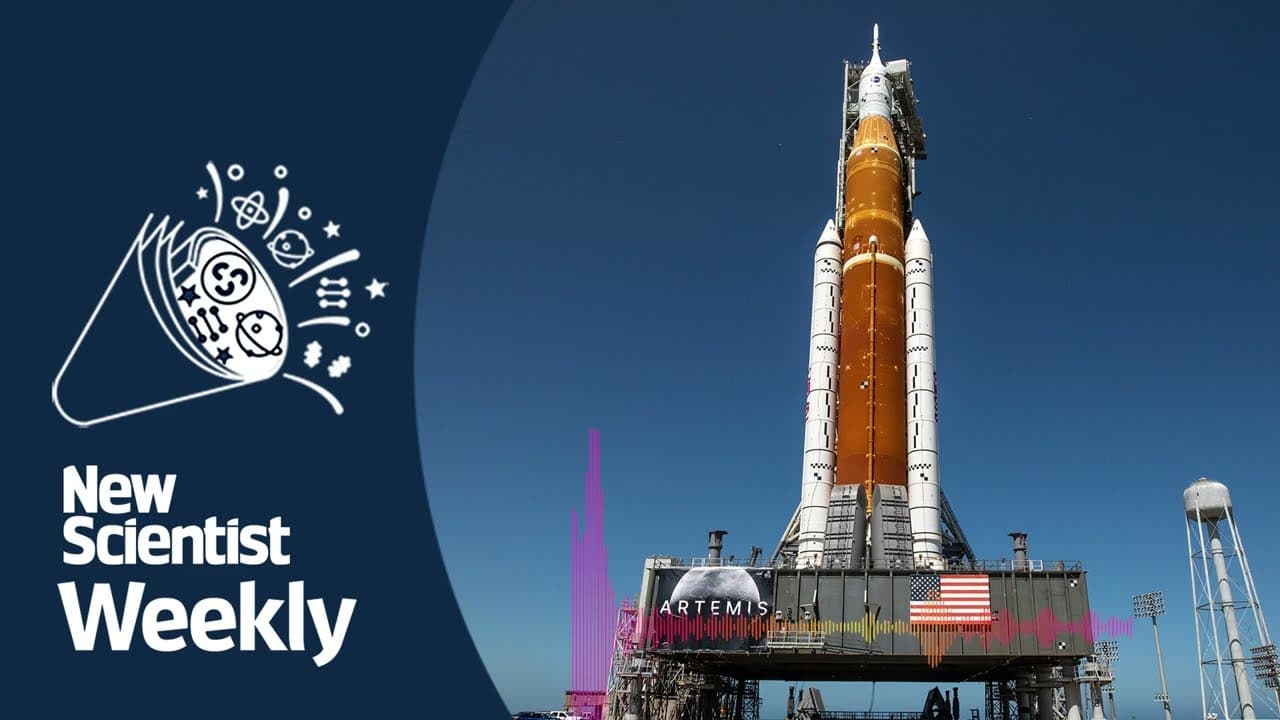
The Artemis I launch | New Scientist Weekly podcast, episode 134
TL;DR
Researchers discover unique mucins in mammals, shedding light on independent evolution of mucus production across species.
Transcript
it's summer sale time we're giving podcast listeners an amazing 50 off an annual subscription to new scientist it's really an incredible deal you can get unlimited access to all the articles on newsscientist.com for under 50 pounds in the uk or 50 in the us go to new scientists.com pod50 to get this bargain and be quick the offer ends soon on septe... Read More
Key Insights
- 🥮 NASA's Artemis 1 mission aims to return humans to the moon for the first time since the Apollo program.
- 🥰 Deep biosphere research reveals heat-loving bacteria in petroleum seeps, indicating microbial life at significant depths.
- 😃 Study in mice uncovers connection between eye movements during REM sleep and direction of gaze in dreams.
- ❓ Evolution of mucins in mammals showcases unique adaptations for mucus production across species.
- 💆 Climate change discussion at New Scientist Live highlights the need for managing mass climate migration.
- 📔 Gaia Vince's book delves into reshaping human geography due to climate change's effects.
- 👨🔬 Research on mucus evolution underscores the diverse pathways for mucus production across mammals.
Install to Summarize YouTube Videos and Get Transcripts
Explore YouTube Video Summarizer or Get YouTube Transcript Extractor
Questions & Answers
Q: Why was NASA's Artemis 1 mission launch delayed, and what does it aim to achieve?
The launch was delayed due to technical issues, and the mission aims to return humans to the moon, furthering space exploration.
Q: What did the deep biosphere research uncover, and why is it significant?
The research revealed heat-loving bacteria in petroleum seeps, indicating movement from great depths, shedding light on microbial life below the Earth's surface.
Q: How did the study in mice contribute to understanding dreams, and what potential implications does it have for future research?
The study connected eye movements during REM sleep to the direction of gaze in dreams, offering insights into decoding dreams in mammals and further research directions.
Q: What surprising findings emerged from the study on mucus evolution in mammals, and what implications does this have for evolutionary biology?
The study found unique mucins in mammals that evolved independently, challenging traditional evolutionary views and suggesting diverse pathways for mucus production evolution.
Summary & Key Takeaways
-
NASA's Artemis 1 mission launch delayed due to technical issues; aims to return humans to the moon.
-
Deep biosphere research reveals heat-loving bacteria in petroleum seeps moving up from thousands of meters below the Earth's surface.
-
Study in mice uncovers connection between eye movements during REM sleep and direction of gaze in dreams.
Read in Other Languages (beta)
Share This Summary 📚
Summarize YouTube Videos and Get Video Transcripts with 1-Click
Try YouTube Summary with ChatGPT & Claude or YouTube Transcript Generator
Explore More Summaries from New Scientist weekly podcast 📚


Summarize YouTube Videos and Get Video Transcripts with 1-Click
Try YouTube Summary with ChatGPT & Claude or YouTube Transcript Generator