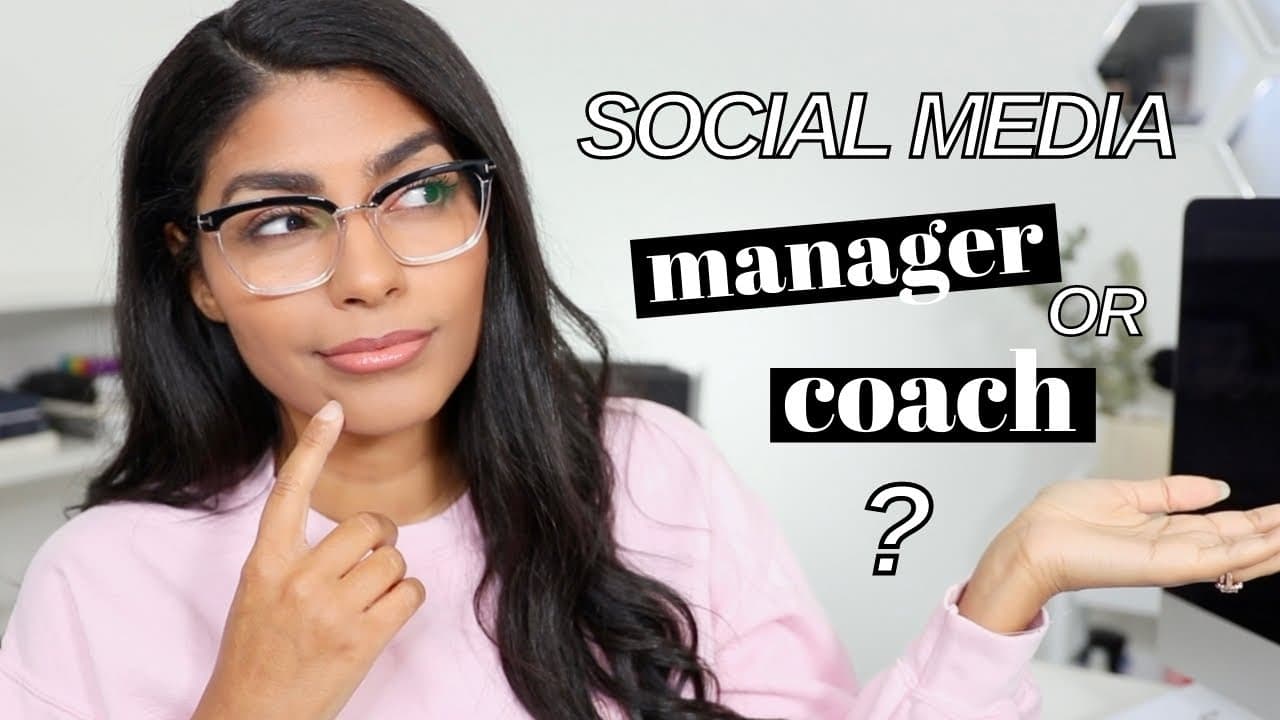
Social Media Manager vs. Social Media Coach
TL;DR
Explores differences between social media managers and coaches, plus tips for starting.
Transcript
hey hey there if you are diving into this social media marketing world you might be a little bit confused specifically about how to refer to yourself and what to refer to your services as over the past few years the coaching industry has kind of really exploded and it used to be the case that anyone who wanted to do social media would become a soci... Read More
Key Insights
- The role of a social media manager involves hands-on tasks like analyzing engagement data, identifying trends, and planning digital campaigns, making it suitable for established businesses with a budget.
- Social media coaches focus on strategy and planning, offering guidance and motivation, which is ideal for solopreneurs and businesses wanting hands-on involvement.
- Social media managers often work on retainer, providing a stable income, whereas coaches may charge per session, offering flexibility but less financial stability.
- Managers are responsible for implementing strategies, leading to direct accountability for results, while coaches advise and motivate, relying on clients to execute plans.
- Coaching is remote-friendly, requiring only a webcam and internet connection, whereas management may demand more tools and meeting commitments.
- Both roles require staying updated on social media trends and platform changes to effectively serve clients and maintain relevance in a fast-paced industry.
- Coaching can be emotionally draining due to the energy required for client interactions, while management may involve dealing with detailed client feedback and demands.
- Coaching might face a reputation challenge, needing proven expertise or a strong personal brand to attract clients, while management can be easier to market due to tangible service delivery.
Install to Summarize YouTube Videos and Get Transcripts
Explore YouTube Video Summarizer or Get YouTube Transcript Extractor
Questions & Answers
Q: What are the main responsibilities of a social media manager?
A social media manager is responsible for analyzing engagement data, identifying trends, and planning digital campaigns to build online communities. They often use tools like Hootsuite or Buffer for scheduling posts and may create content using Canva or Photoshop. Their role is hands-on, requiring them to align with business goals and execute strategies.
Q: How does a social media coach differ from a manager?
A social media coach focuses on strategy and planning rather than execution. They provide guidance, motivation, and accountability to clients, helping them understand social media trends and best practices. Coaches are ideal for solopreneurs or businesses wanting to be hands-on, offering strategic advice rather than managing day-to-day operations.
Q: What are the pros of being a social media manager?
Pros of being a social media manager include stable income from retainer contracts, direct accountability for results, and the opportunity to be creative and hands-on with social media content. Managers often enjoy a dynamic work environment, interacting with different teams and clients, and experiencing the satisfaction of seeing their efforts directly impact business growth.
Q: What are the challenges faced by social media managers?
Challenges for social media managers include being accountable for results, which can be stressful if clients have high expectations. They must stay updated on changing social media trends and manage client demands, which can be detailed and frequent. The role requires adaptability and the ability to handle fast-paced changes in client needs and platform updates.
Q: What are the advantages of being a social media coach?
Advantages of being a social media coach include flexibility and remote work opportunities, allowing for a balanced lifestyle. Coaches can work with a variety of clients, offering strategic advice without the obligation of daily management tasks. This role suits those who enjoy providing guidance and motivation, and who can build a strong personal brand to attract clients.
Q: What are the downsides of social media coaching?
Downsides of social media coaching include potential emotional drain from frequent client interactions and the challenge of ensuring clients implement advice. Coaches may struggle with financial stability due to less consistent income compared to retainer-based management roles. Additionally, coaching can have a reputation challenge, requiring coaches to establish credibility and expertise.
Q: How can someone start a career as a social media manager?
To start a career as a social media manager, one should develop skills in analyzing engagement data, creating content, and using scheduling tools. Building a portfolio with sample projects and gaining experience through internships or freelance work can help. Aspiring managers should stay informed about social media trends and consider enrolling in courses or programs to enhance their expertise.
Q: What steps are recommended to become a social media coach?
Becoming a social media coach involves establishing expertise in social media strategy and building a personal brand. Aspiring coaches should gain experience in social media management or strategy, create a coaching program, and develop a strong online presence. Networking and obtaining client testimonials can also help in building credibility and attracting clients.
Summary & Key Takeaways
-
The video discusses the roles of social media managers and coaches, highlighting the differences in responsibilities, client interactions, and income structures. It provides insights into the pros and cons of each role and offers guidance on starting a career in these fields.
-
Social media managers focus on executing strategies and are accountable for results, often working on retainer for established businesses. In contrast, coaches provide strategic advice and motivation, ideal for solopreneurs and those wanting to be hands-on.
-
Coaching offers flexibility and less commitment, suitable for those seeking a remote-friendly career, while management provides stable income but demands more tools and client interaction. Both require staying updated on social media trends and changes.
Read in Other Languages (beta)
Share This Summary 📚
Summarize YouTube Videos and Get Video Transcripts with 1-Click
Try YouTube Summary with ChatGPT & Claude or YouTube Transcript Generator
Explore More Summaries from Latasha James 📚





Summarize YouTube Videos and Get Video Transcripts with 1-Click
Try YouTube Summary with ChatGPT & Claude or YouTube Transcript Generator