Should You Worry About Antarctica's New, Massive Iceberg?
TL;DR
A massive iceberg broke off from Antarctica, but it won't contribute to rising sea levels. Researchers also found evidence in Australia that humans arrived much earlier than previously thought.
Transcript
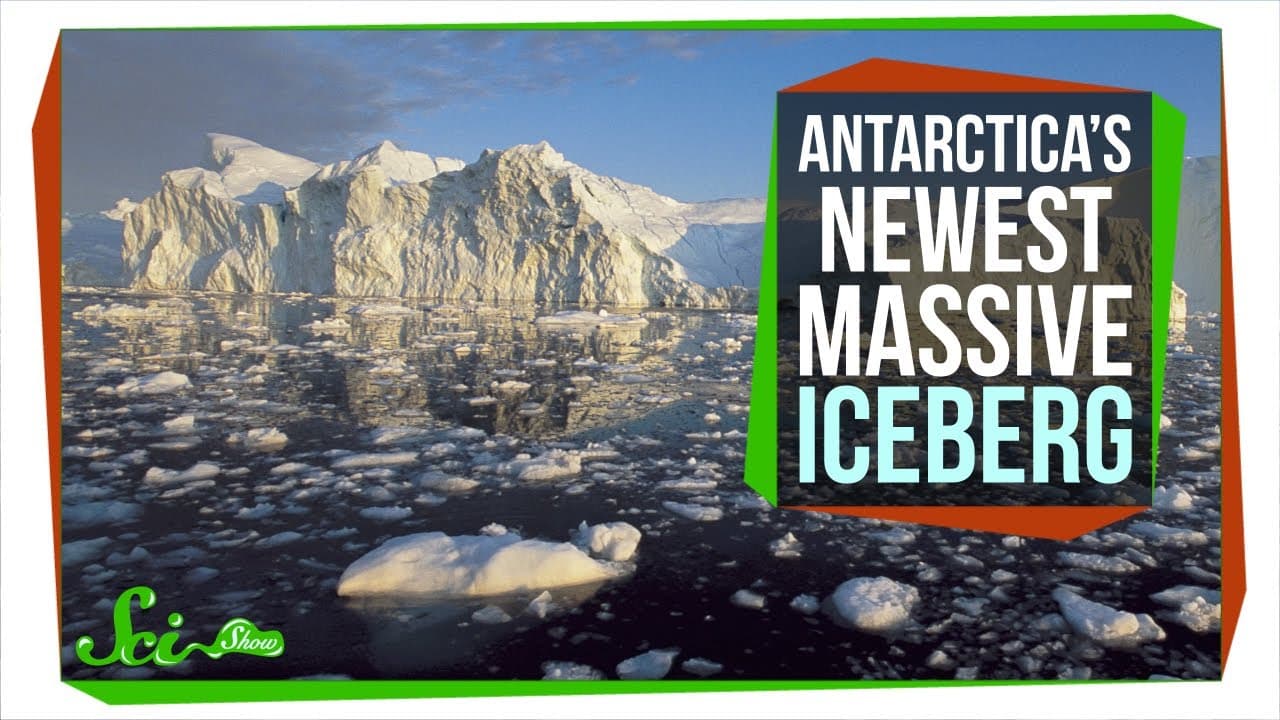
[♪ INTRO] Climate change may have been on your mind last week when you heard about that gigantic iceberg breaking off Antarctica. This piece of ice separated from a part of the continent called the Larsen C ice shelf. It weighs some one trillion metric tons, it’s roughly the size of the state of Delaware, about 5800 square kilometers, and now it is... Read More
Key Insights
- 🤢 Iceberg calving is a normal process and does not directly contribute to rising sea levels.
- 🎅 The recent iceberg break off from Larsen C was expected and not primarily caused by climate change.
Install to Summarize YouTube Videos and Get Transcripts
Explore YouTube Video Summarizer or Get YouTube Transcript Extractor
Questions & Answers
Q: How does an iceberg breaking off from Antarctica affect sea levels?
When icebergs break off from ice shelves, they do not contribute to rising sea levels because they were already displacing the same amount of water as they melt.
Q: Is the iceberg break off related to climate change?
Scientists do not believe that the iceberg break off from Larsen C was directly related to climate change, as iceberg calving is a natural process that occurs constantly.
Q: How do scientists date ancient artifacts?
Scientists used a technique called optically stimulated luminescence (OSL) to date the recently discovered artifacts in Australia. OSL measures the last time a mineral in the artifact was exposed to sunlight, providing an estimate of its age.
Q: What can the discovery of early human artifacts tell us?
The discovery of artifacts in Australia suggests that humans arrived about 65,000 years ago, potentially allowing for interbreeding with other hominid species and coexistence with large extinct animals.
Summary & Key Takeaways
-
A trillion metric ton iceberg the size of Delaware broke off from the Larsen C ice shelf in Antarctica, but it won't increase sea levels.
-
The iceberg break off was expected and is a normal process called calving, unrelated to climate change.
-
Glaciologists are concerned that more ice could enter the ocean, potentially raising sea levels, but there is a chance that the ice shelf could rebuild itself.
Read in Other Languages (beta)
Share This Summary 📚
Summarize YouTube Videos and Get Video Transcripts with 1-Click
Try YouTube Summary with ChatGPT & Claude or YouTube Transcript Generator
Explore More Summaries from SciShow 📚


Summarize YouTube Videos and Get Video Transcripts with 1-Click
Try YouTube Summary with ChatGPT & Claude or YouTube Transcript Generator