Britain's Most HATED Subculture..

TL;DR
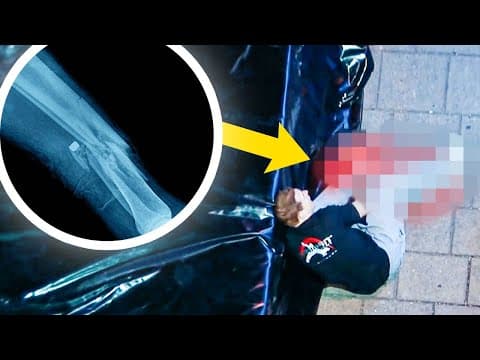
This video explores the history and impact of football hooliganism in England, from its beginnings in the 13th century to its peak in the 1980s and its current state.
Transcript
this video is brought to you by Squarespace a senior officer said the video showed the awful callousness of the Hooligans police had to intervene to control the fan disorders On The Rise so we have bitter rivalry between their supporters makes it one of the world's most deadly football tragedies this small faction of society has been seen as one of... Read More
Key Insights
- 🔥 The video showcases the callousness and violence of football hooliganism, making it one of the most deadly football tragedies in the world.
- 🌍 Football hooliganism is not just about football, but a subculture and scene that has developed its own fashion and attitude.
- 🔴 Violence in football has been present since the sport's early days, dating back to the 13th century.
- 🏴 The late 1800s saw the gentrification of football, but it did not stop the violence.
- 🏴 The first recorded instance of football hooliganism was in 1885 when teams got into a fight with sticks.
- 👥 Football hooliganism can be linked to other youth subcultures of the 50s and 60s, such as the Teddy Boys, mods, and Rockers.
- 🤝 Football hooliganism became a way for working-class men to channel their aggression and find a sense of identity and purpose.
- ✋ Football hooliganism reached its peak in the 70s and 80s, leading to public outrage and government intervention through laws and stadium changes.
Install to Summarize YouTube Videos and Get Transcripts
Explore YouTube Video Summarizer or Get YouTube Transcript Extractor
Questions & Answers
Q: What factors contributed to the rise of football hooliganism in the 1960s and 1970s?
The rise of football hooliganism in the 1960s and 1970s can be attributed to several factors. Firstly, as the elder generation stopped attending football games, there was a lack of authority figures to keep the young fans in check, leading to increased aggression and violence. Additionally, this period saw a rise in youth subcultures that were prone to violence, such as the mods and rockers. Lastly, the social and racial tensions of post-World War II Britain, coupled with the end of mandatory military service, created a release valve for young working-class men to express their aggression through football hooliganism.
Q: How did football hooliganism become associated with far-right extremism in some cases?
In the late 1970s and 1980s, sections of the football hooligan subculture became intertwined with far-right nationalist groups such as the National Front and the British Movement. These groups leveraged the tribalistic and patriotic nature of football hooligans to recruit new members. However, it is worth noting that not all football firms were inherently far-right, as they often reflected the attitudes and values of the town or city they represented. Thus, football hooligans' affiliation with far-right extremism can be viewed as a subset of the broader hooligan subculture rather than a defining characteristic of all hooligans.
Summary & Key Takeaways
-
Football hooliganism has existed since the 13th century, evolving into a subculture with its own fashion and attitude.
-
The 1960s and 1970s saw a rise in organized football hooligan groups called "firms," associated with specific teams.
-
Hooliganism escalated in violence and criminal behaviors, leading to public outrage and government intervention.
Questions:
-
What factors contributed to the rise of football hooliganism in the 1960s and 1970s?
-
How did football hooliganism become associated with far-right extremism in some cases?
-
What events in the 1980s led to the government taking action against football hooliganism?
-
How did the Heysel and Hillsborough disasters impact the perception and control of football hooliganism?
-
How has football hooliganism changed in recent years, particularly in foreign countries?
-
What steps were taken by stadiums and law enforcement to combat football hooliganism?
-
Why did a nostalgic fascination with football hooliganism emerge in the mid-2000s?
-
What psychological and sociological factors contribute to the existence of football hooliganism?
Read in Other Languages (beta)
Share This Summary 📚
Summarize YouTube Videos and Get Video Transcripts with 1-Click
Try YouTube Summary with ChatGPT & Claude or YouTube Transcript Generator
Explore More Summaries from JimmyTheGiant 📚




Summarize YouTube Videos and Get Video Transcripts with 1-Click
Try YouTube Summary with ChatGPT & Claude or YouTube Transcript Generator