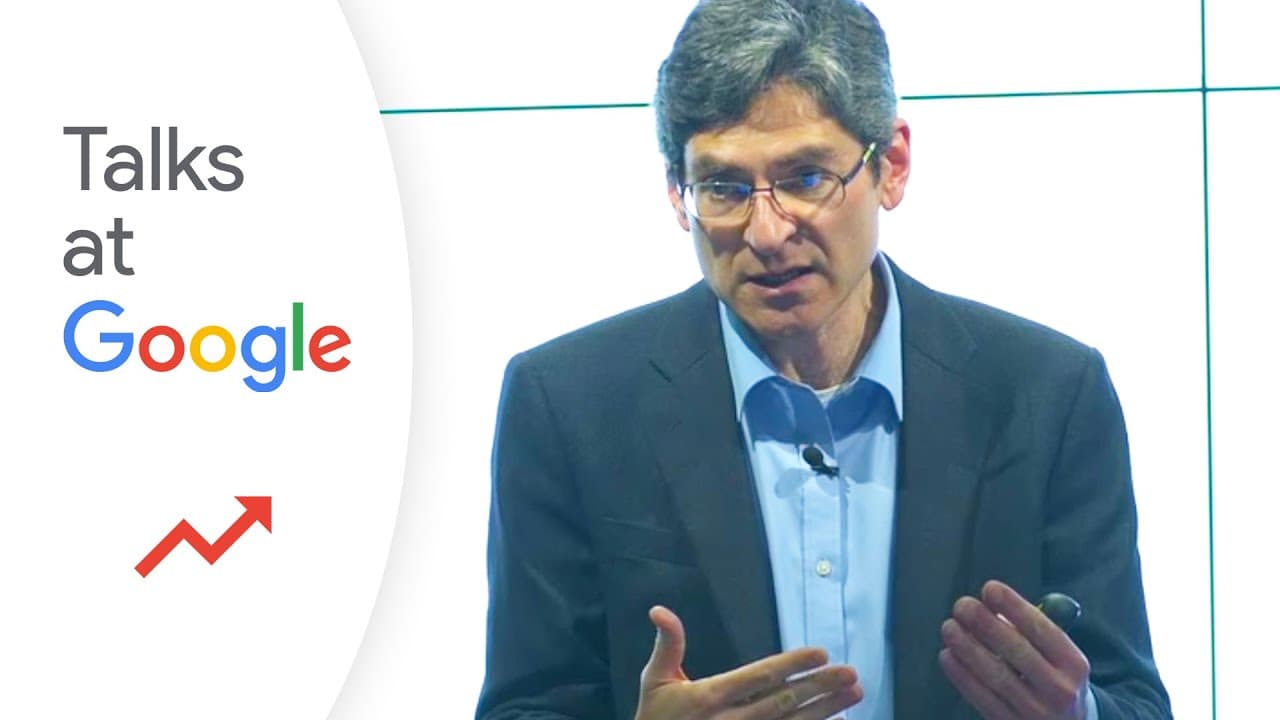
Capitalism Without Capital | J. Haskel & S. Westlake | Talks at Google
TL;DR
The economy is shifting towards intangible assets, such as software, data, and brands, which are more difficult to measure and often overlooked in traditional economic analysis.
Transcript
[MUSIC PLAYING] SPEAKER 1: Good morning. Thank you all for coming. Today at Google, we're delighted to welcome Mr. Jonathan Haskel and Mr. Stian Westlake. Jonathan Haskel is a Professor of Economics at Imperial College Business School. And Stian Westlake is Advisor to the UK'S Minister of Innovation and Technology. Together, they won the Indigo Pri... Read More
Key Insights
- 📼 The shift towards intangible assets is changing the nature of investment in the economy, with intangibles like software and data becoming more important.
- 🥺 Intangible assets are often underestimated and overlooked in traditional economic analysis, leading to a misrepresentation of their value and impact on the economy.
- 😮 The rise of intangible investment may contribute to income and wealth inequality, with leader companies benefiting more from their intangible assets compared to laggard companies.
- 🤗 New methods are needed to accurately measure the value of intangible assets, including open-source contributions, to better understand their role in the economy.
Install to Summarize YouTube Videos and Get Transcripts
Explore YouTube Video Summarizer or Get YouTube Transcript Extractor
Questions & Answers
Q: What are some examples of intangible assets?
Intangible assets include things like software, data, brands, and even intangible knowledge and skills gained through training and education.
Q: Why are intangible assets more difficult to measure?
Intangible assets are harder to measure because they cannot be physically seen or touched. Their value comes from ideas, relationships, and knowledge - all of which are intangible aspects of the economy.
Q: How does the rise of intangible investment affect inequality?
The rise of intangible investment may contribute to income and wealth inequality. Leader companies with valuable intangible assets can scale up and accumulate more wealth, while laggard companies struggle to compete.
Q: How can the value of open-source contributions be measured?
Measuring the value of open-source contributions is challenging because it requires quantifying their impact on the wider economy and society. Traditional economic measures often overlook the value of these contributions, but researchers are working on new methods to capture their value.
Summary & Key Takeaways
-
The nature of investment in capital assets is changing, with intangible assets like software and data becoming more important.
-
Intangible assets are often overlooked in traditional economic measurement methods, such as GDP, leading to an underestimation of their value and impact.
-
The rise of intangible investment may be contributing to the growing gap between leader companies and laggard companies in terms of profitability and productivity.
Read in Other Languages (beta)
Share This Summary 📚
Summarize YouTube Videos and Get Video Transcripts with 1-Click
Try YouTube Summary with ChatGPT & Claude or YouTube Transcript Generator
Explore More Summaries from Talks at Google 📚
Summarize YouTube Videos and Get Video Transcripts with 1-Click
Try YouTube Summary with ChatGPT & Claude or YouTube Transcript Generator