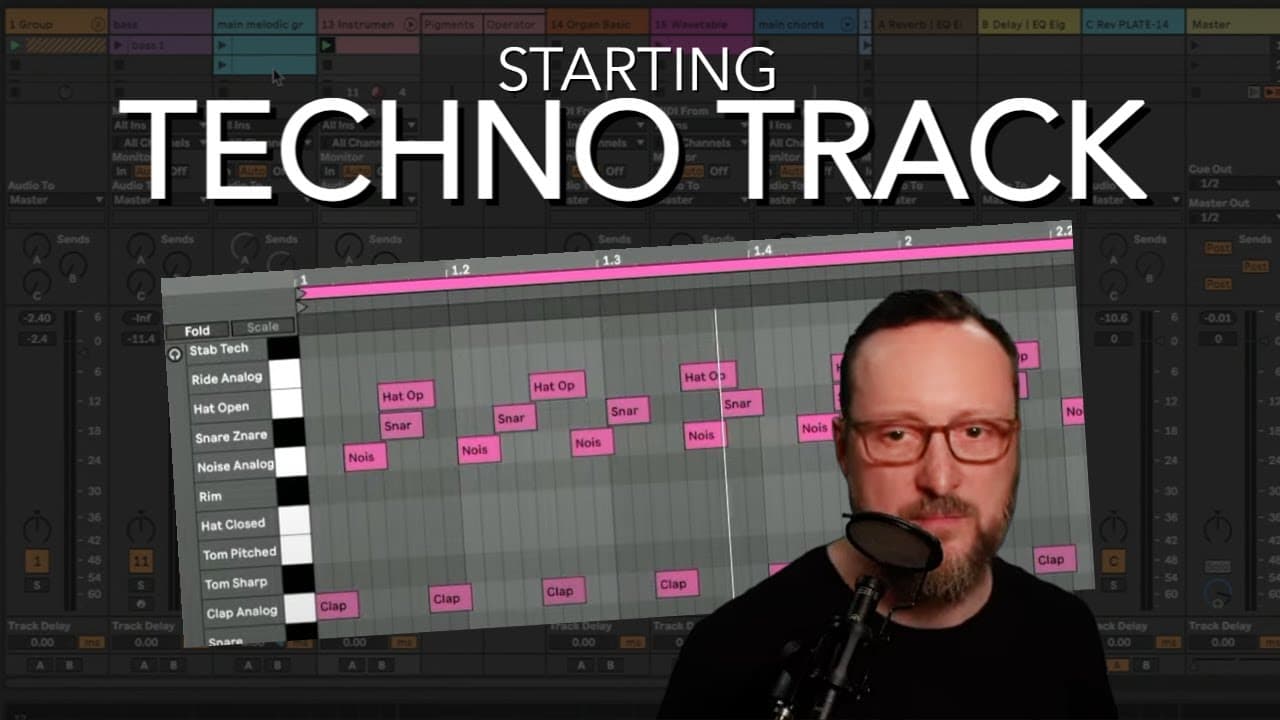
How to START a techno track, with John Selway
TL;DR
In this video, the instructor explores different sounds and techniques to create a groovy track, emphasizing the importance of going with your instincts and experimenting with various elements.
Transcript
hey this is Max at 343 Labs we're a music production School based in New York City Berlin and online and today I'd like to show you a clip by one of our instructors John Selway which is taken from 343tv which is right here on our Channel several days per week now if you want to watch the full stream head over to studio.343labs.com link in the descr... Read More
Key Insights
- 🎵 Going with your gut and not overthinking can lead to interesting and potential ideas in music production.
- 🎹 Adding octave adjustments and arpeggiators can help create new sounds and variations in basslines.
- 🔊 Experimenting with waveform manipulation and LFOs can result in unique and phasing effects in music production.
- 🎚️ Shaping the sound, adjusting note lengths, and utilizing envelope modulation can help create a desired groove and texture in music tracks.
- 🌑 Adjusting the filter range and adding elements like Unison detuning can enhance the depth and fullness of a sound in techno music.
- 🔊 Exploring different effects like side compression and modulation can create dynamic and varied soundscapes in music production.
- 🎚️ Controlling velocity and adding randomness to MIDI patterns can introduce movement and groove in music tracks.
- 🎛️ Utilizing MIDI bounce and layering can expand the possibilities of creating percussion tracks that complement the existing melody.
Install to Summarize YouTube Videos and Get Transcripts
Explore YouTube Video Summarizer or Get YouTube Transcript Extractor
Questions & Answers
Q: How does the instructor suggest overcoming analysis paralysis and trusting one's instincts while creating music?
The instructor recommends going with the first ideas that come to mind and not getting caught up in overthinking or analyzing too much. He suggests playing around with different sounds and techniques, choosing what feels right in the moment.
Q: What techniques does the instructor show for shaping the sound of the track?
The instructor demonstrates adjusting octaves and waveforms, adding modulation through LFOs, and using envelope modulation to create different effects. He also explores playing with filters and note lengths to shape the sound further.
Q: How does the instructor incorporate velocity into creating a groove?
The instructor shows how changing the velocities of the notes can create a more dynamic and evolving groove. He experiments with randomized velocities using a velocity device and explores the impact of velocity on the overall feel of the track.
Q: What suggestions are given by viewers during the video?
Viewers suggest various ideas, such as using side compression and modulating the threshold, playing with the velocity to create a more rhythmic groove, adding 303 sounds, and splitting the bass into low and mid-high frequencies for different processing.
Q: How does the instructor incorporate percussion elements into the track?
The instructor takes the MIDI from the bassline and uses it to play percussion sounds. He explores different drum kits and effects to find fitting percussion elements that complement the groove of the track.
Summary & Key Takeaways
-
The instructor encourages going with the first ideas that come to mind while creating music, emphasizing the importance of not overthinking or analyzing too much.
-
He demonstrates how to work with different sounds, such as adjusting octaves and waveforms, adding modulation, and shaping the overall sound.
-
The video also explores using velocity to create a more dynamic groove and experimenting with different percussion elements.
Read in Other Languages (beta)
Share This Summary 📚
Summarize YouTube Videos and Get Video Transcripts with 1-Click
Try YouTube Summary with ChatGPT & Claude or YouTube Transcript Generator