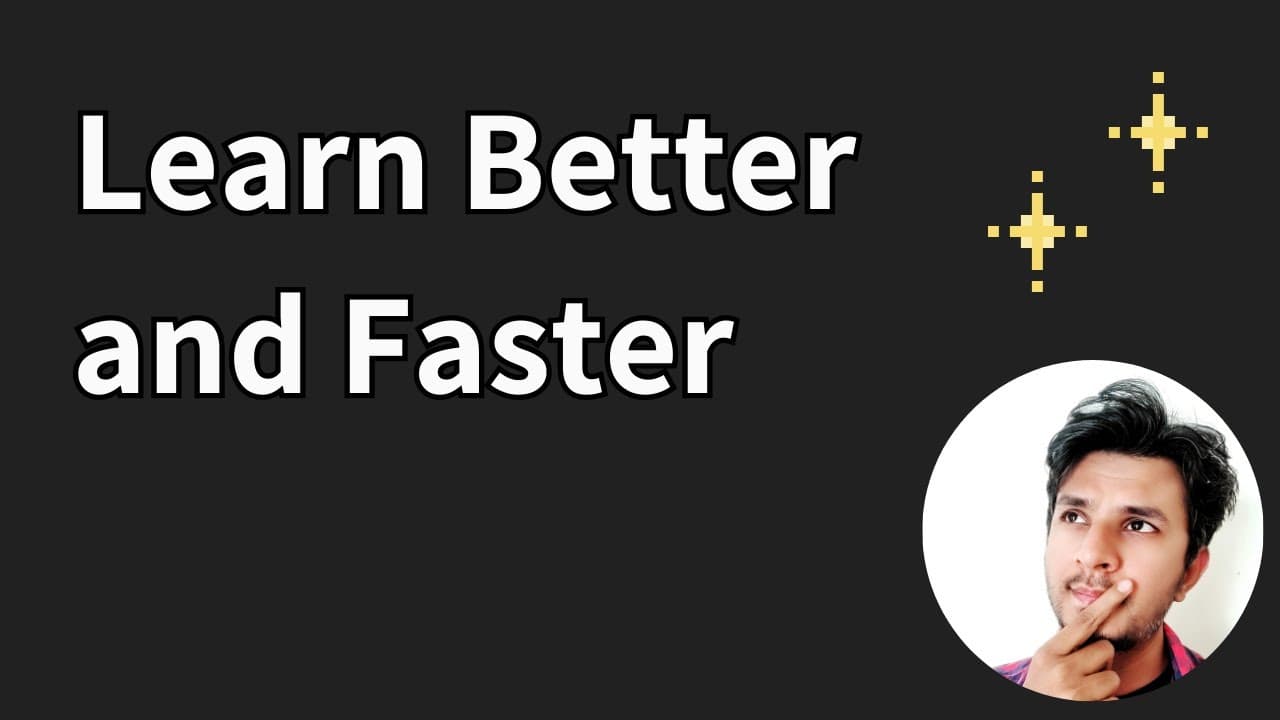
How to learn better and faster as a software engineer?
TL;DR
This video provides five strategies to learn better and faster as a software engineer, including registering curiosity, jumpstarting, doing the laundry (implementing what you learn), following the inverse power law, and juggling multiple learning topics with time boxing.
Transcript
so the domain of software engineering evolves rapidly which means one tool or Tech that is relevant today might not stand tall a few years later this requires us to stay relevant by learning new skills continuously so today from my personal experience I'll try to answer this one question how to learn better and faster as a software engineer I typic... Read More
Key Insights
- 🔍 Register your curiosity: When something sparks your interest, make a note of it in a note-taking app. This natural curiosity will motivate you to learn more about the subject in the future.
- 🚀 Jumpstart your learning: Instead of waiting for the perfect time or resource, start learning right now. Any resource is good when you're starting from zero, so don't procrastinate.
- 🧺 Do the laundry: Rather than just imagining or planning what you'll do with your newfound knowledge, start implementing it. Get your hands dirty and start coding or practicing the concepts you've learned.
- 📚 Follow the inverse power law: Spend more time on building a solid foundation and understanding the basics. This will make it easier for you to grasp advanced concepts and delve deeper into the subject. ⏰ Juggle and time box: It's possible to learn multiple things in parallel. Pick two things that interest you and switch between them if you get bored. Use time boxing to set limits on how long you spend on each topic.
- 💡 Jot down questions: Whenever you come across a question or something that piques your interest, write it down. Revisit your notes regularly and dive deeper into those topics when you have the time.
- 📆 Revisit and review your notes: Don't feel pressured to learn everything immediately. Take the time to periodically revisit your notes and explore the subjects that intrigued you further.
- ♀️ It's okay to drop things: If you realize that a topic is not for you or doesn't align with your goals, it's okay to let it go. Acknowledge your limitations and focus on what truly interests you and helps you grow as an engineer.
Install to Summarize YouTube Videos and Get Transcripts
Explore YouTube Video Summarizer or Get YouTube Transcript Extractor
Questions & Answers
Q: What is the importance of registering curiosity and making notes when learning as a software engineer?
Registering curiosity and making notes is important because it ensures that you won't forget the topics or questions that sparked your interest. By storing them in a note-taking app, you have a reminder to revisit and learn about these topics, without needing external motivation. It helps in continuous learning and ensures you don't miss out on valuable information that interests you.
Q: Why is jumpstarting essential for learning as a software engineer?
Jumpstarting is essential for learning as a software engineer because waiting for the perfect time, resource, or conditions may lead to procrastination or missed learning opportunities. By starting immediately with any available resource, even if it's not the best, you can begin the learning process and build momentum. It helps in getting over the initial inertia and moving towards continuous learning.
Q: What does "doing the laundry" mean in the context of learning as a software engineer?
"Doing the laundry" in the context of learning as a software engineer refers to the importance of implementing what you learn by coding and getting hands-on experience. It emphasizes the need to go beyond just reading or watching tutorials and actually practicing what you have learned. By doing so, you gain a deeper understanding and practical knowledge of the concepts and can tackle real-world challenges effectively.
Q: How does the inverse power law apply to learning as a software engineer?
The inverse power law suggests spending more time focusing on the basics and foundational concepts before diving into advanced topics. It emphasizes the importance of having a solid understanding of fundamentals, as it facilitates easier comprehension and application of more advanced concepts. By mastering the basics, you build a strong foundation that supports your learning journey, making it easier to grasp complex concepts and solve problems effectively.
Summary & Key Takeaways
-
Registering curiosity: Whenever something sparks your interest, make a note of it in a note-taking app to ensure you remember to learn about it later.
-
Jumpstarting: Start learning immediately instead of waiting for the perfect time or resource. Any resource will do when you're starting from zero.
-
Doing the laundry: Instead of just reading and imagining possibilities, start implementing what you learn by coding and getting your hands dirty.
-
Inverse power law: Spend more time mastering the basics and building a solid foundation before diving into advanced topics.
-
Juggling and time boxing: Learn multiple things at once, switching between them if you get bored, and time box your learning periods to ensure progress.
Read in Other Languages (beta)
Share This Summary 📚
Summarize YouTube Videos and Get Video Transcripts with 1-Click
Try YouTube Summary with ChatGPT & Claude or YouTube Transcript Generator
Explore More Summaries from Asli Engineering by Arpit Bhayani 📚



Summarize YouTube Videos and Get Video Transcripts with 1-Click
Try YouTube Summary with ChatGPT & Claude or YouTube Transcript Generator